Micro SaaS Ideas: 13 You Can Launch With Ready Code (2026)
Micro SaaS ideas with code that already runs: 13 niche products, who pays, how to charge and what the code covers, from free starter kits to $149 apps.
The micro SaaS ideas most likely to earn are narrow products sold to businesses that already pay for the same job: a vacation rental host paying a marketplace fee on every booking, a restaurant paying a delivery app's commission, an organiser paying a fee on every ticket. Here are 13 of them, grouped by category, each with a starting point that already works: a full-stack app from Aniq UI for nine ideas, and the best free and paid starter kits for the four we have no template for.
For every idea you get who pays and why, how it can charge, what the first version needs, what the ready code covers, what you still build, and the price. The lists that rank for this search today, such as IdeaProof's 50 picks, NxCode's 50 ideas and MicroConf's 13 SaaS ideas, stop at the idea: none of them gives you code (checked November 2026). Where our code stops short, we say so.
What a micro SaaS is, and two ways to run one from a template
A micro SaaS is a small software business, usually run by one person or a small team, that sells a subscription to a narrow group of customers with one specific problem. Narrow is the point: "direct booking for cabin owners" is a buyer you can find and call. Most good SaaS business ideas at this size are B2B, because a business keeps paying for a tool that saves it money or wins it customers.
The nine Aniq UI ideas start from a full-stack product (a Next.js 16 website or app, a Next.js dashboard and a NestJS API) built for a single business. You can run it as a SaaS in two ways:
- One copy per customer. A separate copy for each business, with its own domain, brand and database, for a setup fee and a monthly fee. It works with every template here from day one; each copy is one more app to host, back up and update.
- One platform for many customers. One app, where each business sees only its own data, signs up on its own and pays a subscription. Northstack is built this way, and Ticketory already holds several organisers as workspaces. For the others, keeping customers apart in one database is code you write.
Both models are allowed. You can modify a premium Aniq UI template and use it in as many commercial projects as you like, for yourself or for clients, so you may host it as your own SaaS, under your name, and charge for access, or deliver it to a client as a build. What the licence rules out: redistributing, reselling or sublicensing the code, modified or not; sharing your licence; building a template marketplace or a rival product with it; and presenting it as your own original work (terms, section 2).
Booking SaaS ideas for hospitality
1. Direct booking for vacation rental hosts: Hollina
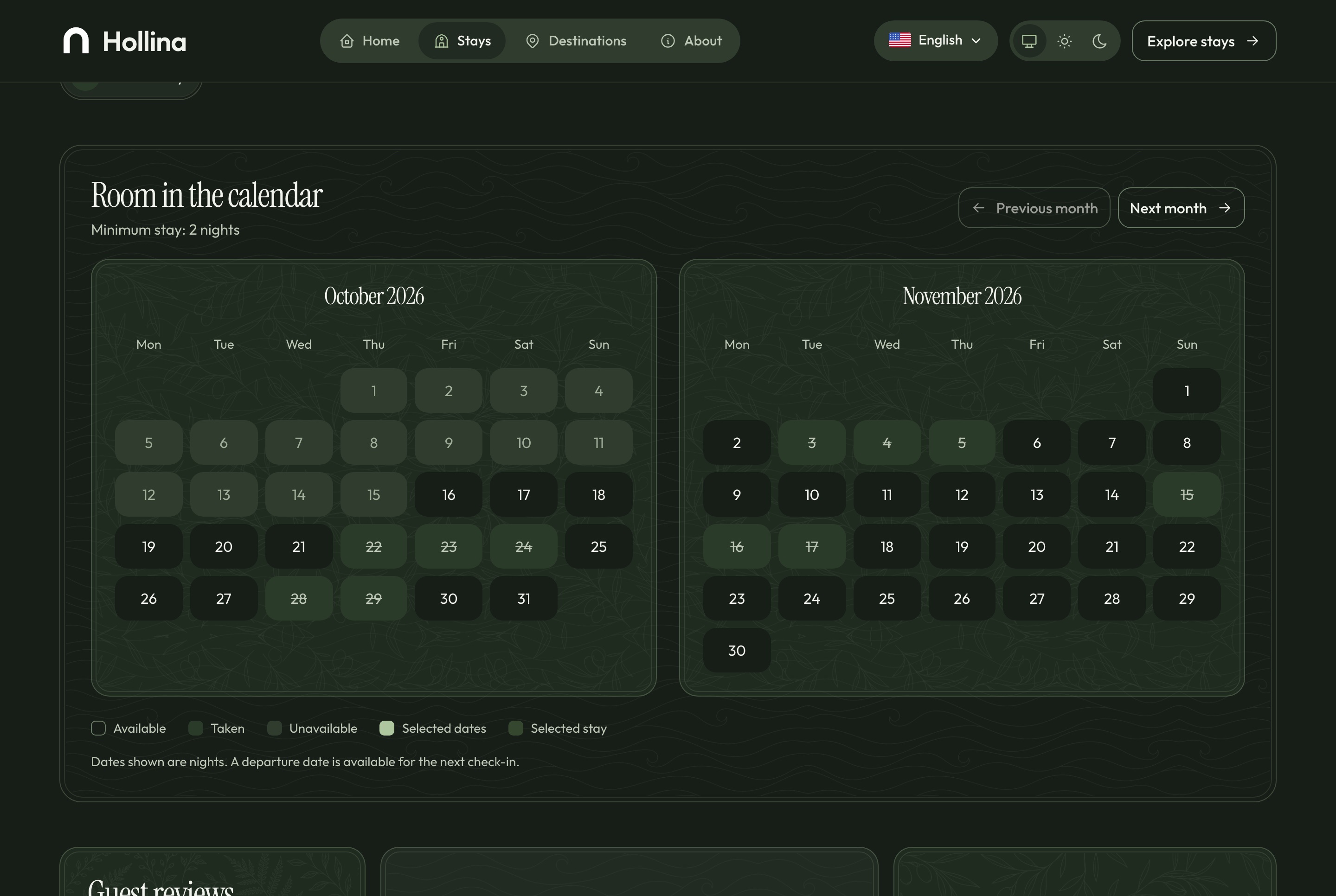
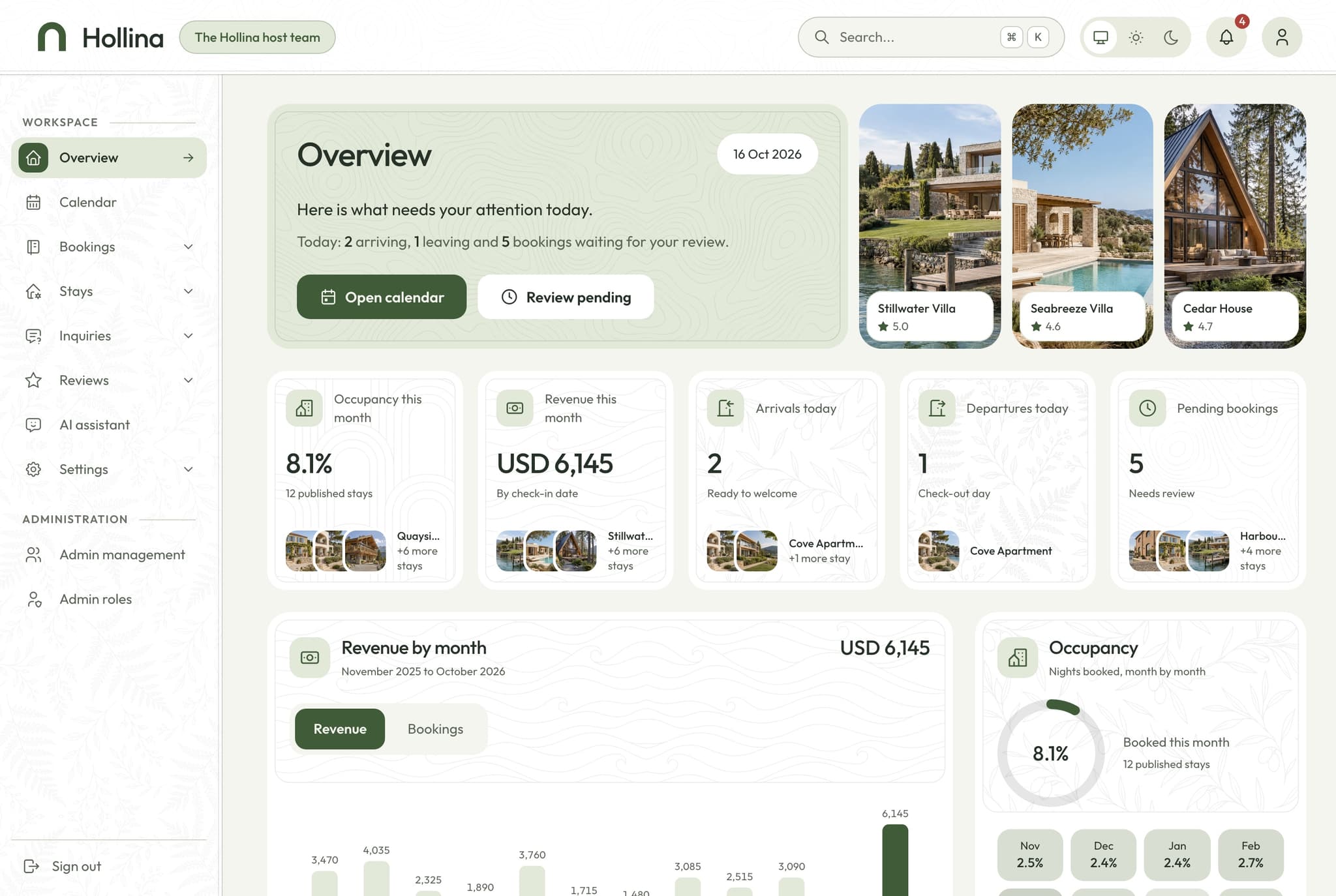
Who pays and why: hosts and small property managers. Airbnb's help centre says most hosts on its single-fee structure pay 15.5% of each booking (checked November 2026). A host's own booking site keeps that share on repeat guests and on traffic the host brings in.
How it can charge: a monthly fee per host or per property, plus a setup fee.
First version: stay pages with real availability, payment, a calendar the host can block, and a dashboard to confirm and check in guests.
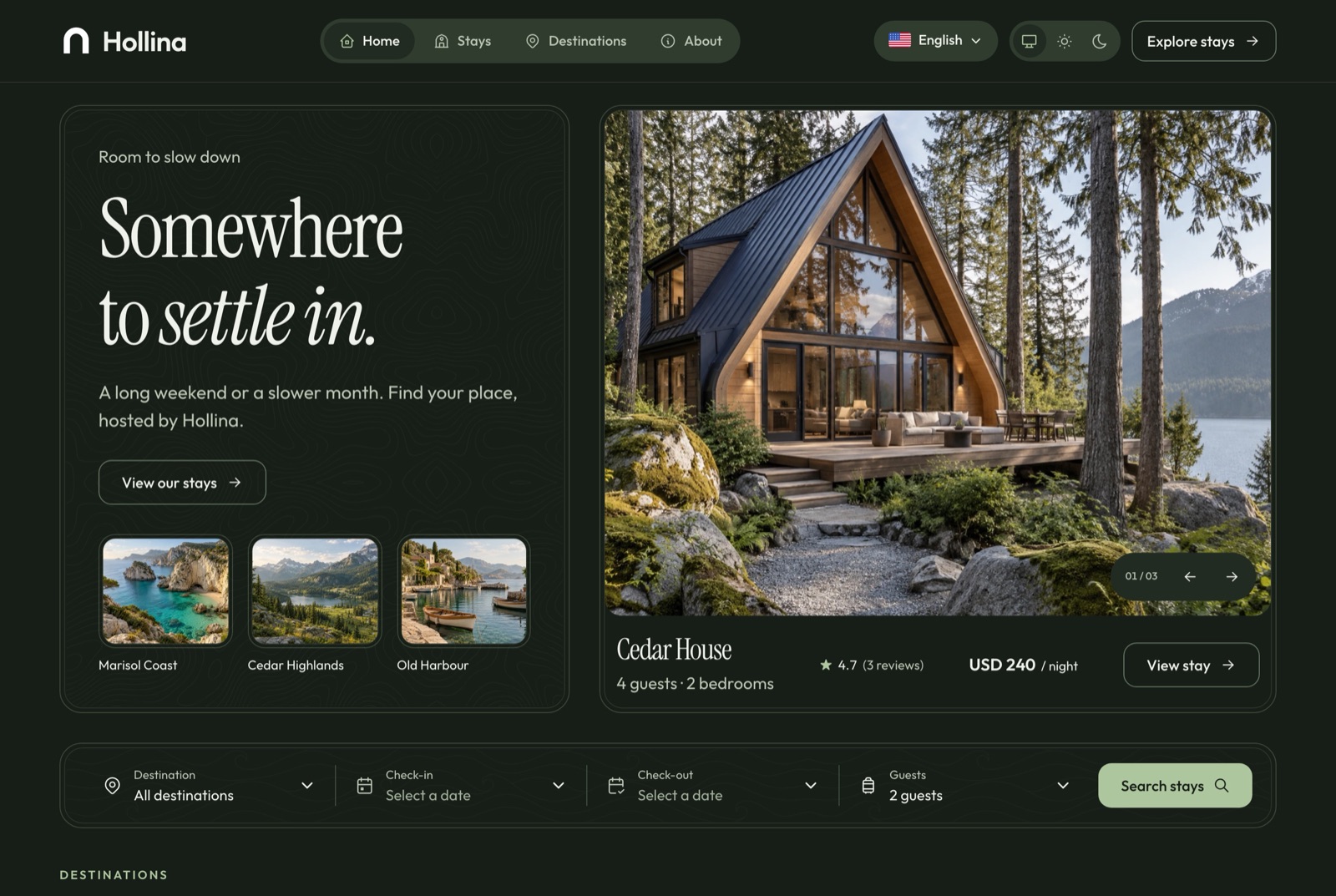
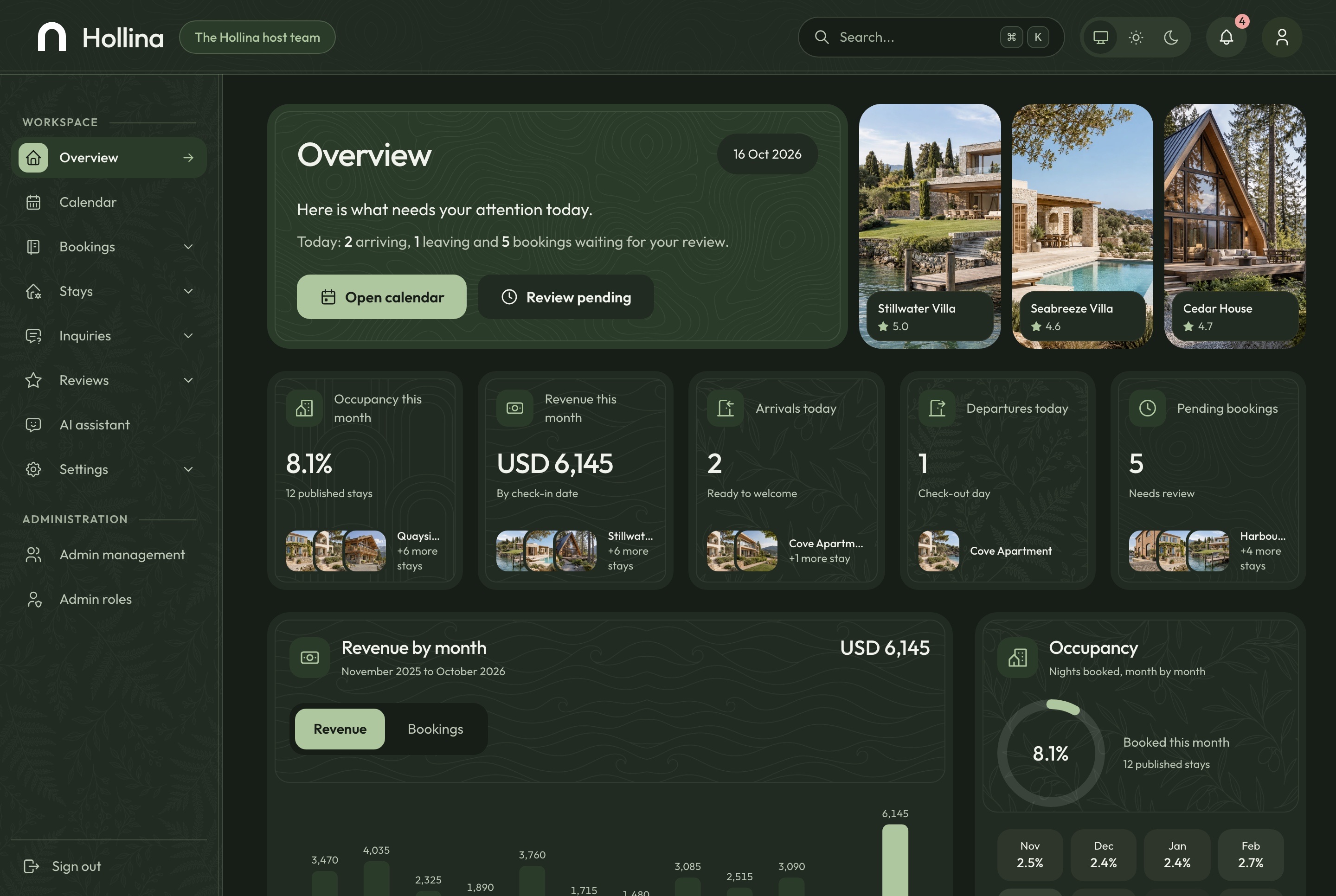
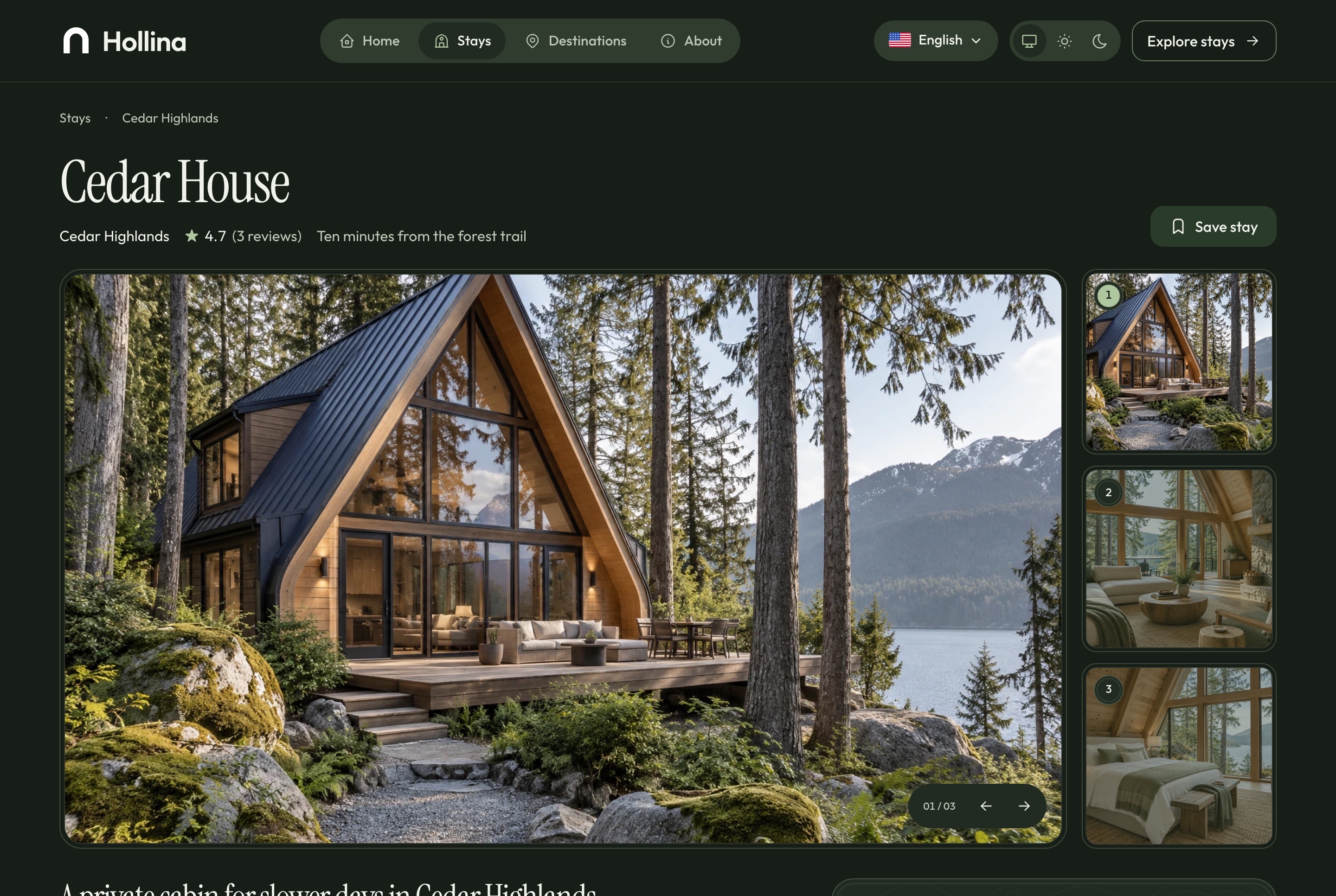
Ready code: Hollina lets guests filter stays by date and guest count, see a live quote on a two-month availability calendar, and pay through Stripe's hosted Checkout, PayPal or on arrival; unpaid dates are held for 30 minutes, and webhooks are signed. The host dashboard shows occupancy, revenue, arrivals and departures, a month calendar with blocked dates, a stay editor in English and Arabic, and an AI assistant.
Still to build: there is no sign-up page, and the API sends no email. Pricing comes down to one nightly rate, one cleaning fee and a minimum stay; seasonal rates, discount codes and calendar sync with listing sites are missing, and a host who also lists on marketplaces needs that sync to avoid double bookings. Our vacation rental booking guide covers the full setup.
Price: Full Stack $149; Stays Website $39, Booking Dashboard $49, Backend API $99. Open the demo.
Food ordering SaaS ideas
2. Commission-free ordering for restaurants and cloud kitchens: Food Studio
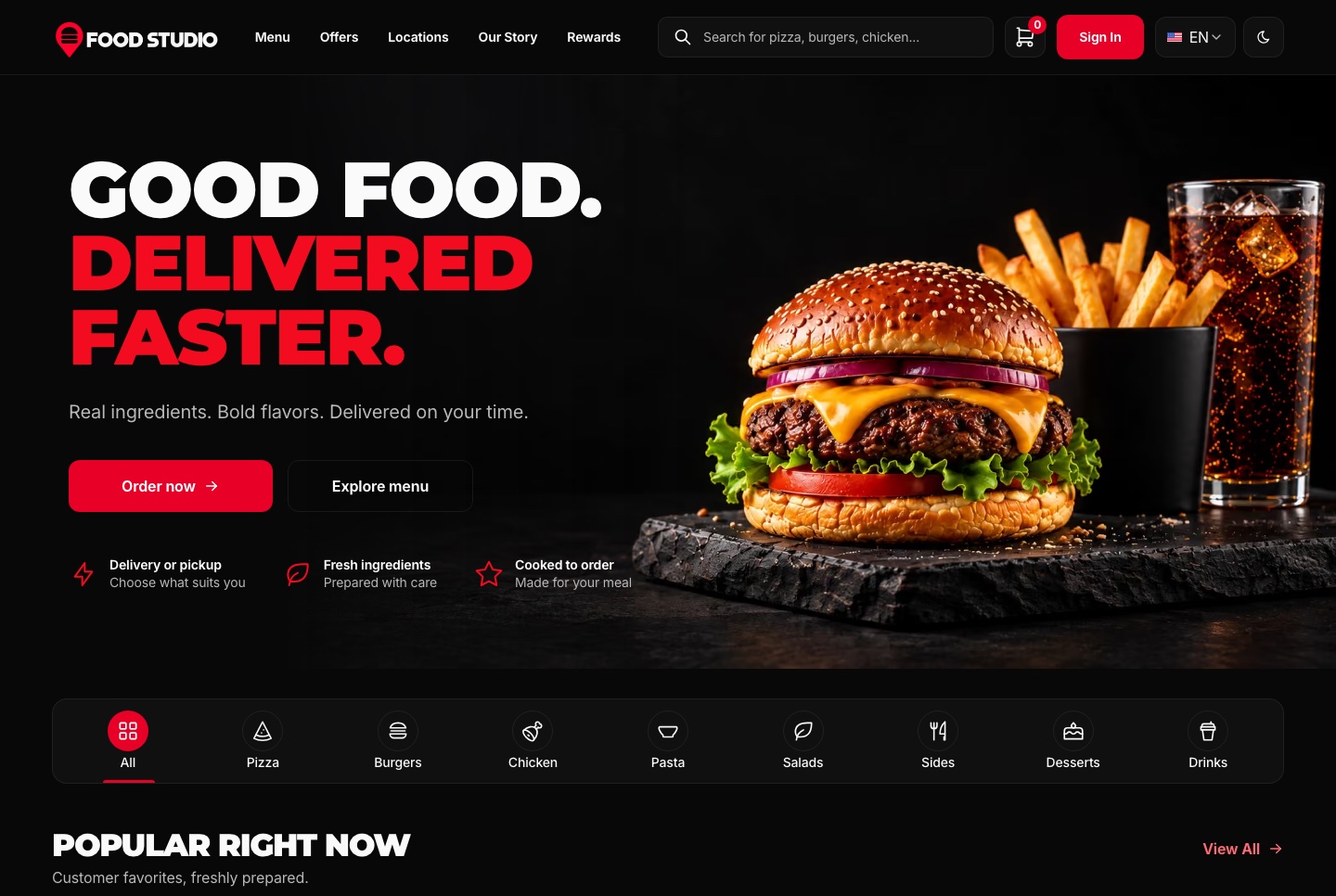
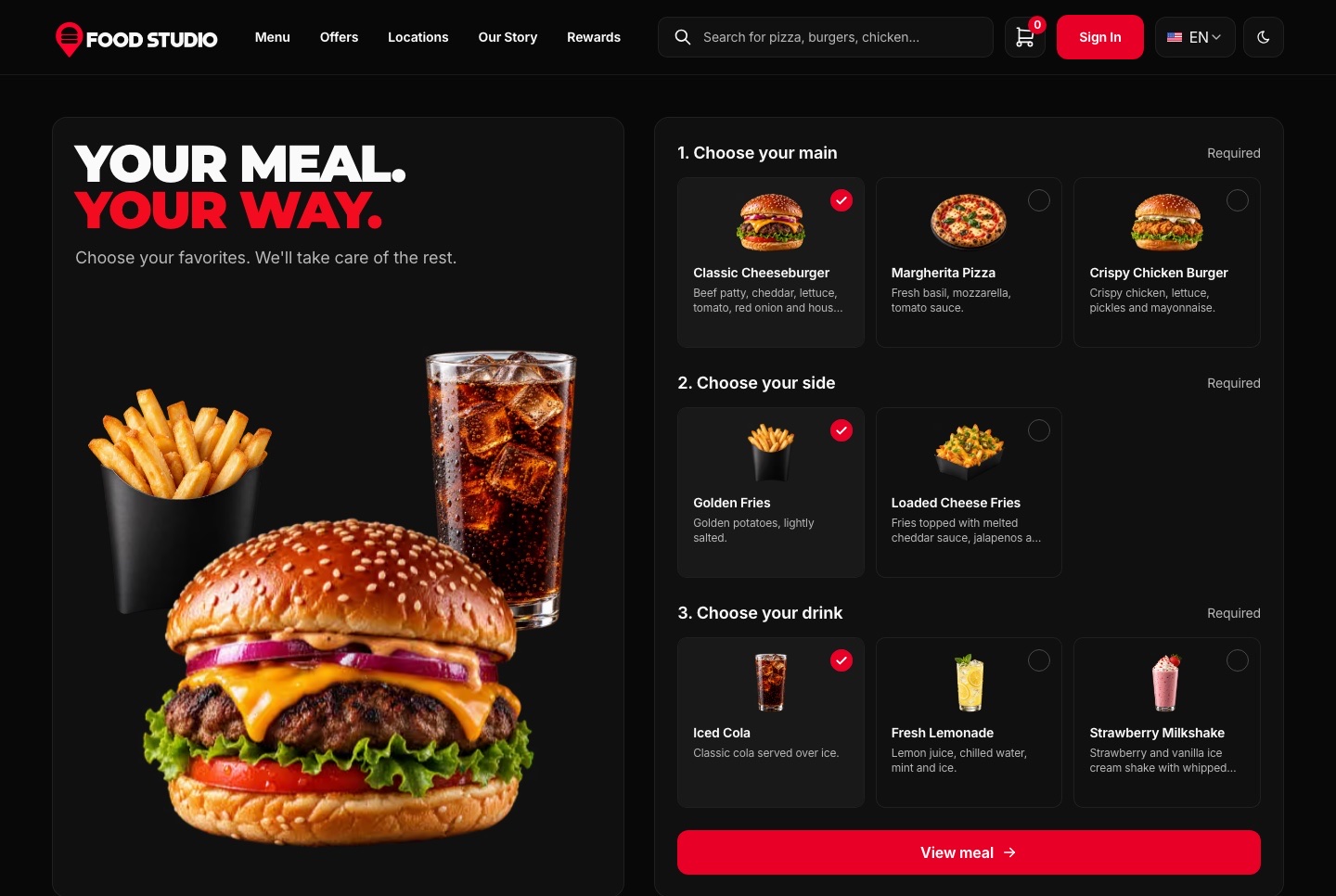
Who pays and why: independent restaurants, burger and pizza brands, and cloud kitchens. Uber Eats' US merchant pricing lists marketplace fees of 20%, 25% or 30% on delivery orders by plan, and 7% on pickup with validated in-store pricing (checked November 2026). An own ordering site takes orders from existing customers without that fee.
How it can charge: a flat monthly fee per restaurant, an extra fee per kitchen, and a setup fee for the menu.
First version: a menu with photos and allergens, a cart, delivery or pickup, online payment, order tracking and a kitchen screen.
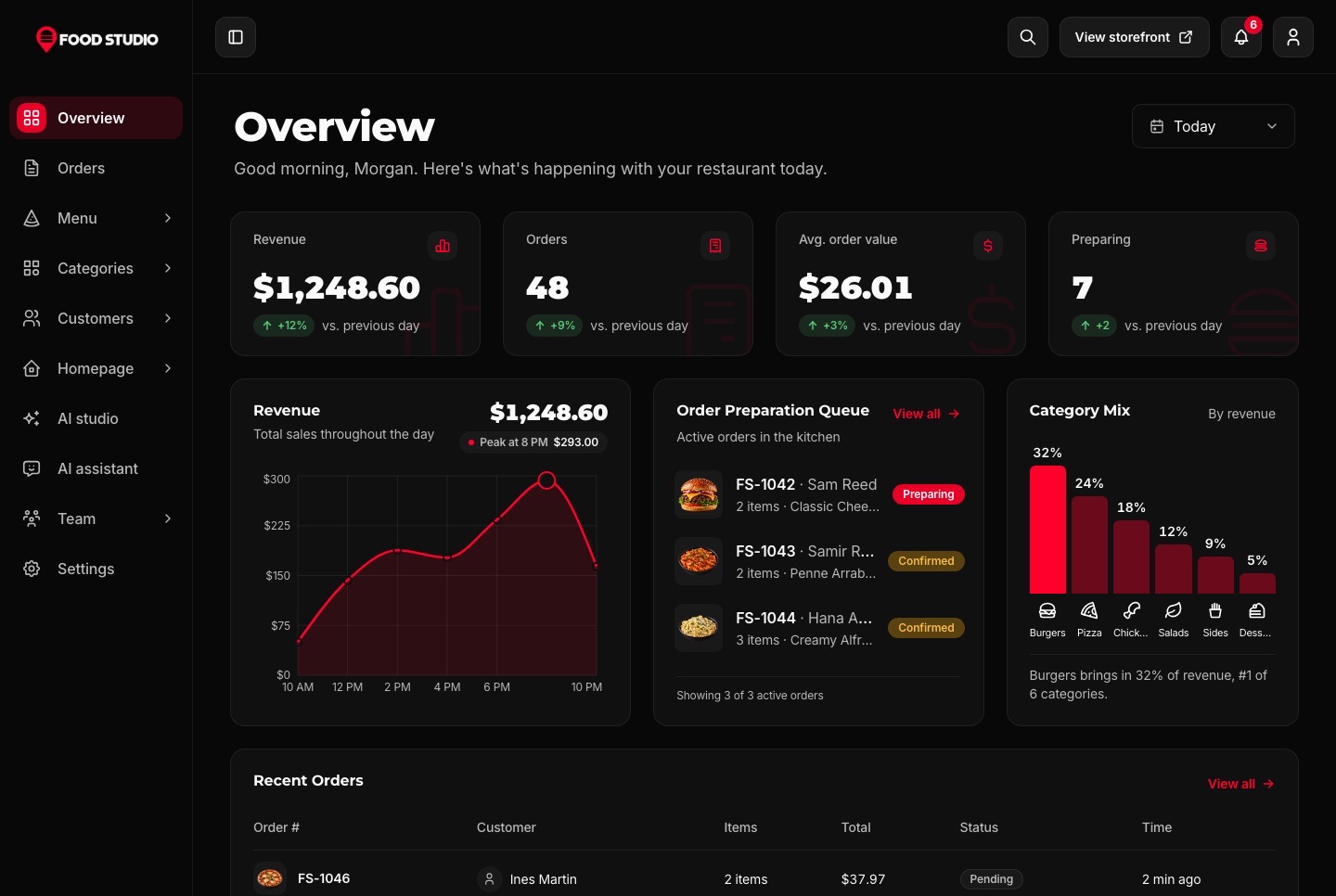
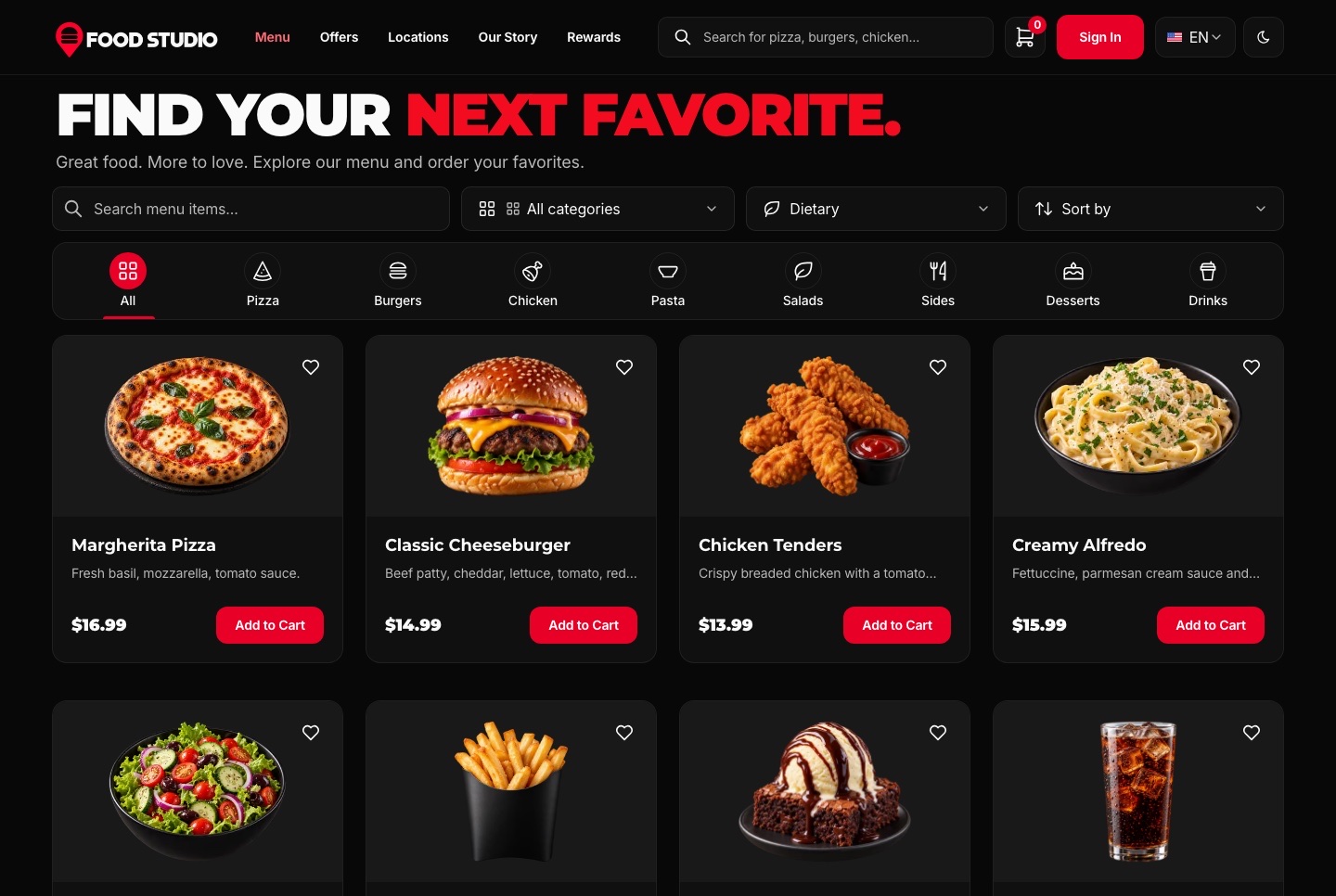
Ready code: Food Studio has menu filters, allergens, combos, and delivery checked against each kitchen's postcodes, hours and minimum order. Payment runs on Stripe's hosted Checkout or PayPal with signed webhooks. The staff dashboard covers orders, menu, customers, the home page, the team and settings; kitchen accounts see only their kitchen's orders, and an AI studio restyles dish photos.
Still to build: there are no order confirmation emails, no orders for a later time, no tips, no tax lines and no cash on delivery. Serving many unrelated restaurants takes a copy for each one, or tenant separation. The restaurant online ordering guide walks through the full setup.
Price: Full Stack $149; Ordering Website $39, Staff Dashboard $49, Backend API $99. Open the demo.
Event and ticketing SaaS ideas
3. Ticketing for event organisers and venues: Ticketory
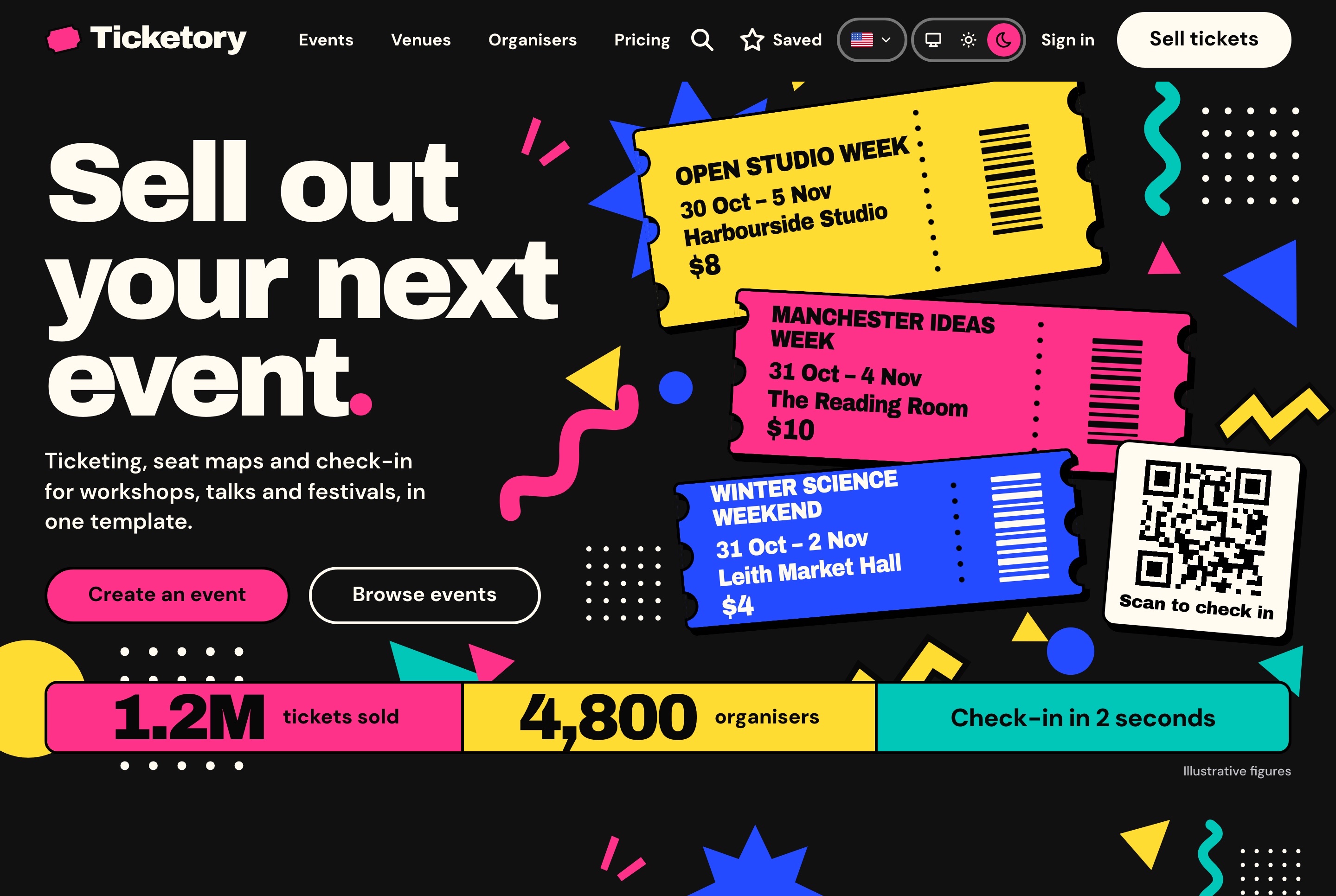
Who pays and why: organisers and venues. Eventbrite's US pricing lists 3.7% plus $1.79 per paid ticket, and 2.9% payment processing per order (checked November 2026). A simpler fee, local currency and Arabic pages give organisers a reason to move.
How it can charge: a booking fee per paid ticket, paid by the attendee, with free events free, or a monthly plan for venues. Ticketory ships an example pricing page with three plans and a worked buyer fee.
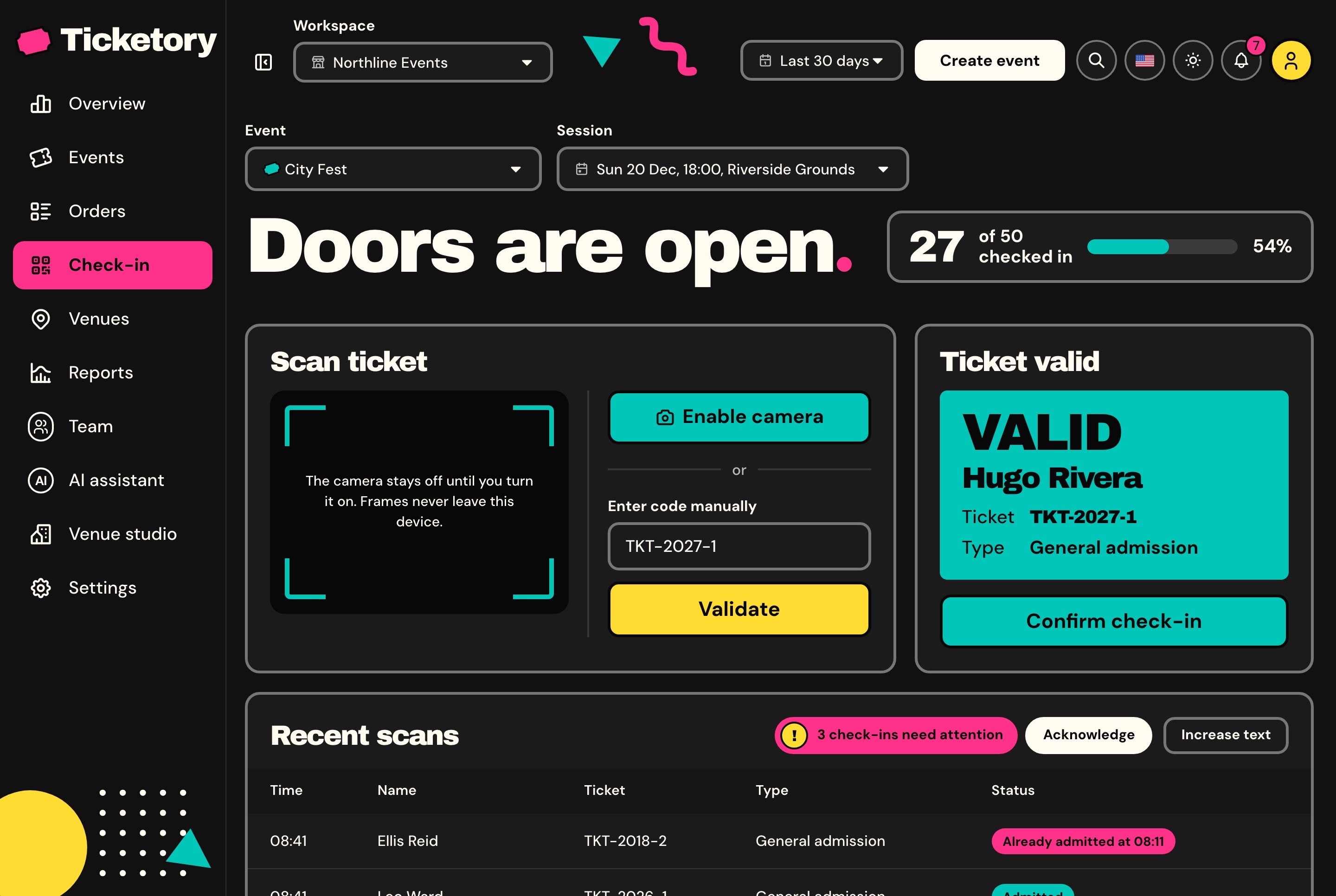
First version: event pages, seats or general admission, checkout, QR tickets, door check-in, refunds and a sales report.
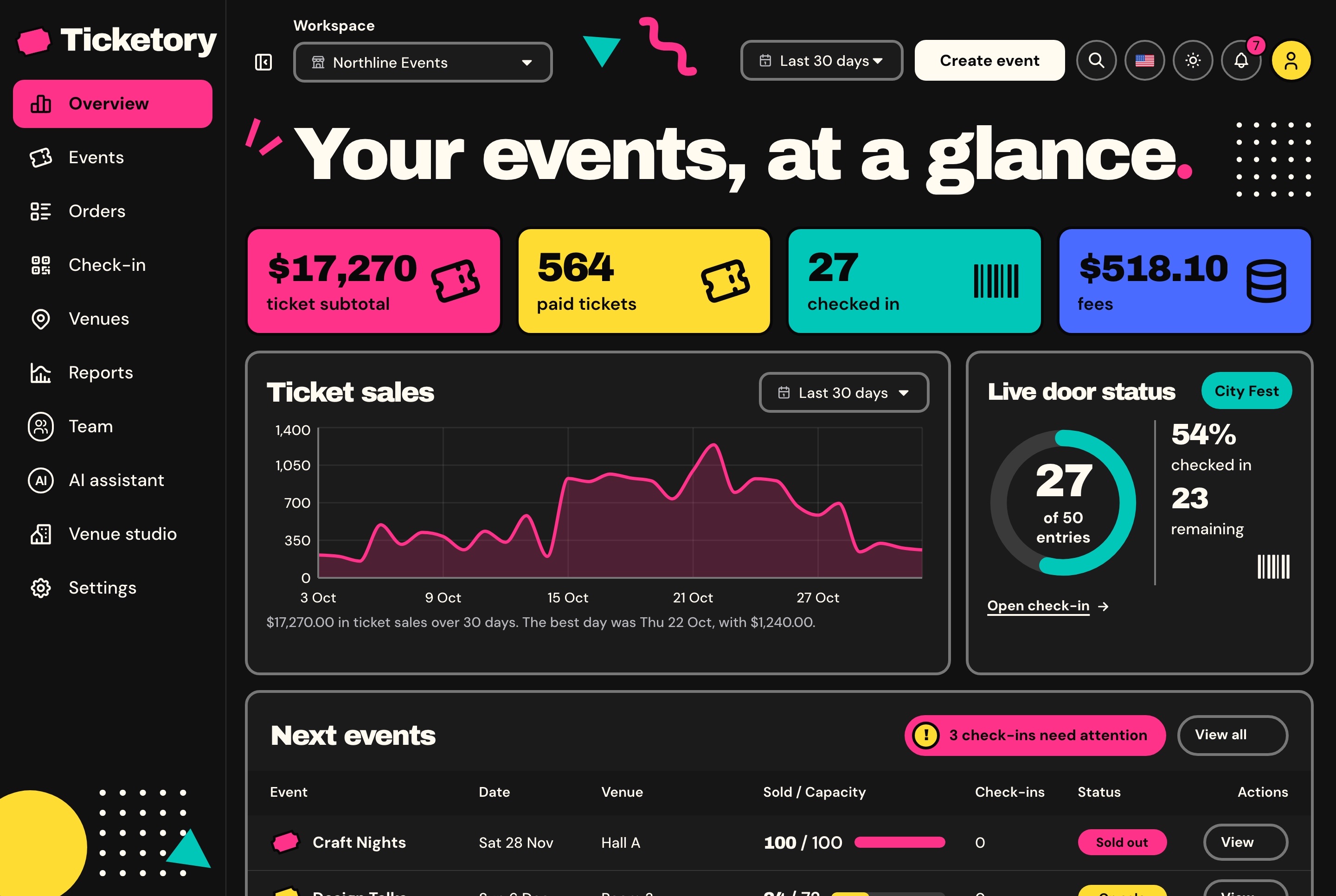
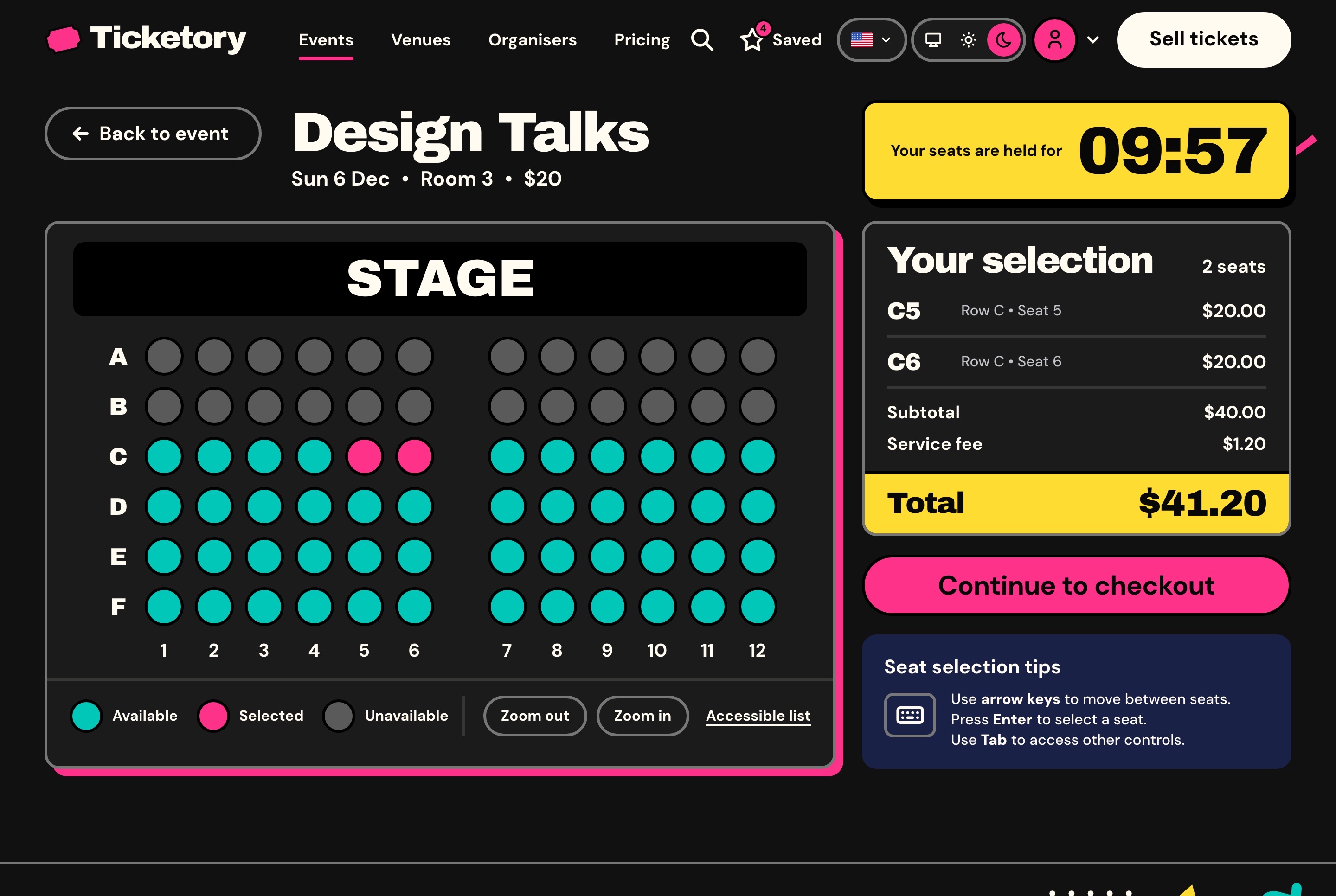
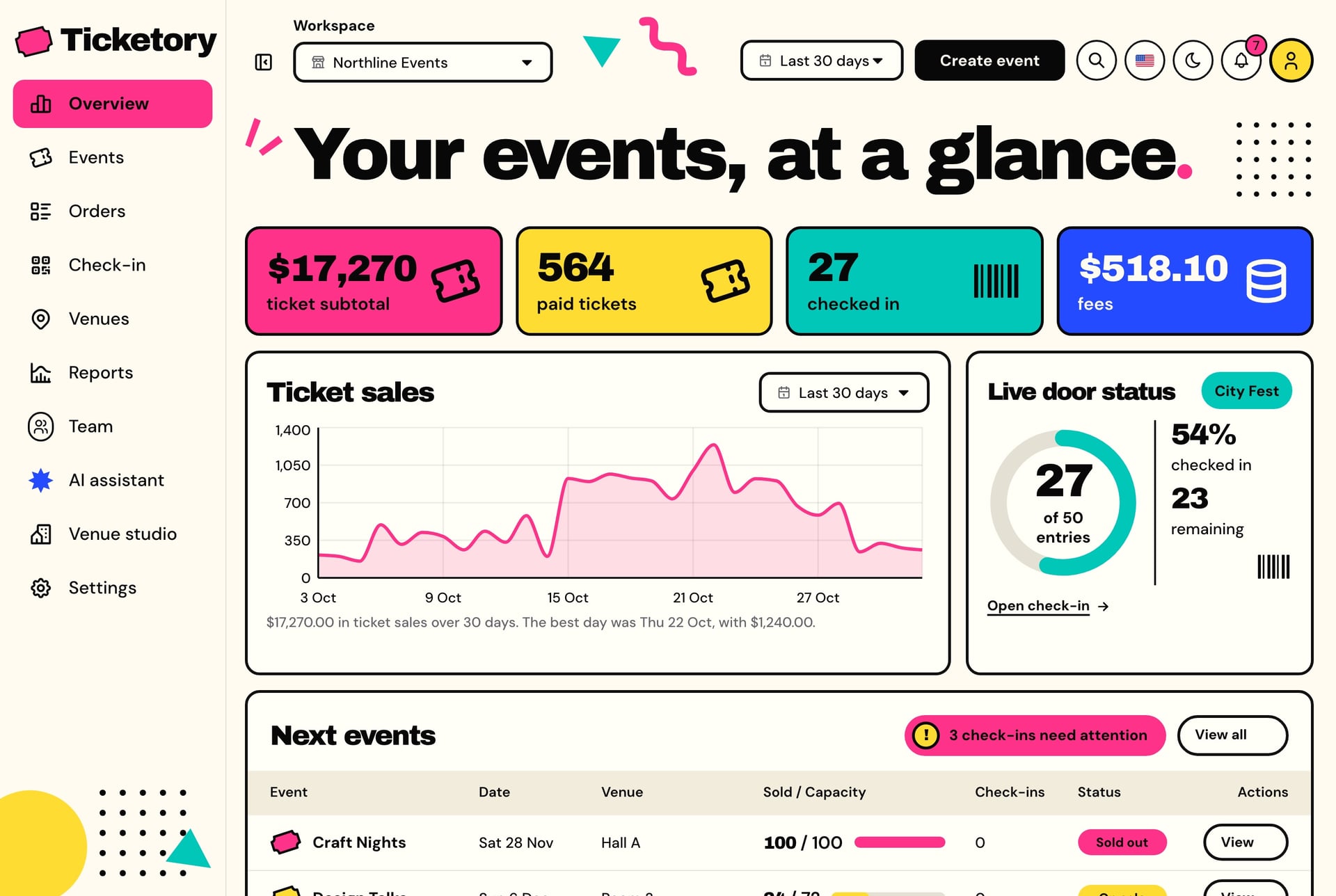
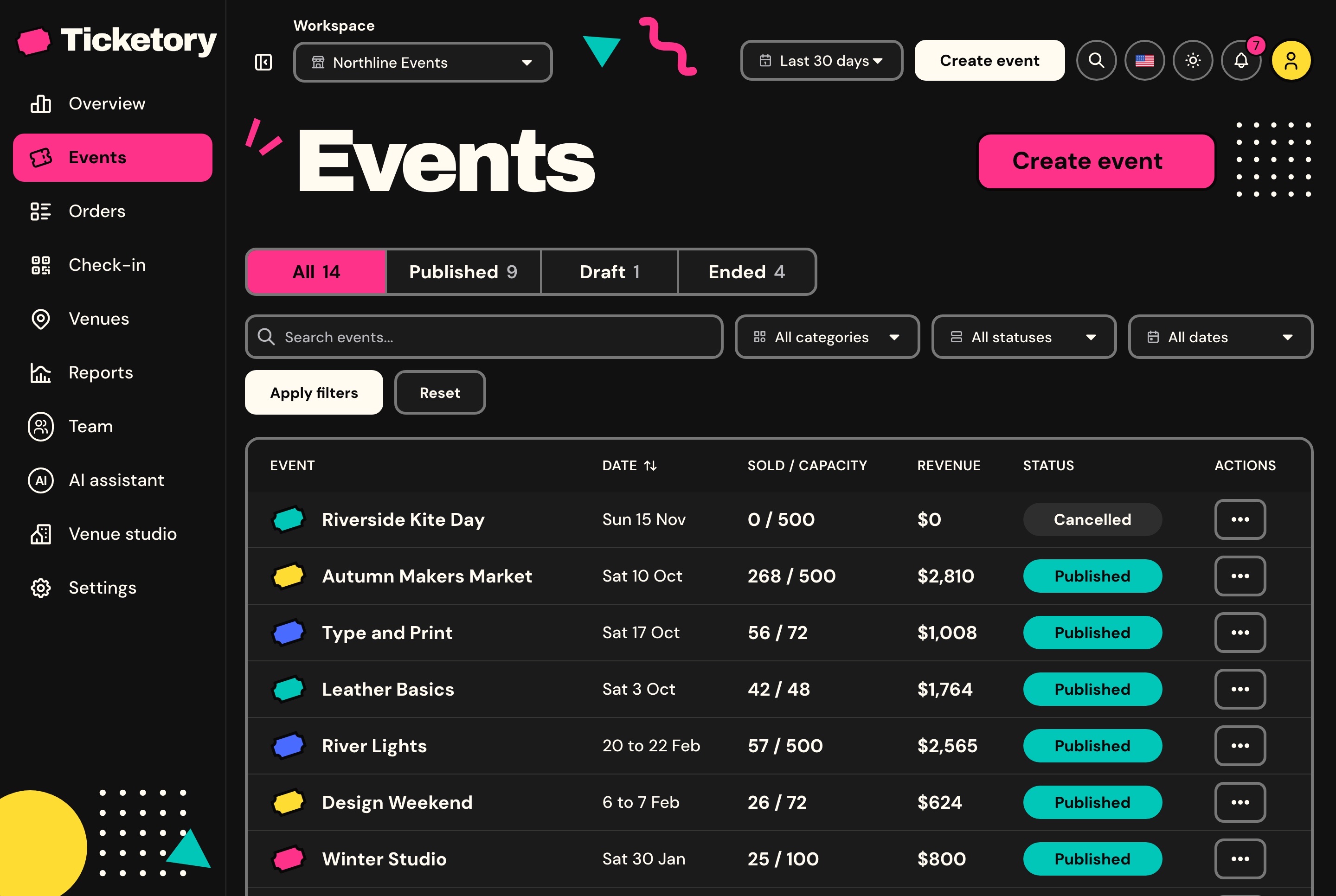
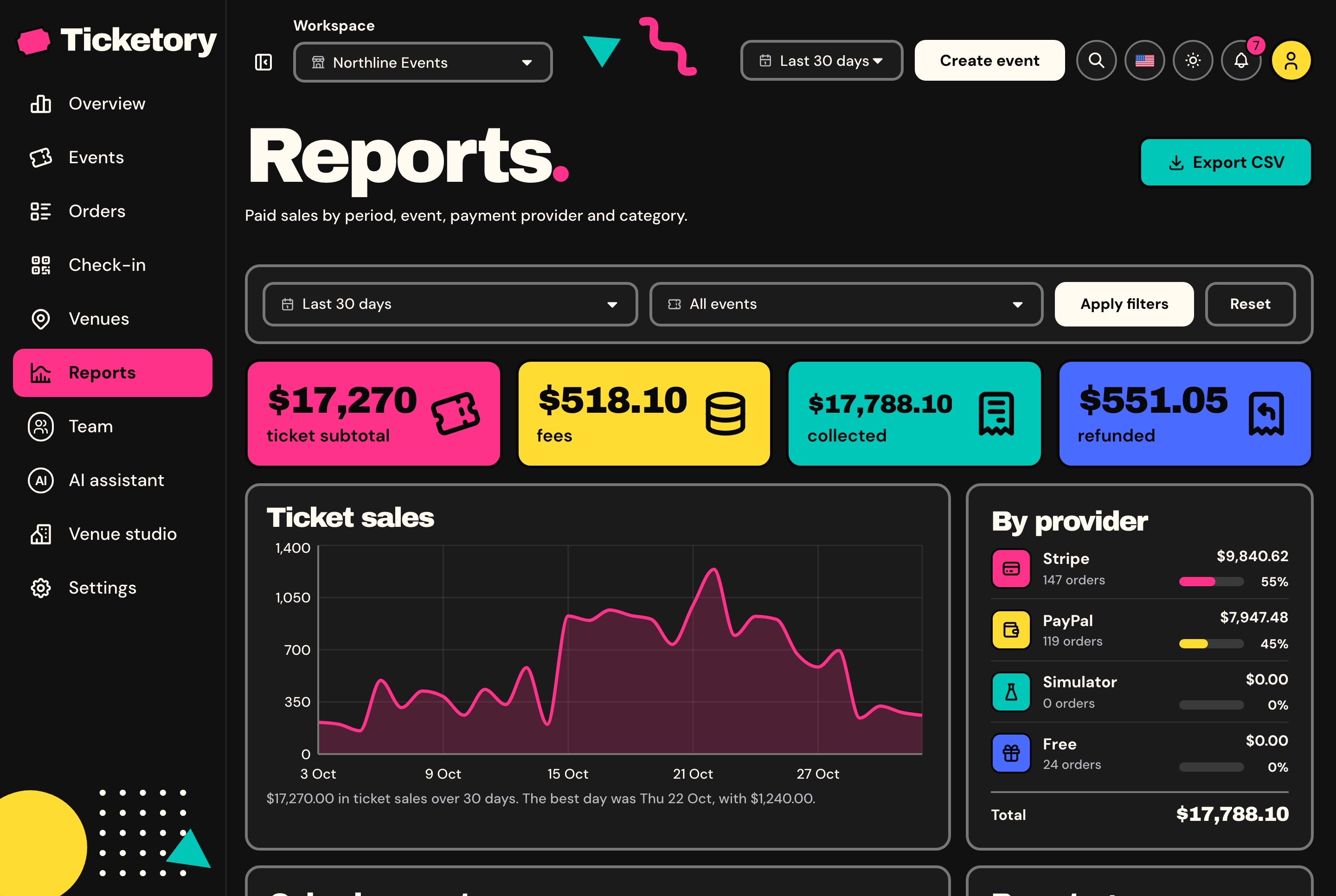
Ready code: Ticketory has event search, seat maps that update live and hold a seat for ten minutes, checkout on Stripe's or PayPal's own page, free tickets that skip payment, and QR passes, PDF tickets and calendar files. The organiser dashboard covers events, venues, a seat layout editor, orders, refunds, reports and check-in by camera or typed code. Each organiser is a workspace with its own currency (five supported), a booking fee from 0 to 20 percent, a time zone and a team with roles.
Still to build: the money goes to your own Stripe and PayPal accounts with no payout split between organisers, so a platform that pays organisers out needs payouts built. Sign-up for new organisers is not on the product page. Tax setup, news emails, offline check-in and Arabic text in PDF tickets are not included. Compare it in Event Ticketing Website Templates.
Price: Full Stack $149; Ticketing Website $39, Organiser Dashboard $49, Backend API $99. Not in the bundle. Open the demo.
4. Tickets and check-in for workshops, classes and meetups: Ticketory
Who pays and why: people who run small events again and again: cooking and craft workshops, language classes, talks and meetups. They need a page per date, a count of places, payment and a door list, often for free events too.
How it can charge: free events free, a small fee per paid ticket, or a flat monthly plan for a busy studio.
First version: a page per session, general admission, free and paid tickets, and a check-in list.
Ready code: Ticketory lists workshop and class organisers among its uses. General admission holds a number of places instead of seats, an event carries up to ten ticket types, and free tickets skip payment but still get passes and QR codes. The door checks tickets on a phone.
Still to build: class packs and memberships are not on the product page. For weekly classes, check how the demo's event editor sets dates before you promise a series.
Price: from $39 for the ticketing website to $149 for the Full Stack.
Real estate SaaS ideas
5. Listings and a lead desk for small agencies: Velra
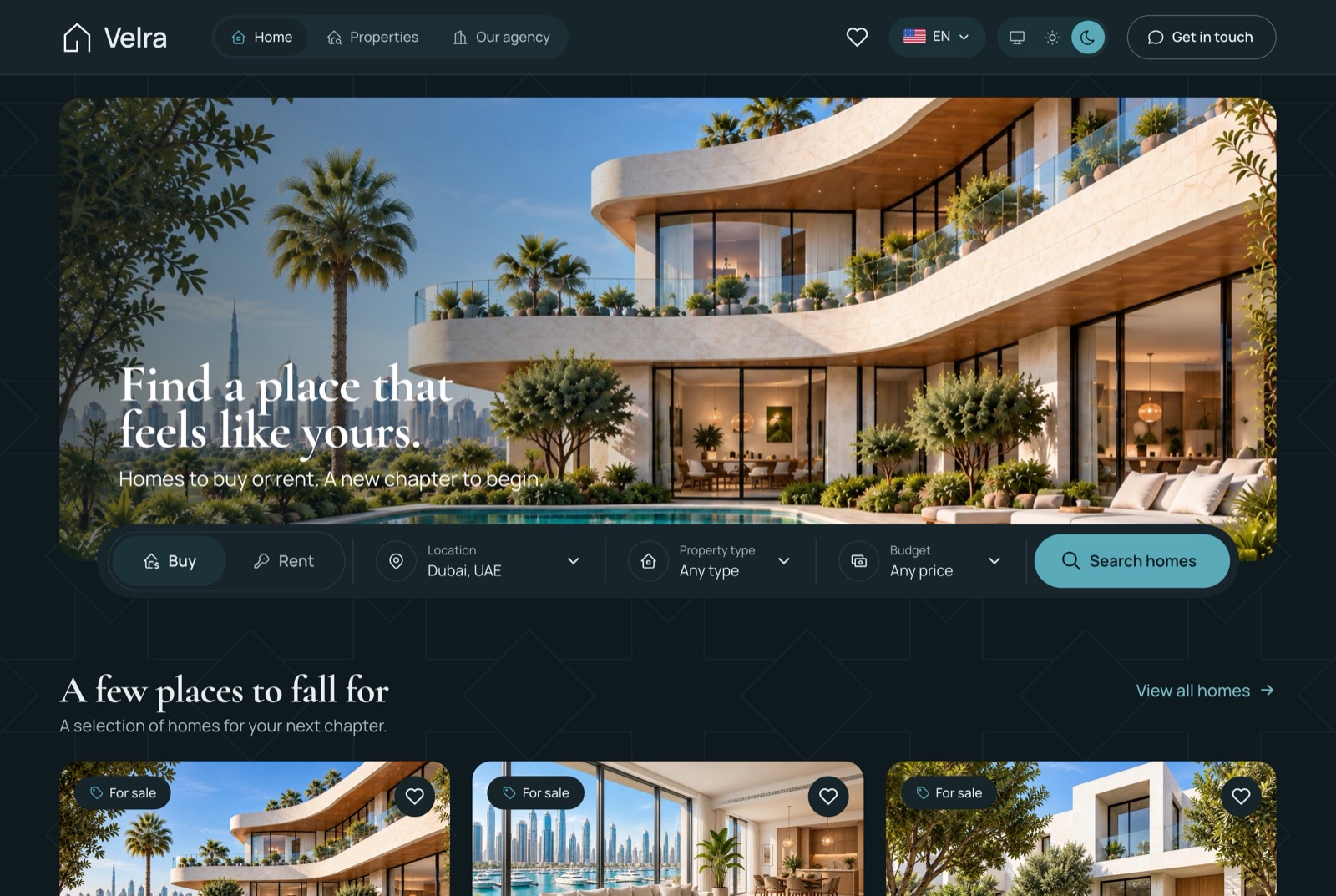
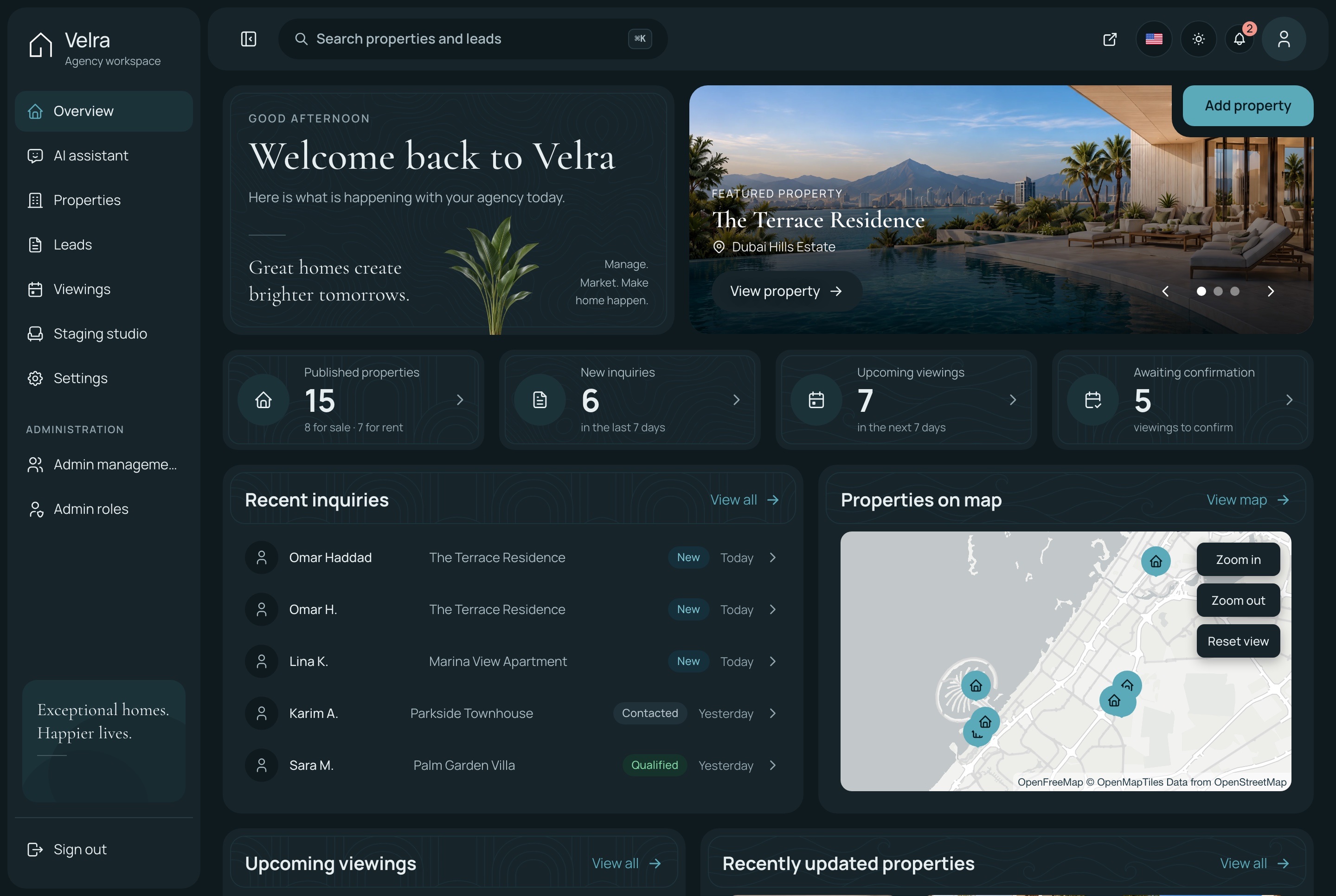
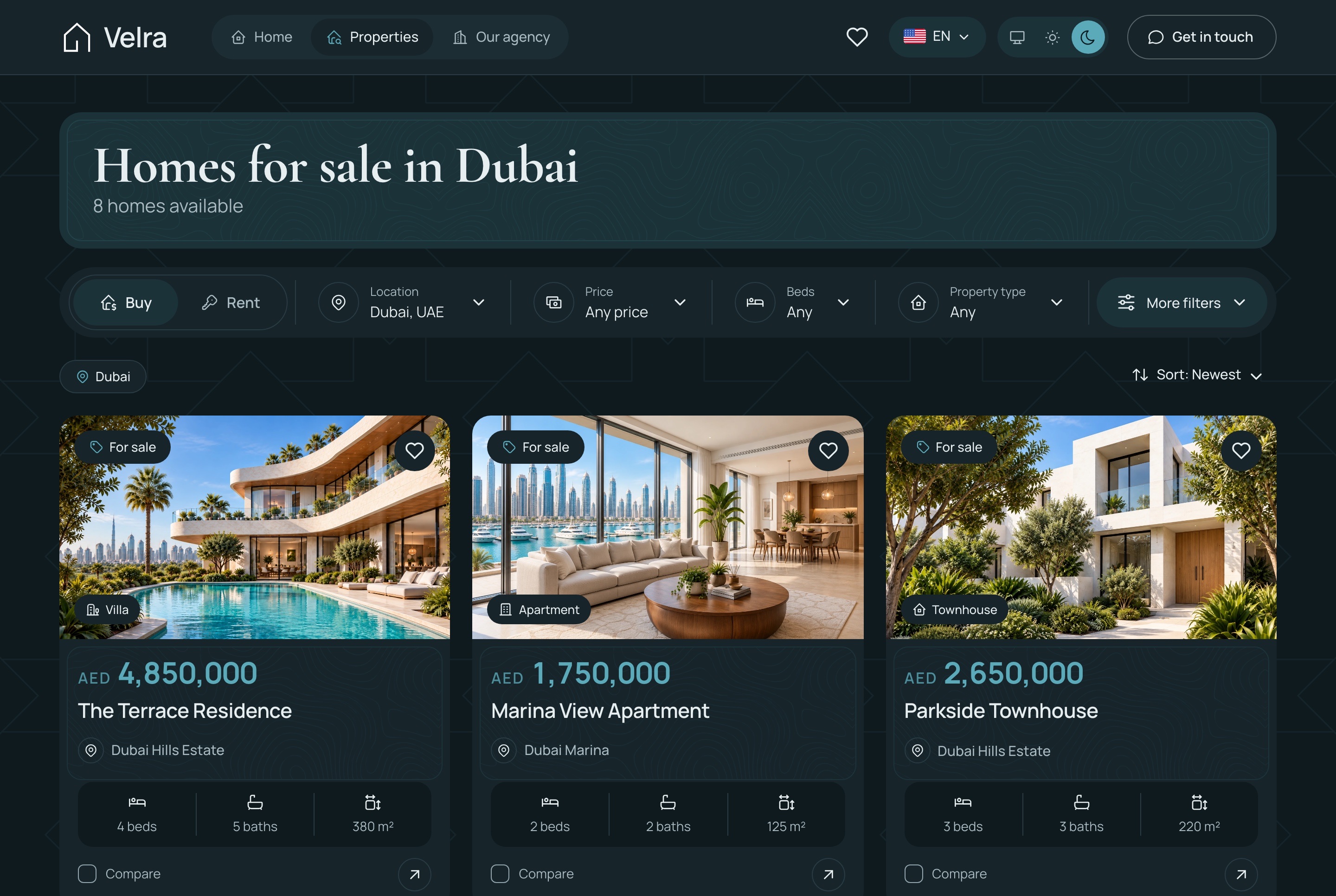
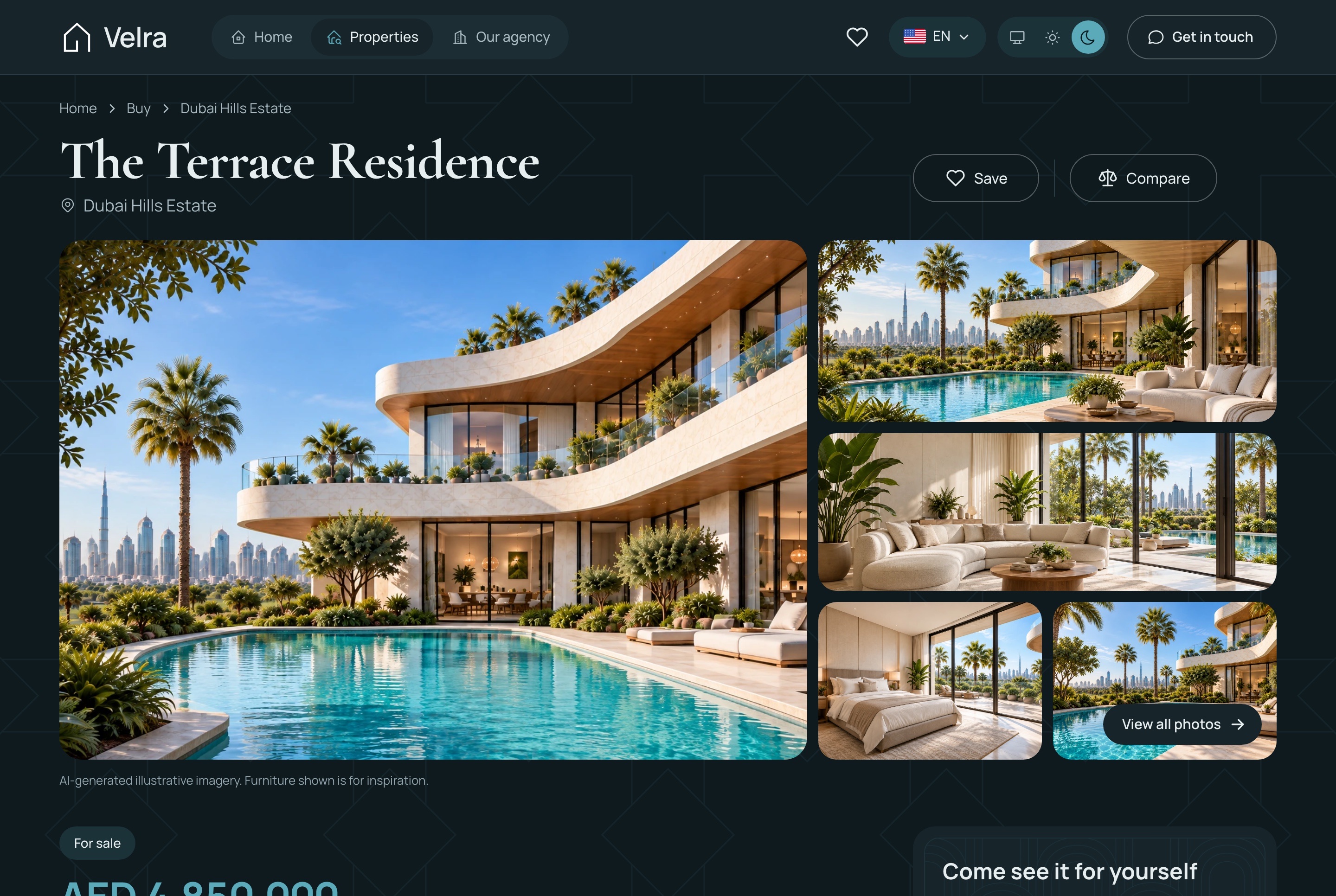
Who pays and why: small agencies and brokers who want their own listings site and one inbox for inquiries and viewings.
How it can charge: a monthly fee per agency, by agent seats or active listings, plus setup.
First version: listings with filters, property pages, viewing requests, a lead inbox and a property editor.
Ready code: Velra has homes for sale and rent with filters kept in the address, saved homes, a three-home comparison and viewing requests that wait for the agency to confirm. The agency dashboard tracks inquiries from New to Contacted, Qualified or Closed, viewings and properties, with an editor in English and Arabic, a map pin, AI virtual staging with approval and an AI assistant.
Still to build: it sends no email and takes no payments. It is set to UAE dirhams and Dubai time, and another market is custom work. There is no sign-up page, and the product page does not mention importing listings from portals. For the full setup, read the real estate agency website guide.
Price: Full Stack $149; Public Website $39, Agency Dashboard $49, Backend API $99. Open the demo.
Coaching and education SaaS ideas
6. Online coaching for personal trainers: Kinora
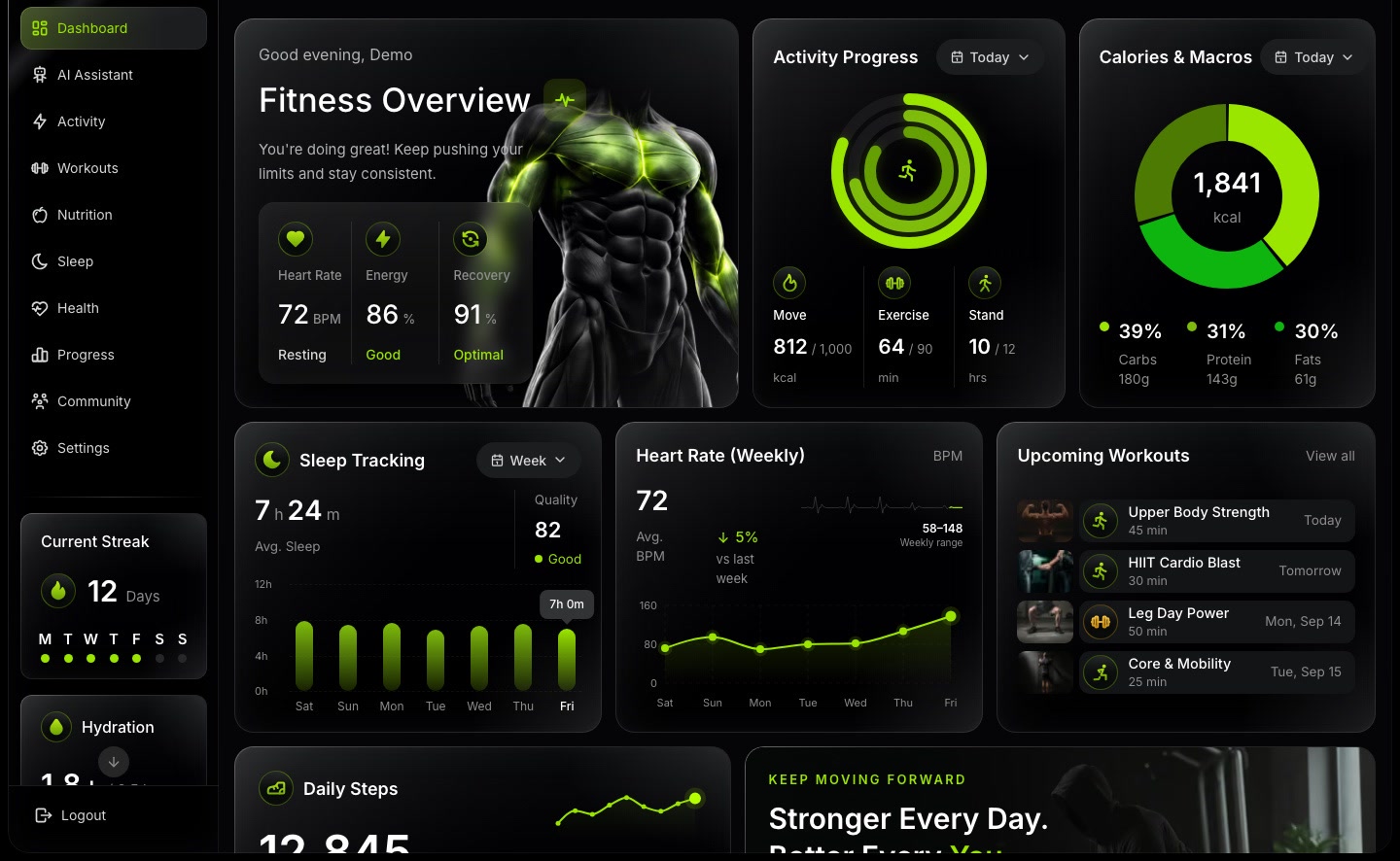
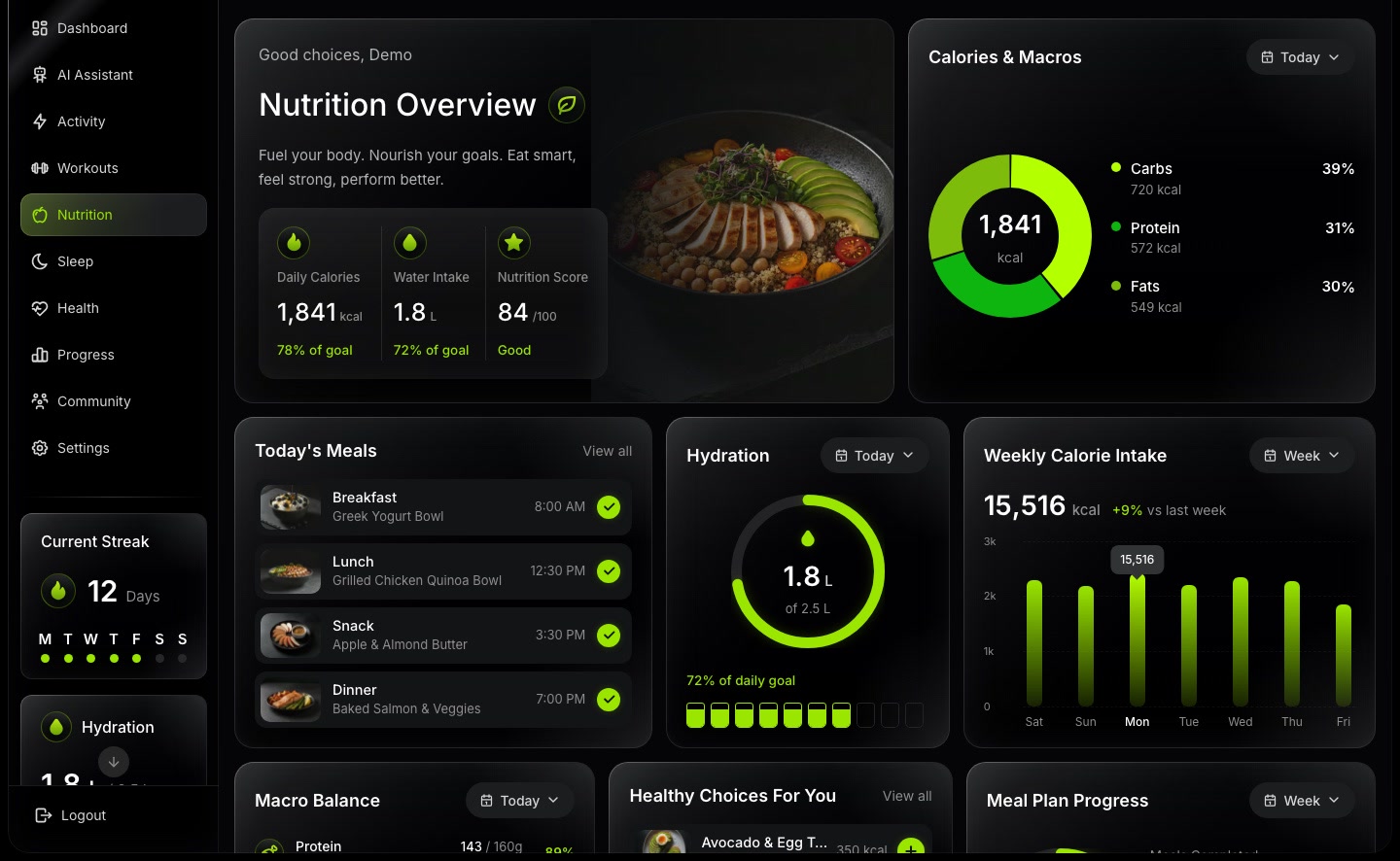
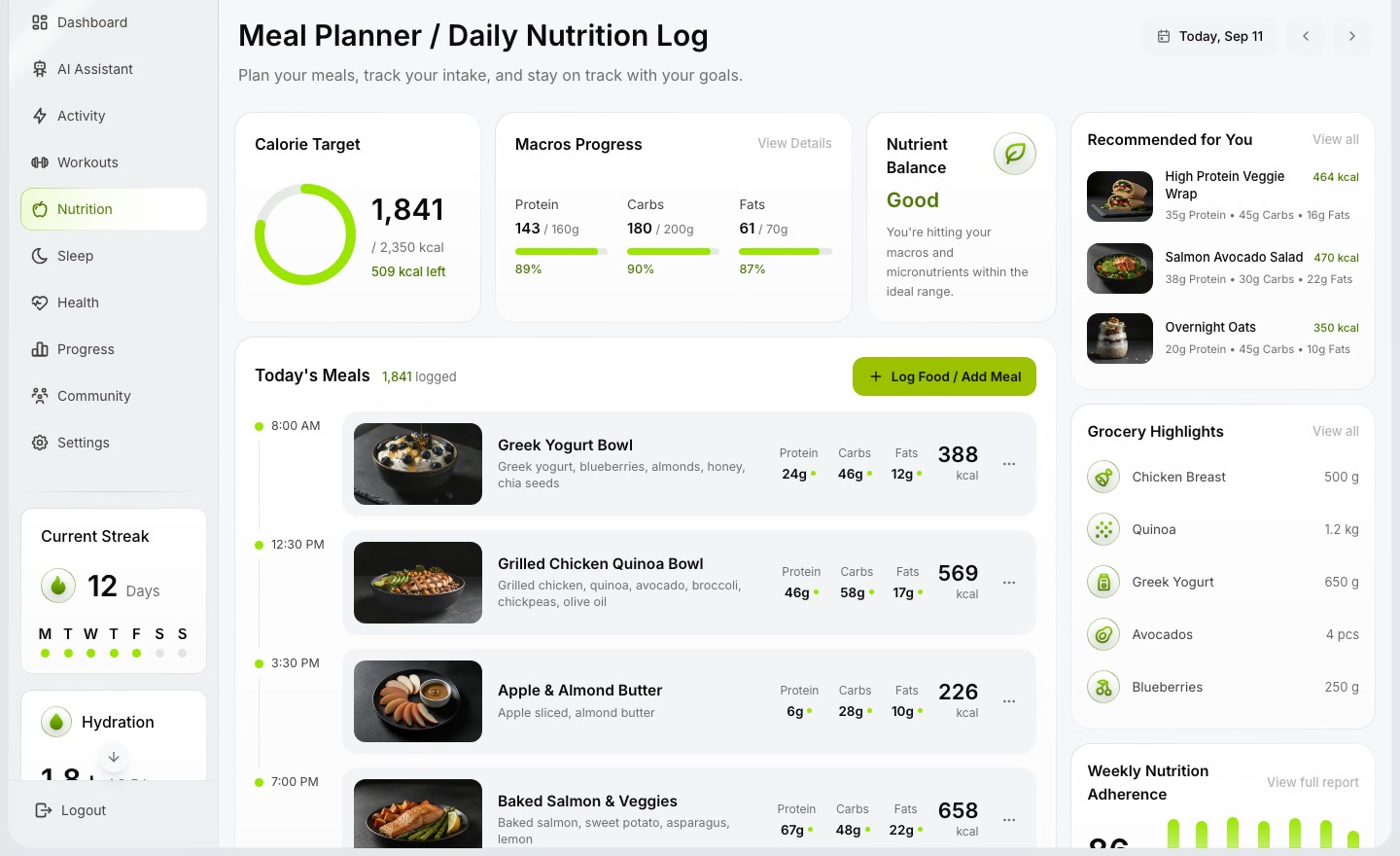
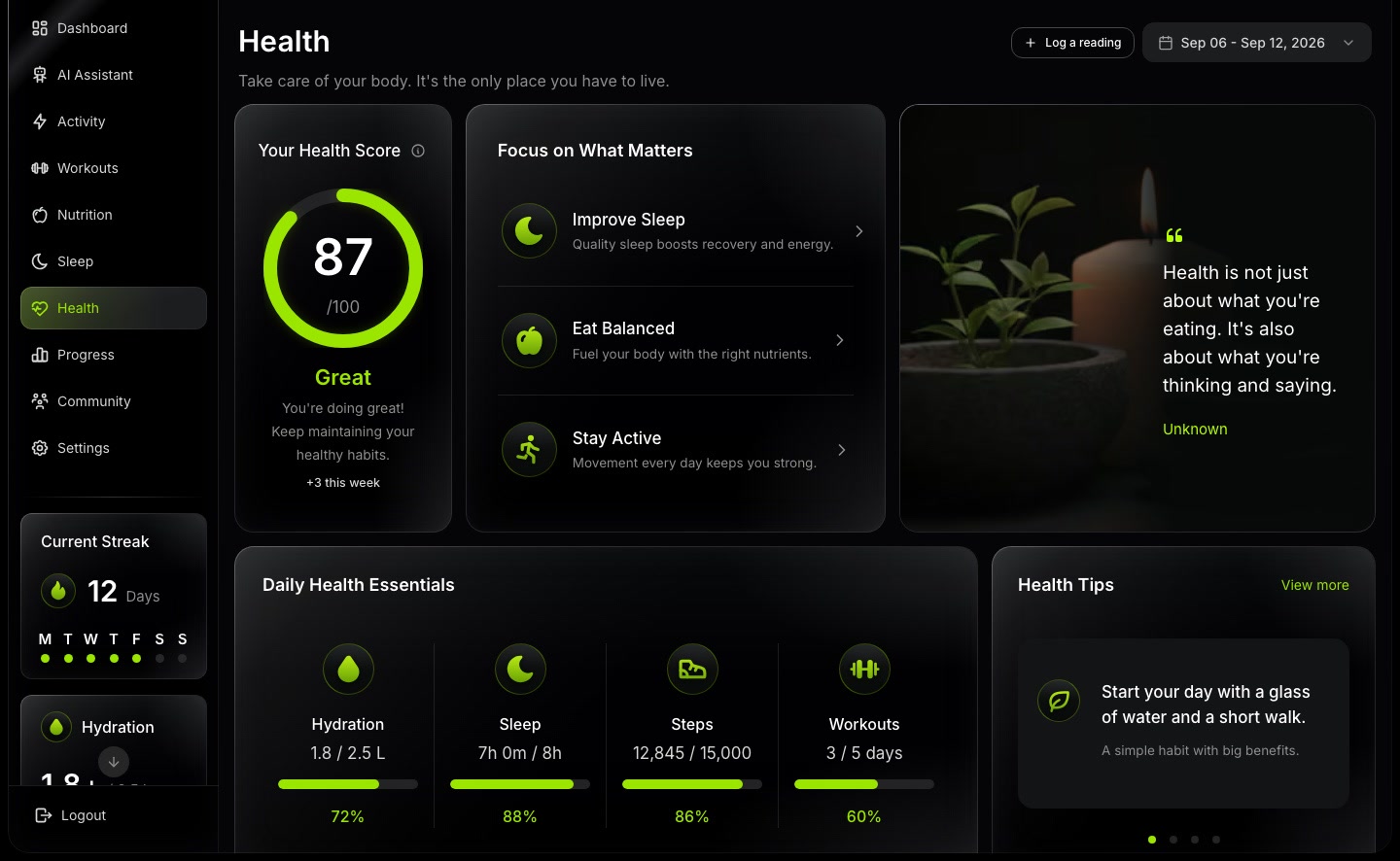
Who pays and why: personal trainers and small studios coaching clients online. Coaching apps already charge them by roster size: Trainerize prices its plans by client seats (checked November 2026).
How it can charge: a monthly fee per coach, tiered by client seats, or per studio.
First version: a roster, assigned workouts, a workout logger, meal plans, weekly check-ins and messages.
Ready code: Kinora has member and coach dashboards over a NestJS API: roster, assigned workouts with compliance, weekly check-ins, a live workout logger, an exercise library, programs, a meal planner with macros, progress tracking and live coach messages. Each coach sees only their own clients, and an AI assistant answers with charts.
Still to build: there is no payment provider (the billing card shows seeded figures), no email and no self-service password reset. A member has one active coach at a time, and there is no public marketing site, so add a landing page. The online fitness coaching app guide has the full setup.
Price: Full Stack $149; Member & Coach Dashboard $69, Backend API $99. Open the coach demo.
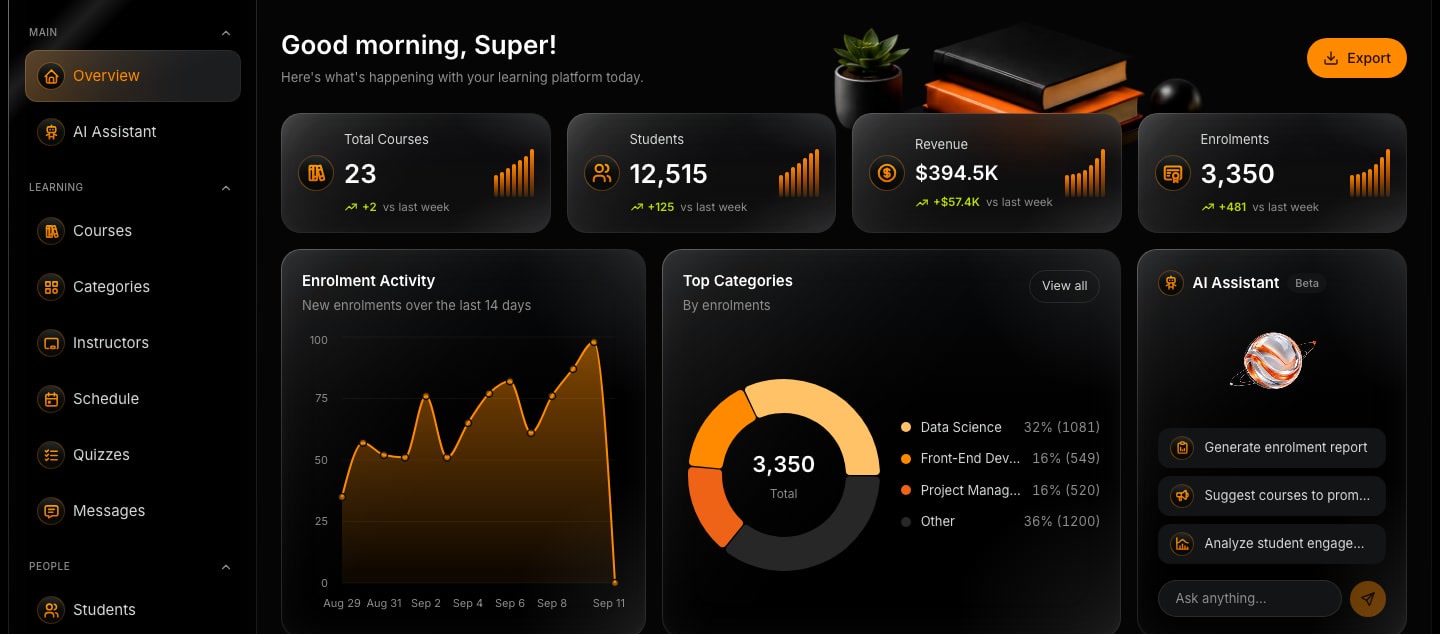
7. A course platform for teachers and small academies: Learnio
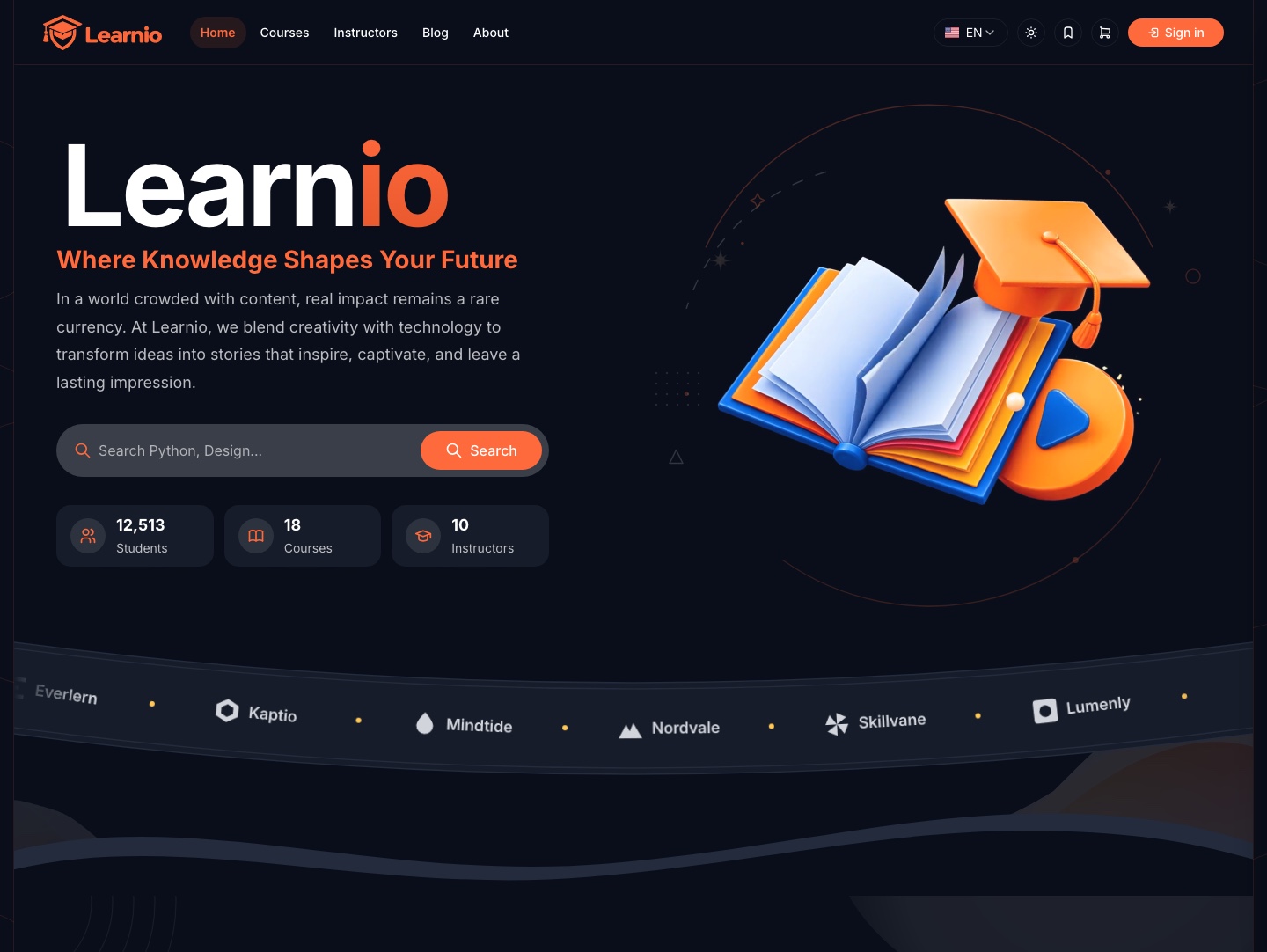
Who pays and why: tutors, bootcamps and academies. Teachable lists Starter at $39 a month with a 7.5% transaction fee, and Builder at $89 a month (checked November 2026). An academy that wants its own brand, payment account and Arabic pages is the buyer for a hosted alternative.
How it can charge: a monthly fee per academy, by instructors or active students, plus setup.
First version: course pages, checkout, lessons, quizzes and certificates.
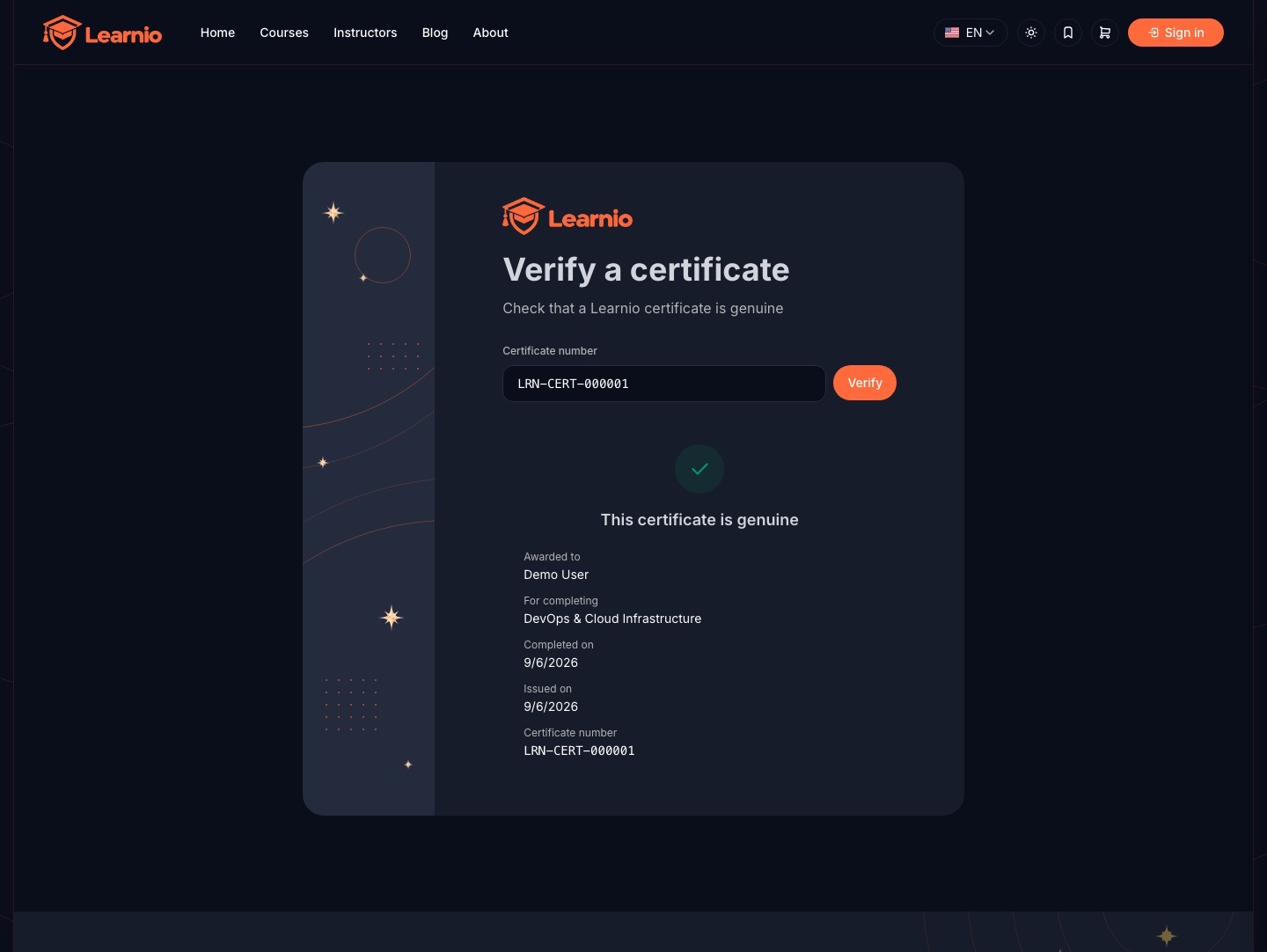
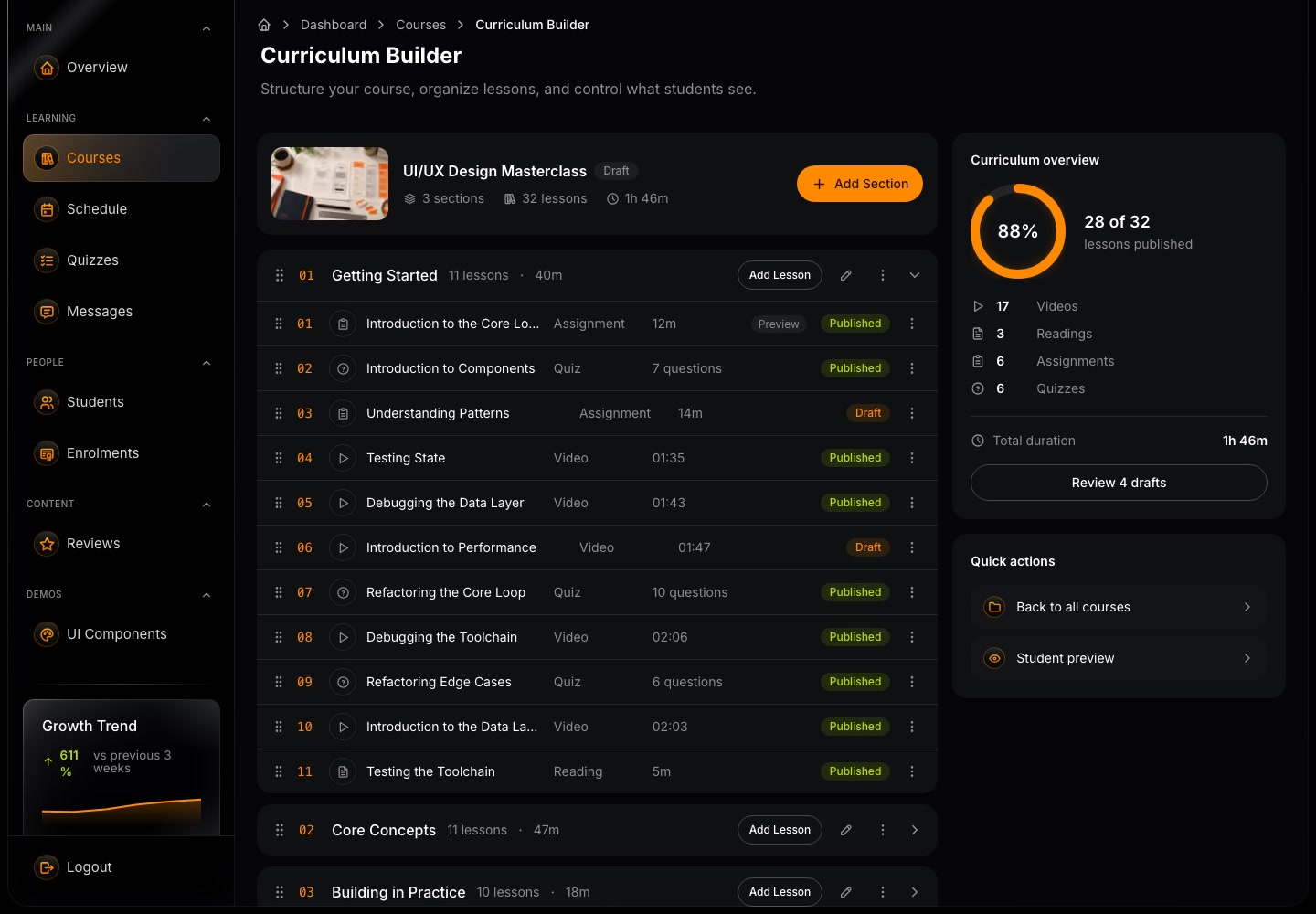
Ready code: Learnio has a catalogue, Stripe Checkout with enrollment once payment settles (PayPal integration code included), and a lesson player with notes and resources. The dashboard has a curriculum builder, server-graded quizzes, assignments, certificates with public verification, messaging and live classes. Emails go through Resend in English and Arabic, instructors see only their own courses, and an AI assistant drafts courses.
Still to build: live classes need a meeting server you host. Checkout sells course by course, so a monthly school membership is billing you add, and a marketplace of many academies needs tenant separation. Setup from start to finish is in the guide to an LMS with live classes.
Price: Full Stack $149; Student Website $39, Admin & Instructor Dashboard $49, Backend API $99. Open the demo.
E-commerce SaaS ideas
8. Done-for-you stores for one niche of fashion brands: the e-commerce template
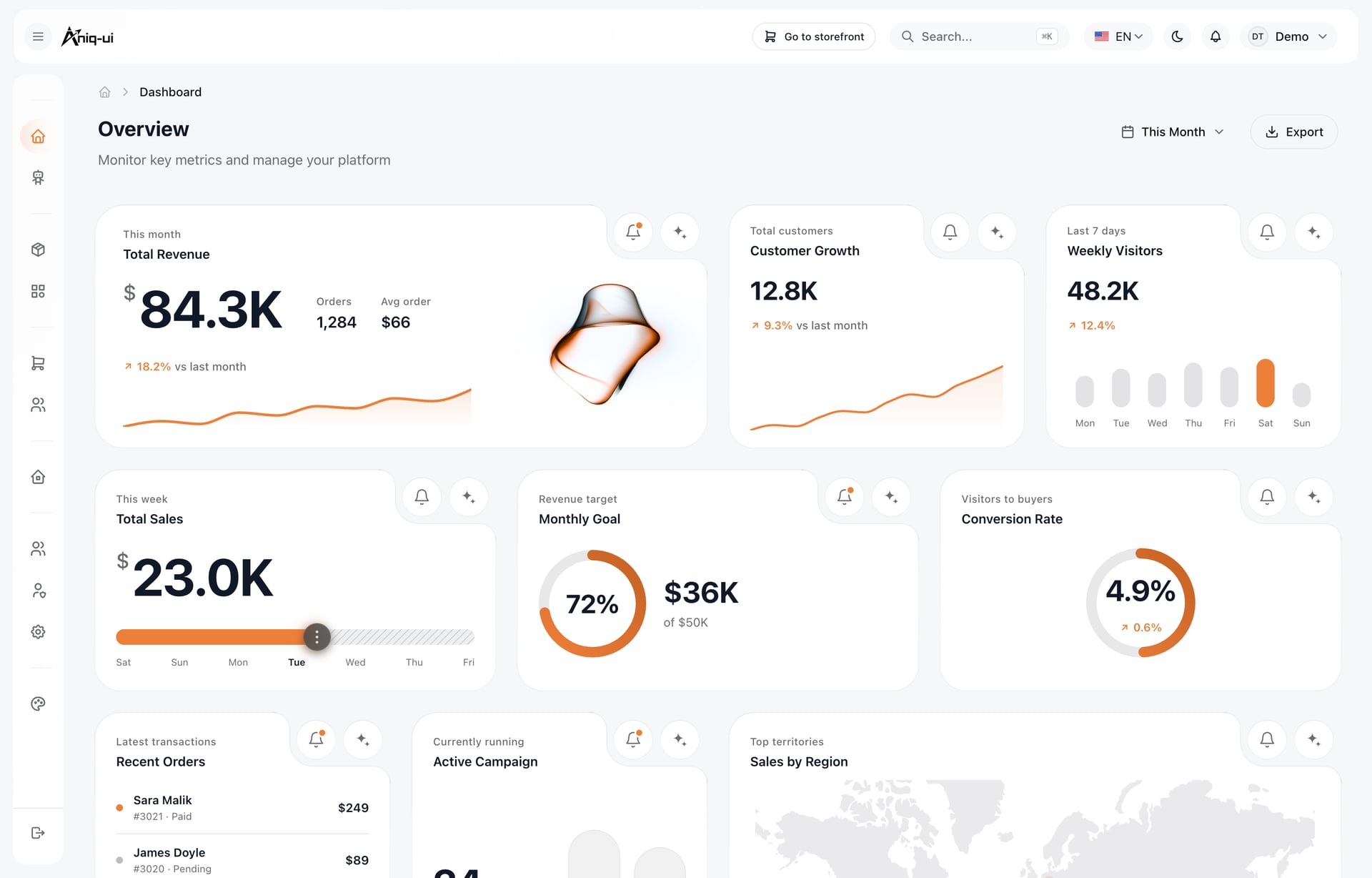
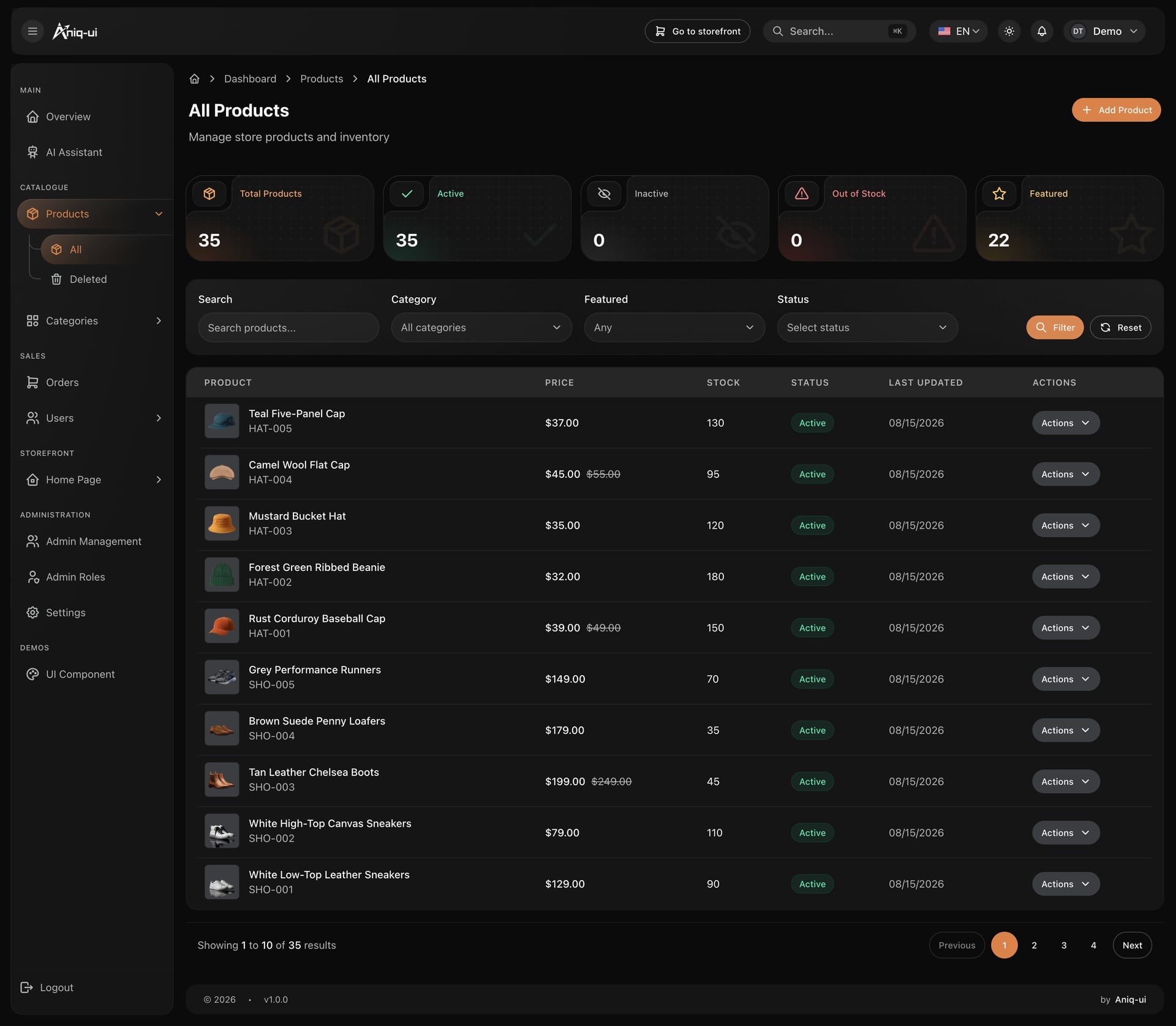
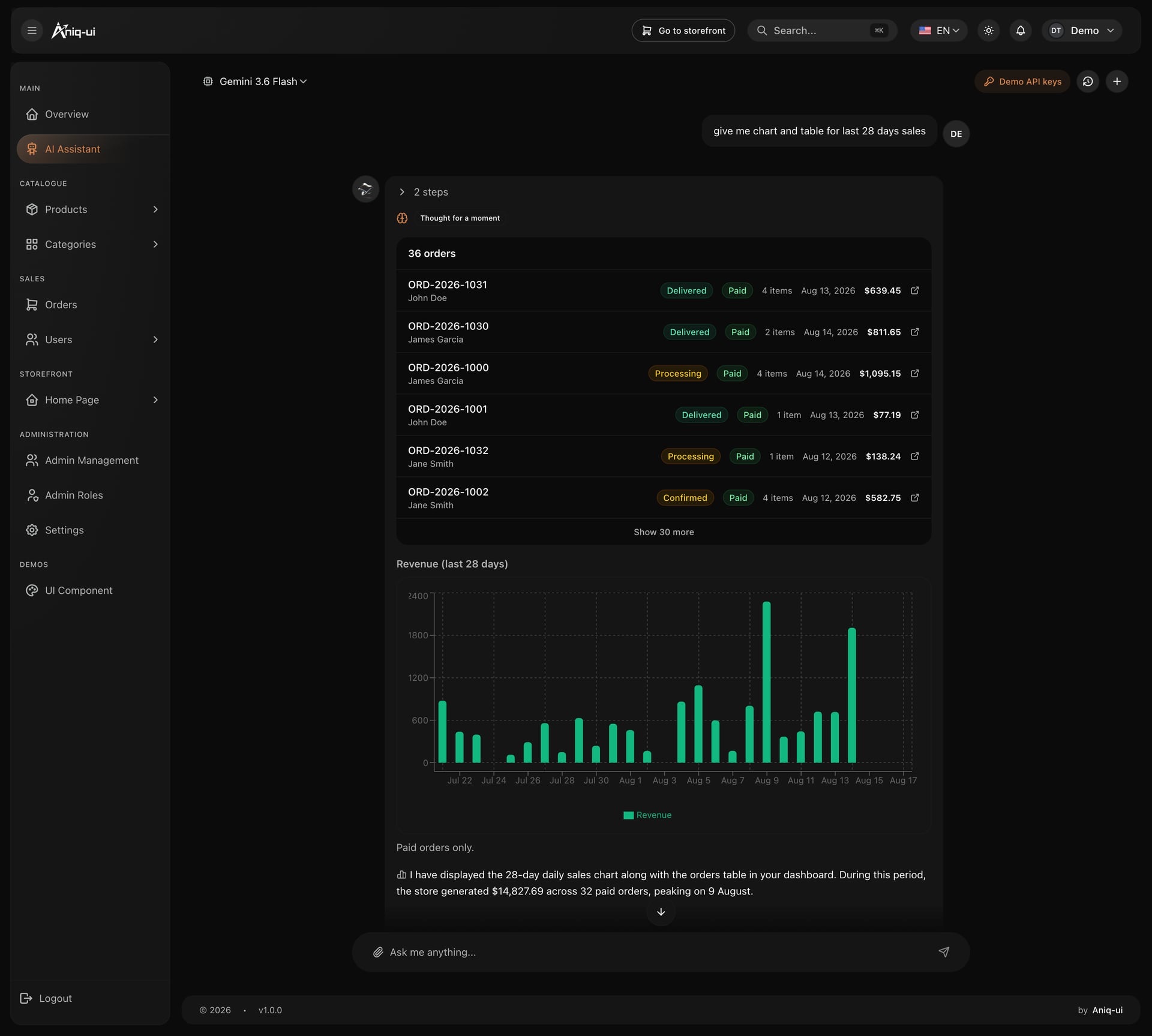
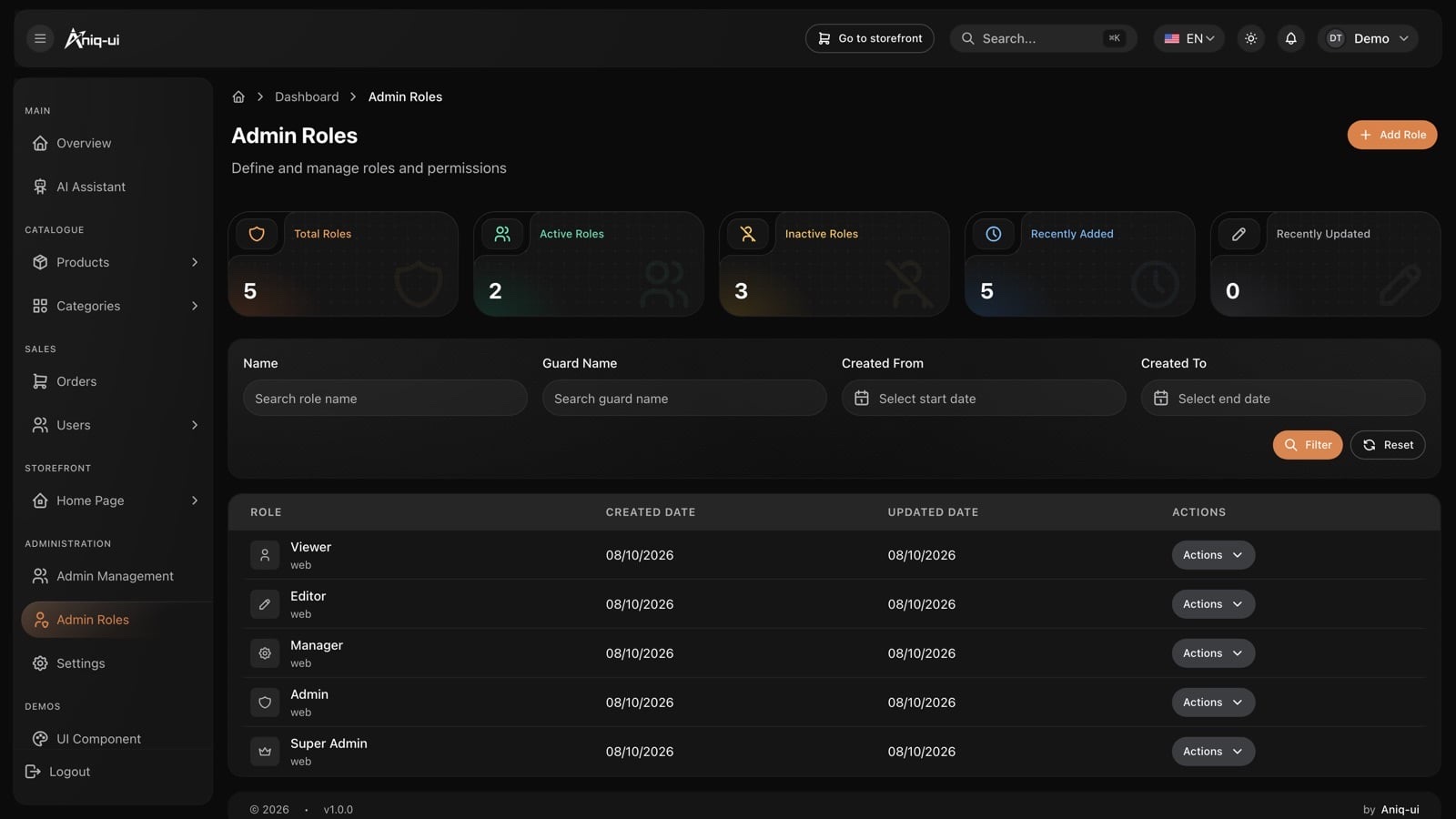
Who pays and why: small clothing brands and boutiques. Shopify lists Basic at $39 a month billed monthly, with a 2.9% plus 30 cents online card rate (checked November 2026). A store service for one niche wins on setup done for the owner, Arabic pages and an AI try-on.
How it can charge: a monthly fee per store and a setup fee for the catalogue.
First version: a catalogue, product pages with sizes and colours, a cart, checkout, order tracking and an admin.
Ready code: the Next.js e-commerce template has a storefront with filters, variants, guest checkout, order tracking, accounts, reviews, a wishlist and an AI virtual try-on, and an admin for products, orders with fulfilment progress, customers and roles, with an AI assistant and background removal. Shoppers pay by card through Stripe or cash on delivery.
Still to build: there is no PayPal, Stripe charges in US dollars, shipping is one rule and no tax is applied. Each brand needs its own copy unless you add tenant separation. For the full setup, see the online store and admin panel guide.
Price: Full Stack $149; Storefront $39, Admin Dashboard $49, Backend API $99. Open the demo.
B2B SaaS ideas: a workspace product
9. A workspace tool for one kind of team: Northstack
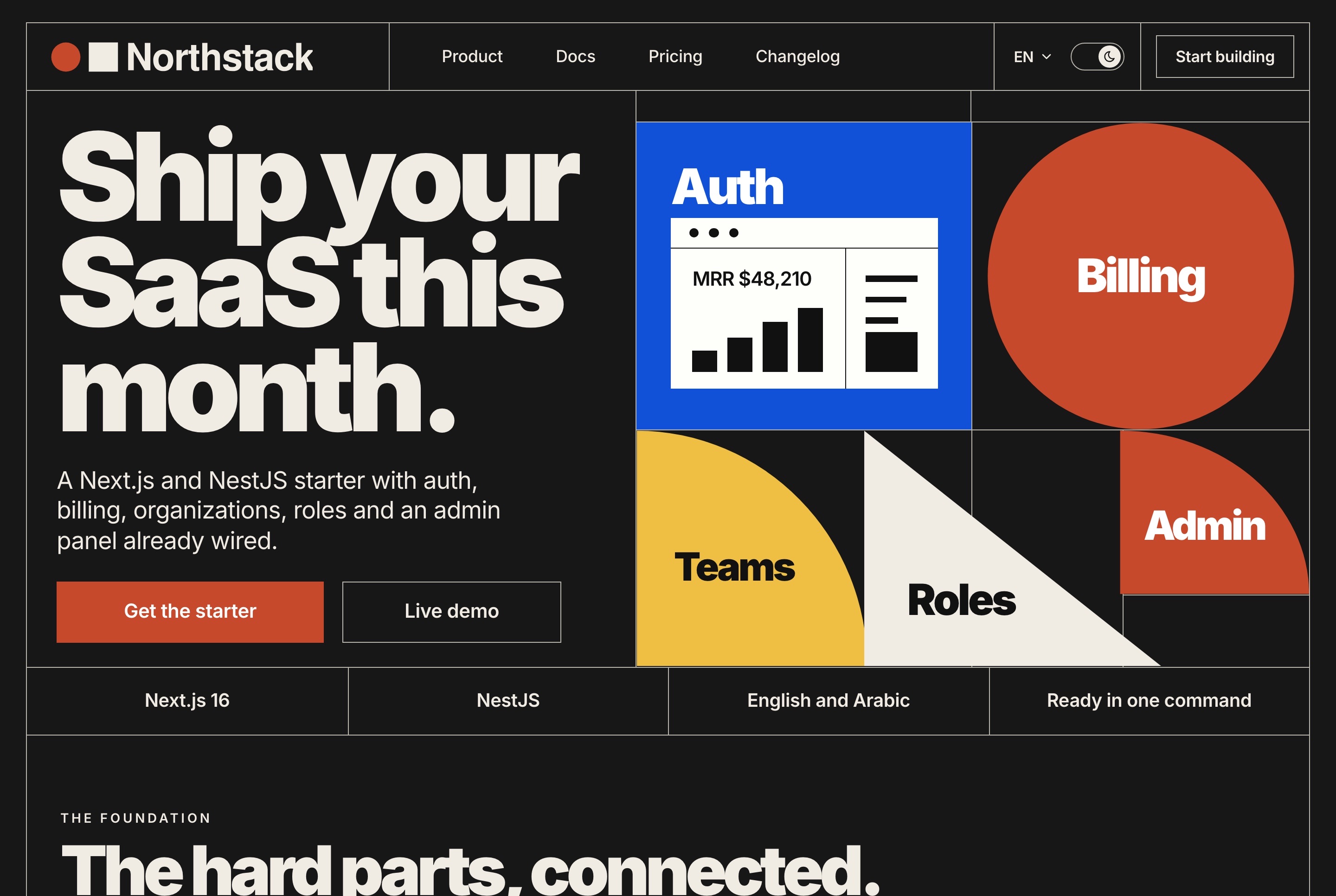
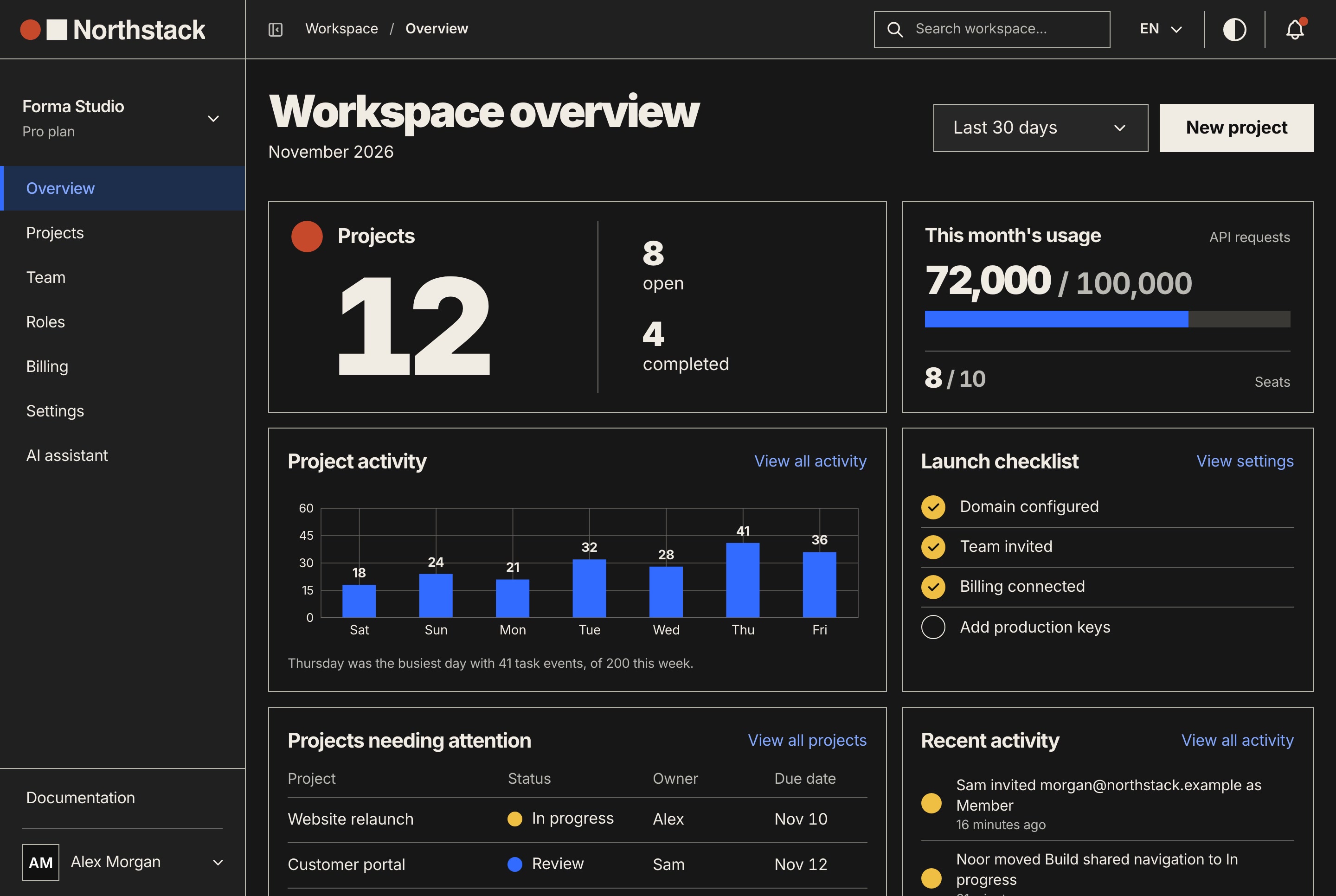
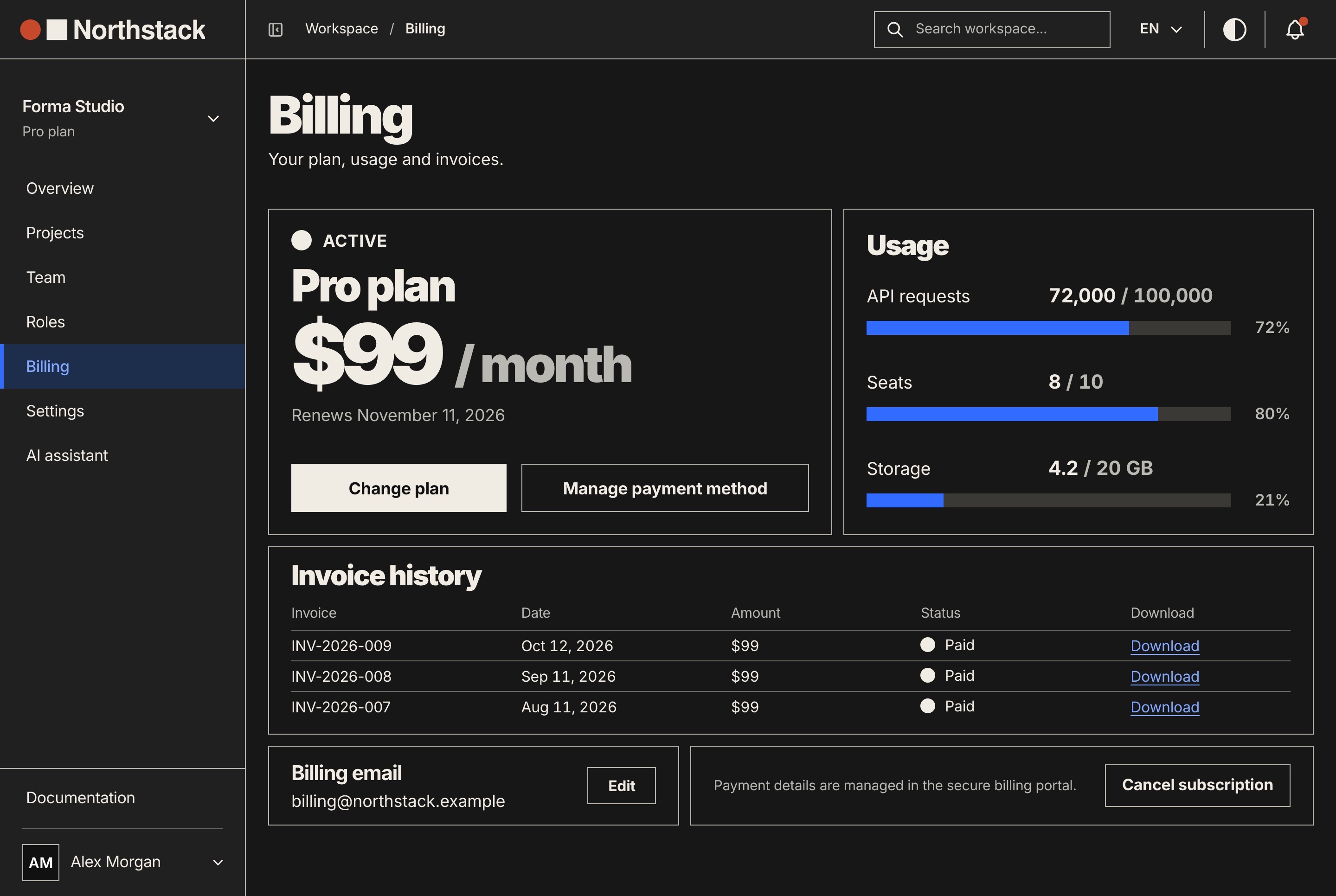
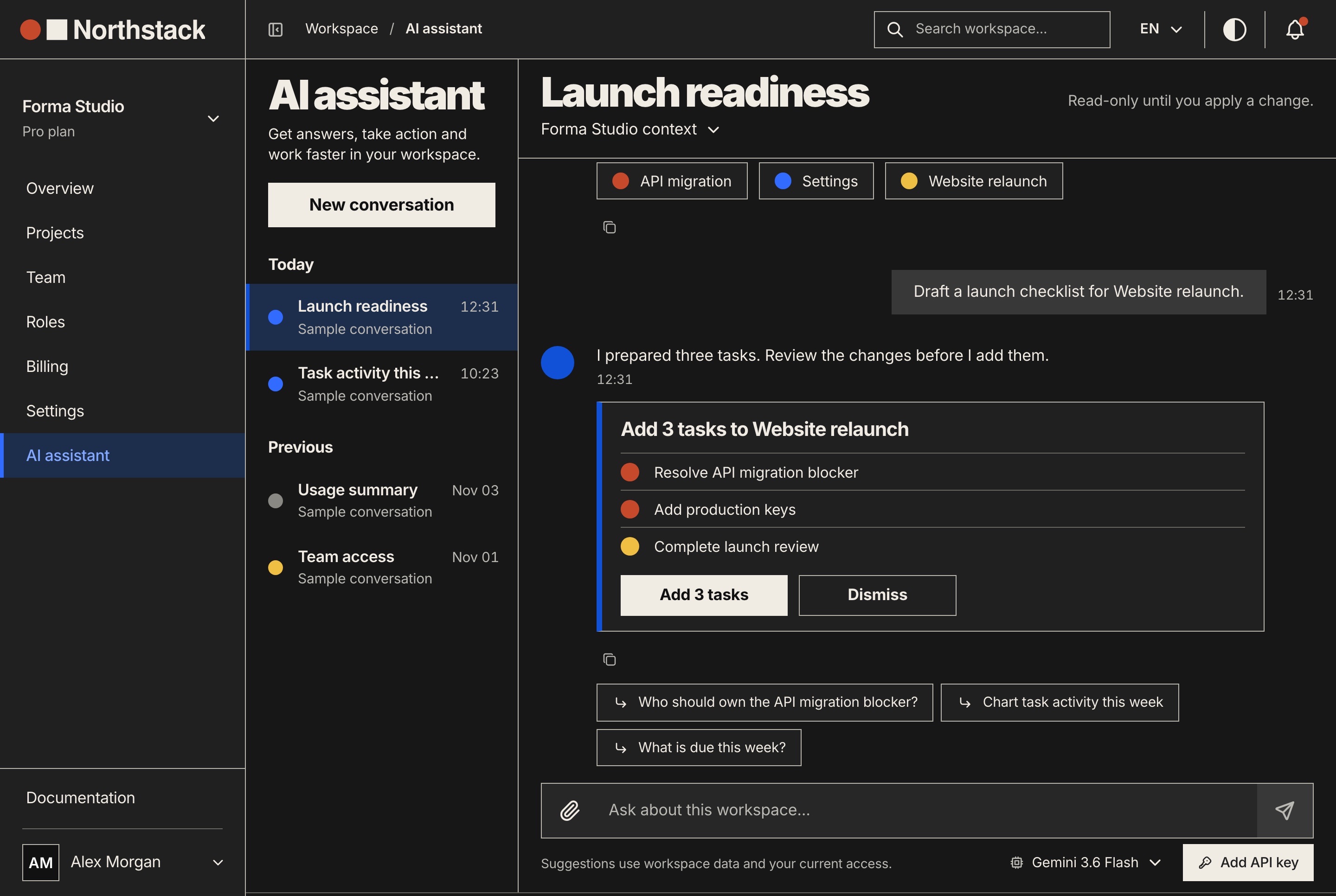
Who pays and why: a small company's team, per seat, for a tool shaped around its work: a client portal for design studios, a job tracker for subcontractors, a deliverables board for agencies. Northstack's own product is projects with task boards and files, so project-shaped niches fit with the least change.
How it can charge: per seat with usage limits. Northstack ships Starter, Pro and Scale plans with seats, API requests and storage; upgrades open Stripe's hosted Checkout and downgrades wait for renewal.
First version: sign-up, a workspace, teammates, your core feature and billing.
Ready code: Northstack has sign-up with onboarding, invitations and password reset; multi-tenant workspaces with an editable permission matrix enforced in the dashboard and the API; plans, usage limits and PDF invoices with Stripe or a test checkout; API keys, an activity log and an AI assistant. Platform staff get an administration with recurring revenue, plans, trials and suspension. See also How to Build a SaaS Admin Panel With an AI Assistant in Next.js.
Still to build: your niche's own feature. The website's checkout sells one-time licences, so point its pricing at sign-up, where the plans live.
Price: Full Stack $149; SaaS Website $39, Workspace Dashboard $49, Backend API $99. Not in the bundle. Open the demo.
SaaS app ideas we have no template for
These four SaaS app ideas have buyers but no Aniq UI template; their starting points follow.
10. Appointment booking for salons, barbers and clinics
Who pays: businesses that sell time, such as salons, barbers and physiotherapists; an empty slot is lost income. Charge: per location or per staff calendar each month. First version: services with durations, staff calendars, a booking page, reminders and deposits. Starting point: none of our templates books time slots (Hollina books nights), so start from Northstack for workspaces and billing, or from a free starter. Still to build: scheduling rules, time zones and reminders by email or SMS.
11. Quotes and invoices for tradespeople
Who pays: plumbers, electricians and small contractors who quote from a phone and get paid late. Charge: per user per month. First version: customers, a quote builder, quote to invoice, a PDF, a payment link and reminders. Starting point: any starter below, for accounts and your own billing. Still to build: the invoices, the PDFs and each country's tax rules, which are the product itself.
12. Review requests for local businesses
Who pays: dentists, garages, gyms and restaurants that are chosen by their reviews. Charge: per location per month. First version: a customer list, a request by email or SMS after a visit, a link to the review page and a count of replies. Starting point: Open SaaS sends email on cron jobs; ShipFast sends through Mailgun or Resend. Still to build: SMS, sending limits, and a flow that follows each review platform's rules on asking for reviews.
13. A narrow AI tool for one profession
Who pays: people who write the same text every day: listing descriptions for agents, product copy for sellers, lesson plans for tutors. Charge: monthly with a usage allowance, because each request costs you model fees. First version: one input, one output, history, limits and billing. Starting point: Open SaaS has an example app that calls the OpenAI API, and Northstack counts API requests per plan. Still to build: the prompts, quality checks and a cost cap per customer.
The starting points for these four
Next.js SaaS Starter (free)
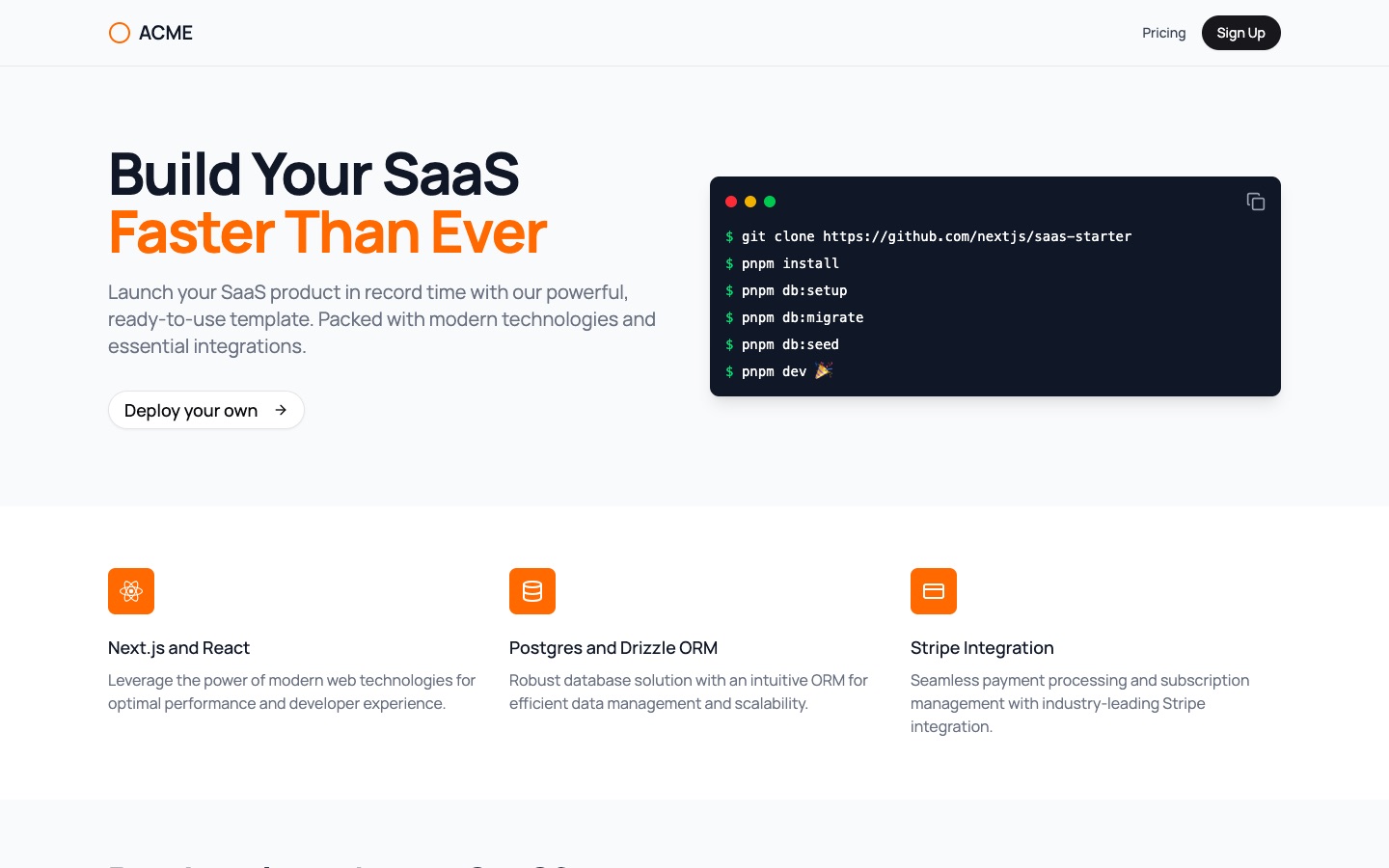
Free to use under the MIT licence, the Next.js SaaS Starter has roughly 16.3k GitHub stars (checked November 2026). On a Postgres database with Drizzle, it ships Owner and Member roles, an activity log, email and password login, a pricing page wired to Stripe Checkout, and the Stripe Customer Portal for managing subscriptions. Its package.json pins a Next.js 15 canary build, and the kit stays minimal by design.
Open SaaS (free)
Open SaaS is free and MIT-licensed, with about 16.4k GitHub stars. It runs React and Node.js on the Wasp framework with Prisma, not Next.js, and includes auth, payments with Stripe, Polar.sh or Lemon Squeezy, an admin dashboard, email sending, an OpenAI example app, S3 uploads, and docs and a blog.
ShipFast and Makerkit (paid)
ShipFast sells from $199 one time (shown as reduced from $299) for unlimited projects. It offers sign-in with Google and magic links, payments through Stripe or Lemon Squeezy, and MongoDB or Supabase, and its page lists no teams. Makerkit targets B2B teams: the one-developer Pro licence lists at $349, shown at $226.85 as a launch offer, and freelancers' clients each need their own licence (checked 22 November 2026).
Northstack ($149)
For a B2B idea that needs workspaces, roles, plans and a platform admin in English and Arabic, Northstack is our closest base: keep the accounts and billing, and replace projects with your feature.
Micro SaaS ideas compared
| Idea | Who pays | Pricing model | Ready code | Price |
|---|---|---|---|---|
| Direct booking | Vacation rental hosts | Monthly per host or property | Hollina | $149 |
| Restaurant ordering | Restaurants, cloud kitchens | Monthly per restaurant, extra per kitchen | Food Studio | $149 |
| Event ticketing | Organisers, venues | Fee per paid ticket, or monthly | Ticketory | $149 |
| Workshop tickets | Workshop and class organisers | Small fee per paid ticket | Ticketory | From $39 |
| Listings and leads | Small agencies, brokers | Monthly per agency, by seats or listings | Velra | $149 |
| Online coaching | Personal trainers | Monthly per coach, by client seats | Kinora | $149 (dashboard $69) |
| Course platform | Tutors, academies | Monthly per academy | Learnio | $149 |
| Fashion stores | Clothing brands | Monthly per store, plus setup | E-commerce template | $149 |
| Team workspace tool | Small company teams | Per seat, with usage limits | Northstack | $149 |
| Appointment booking | Salons, clinics | Monthly per location or calendar | A starter kit or Northstack | Free to $149 |
| Quotes and invoices | Tradespeople | Monthly per user | A starter kit | Free to $199 |
| Review requests | Local businesses | Monthly per location | Open SaaS or ShipFast | Free to $199 |
| Niche AI tool | Agents, sellers, tutors | Monthly with a usage allowance | Open SaaS or Northstack | Free to $149 |
How to pick a micro SaaS idea to launch
Start where a business already pays
Pick a buyer who pays today for the job: a commission per order, a fee per ticket, a tool they put up with. With no current spend, you must create the budget first, which is slow for one person.
Count the gap between the ready code and the first invoice
List what the first customer needs and tick what the starting point already does. For Hollina it may be emails and calendar sync, for Kinora billing and email, for Ticketory as a platform payouts. A short list means you sell sooner.
Decide: one copy per customer, or one platform
One copy per customer reaches a first sale with no new code. One platform needs tenant separation and self-service sign-up, then costs less per customer. Northstack is built that way.
Check payments and currency in your market
Hollina, Food Studio and Ticketory take Stripe and PayPal; Learnio takes Stripe, with PayPal code included; the store takes Stripe in US dollars and cash on delivery; Velra takes no payments and is set to UAE dirhams. If Stripe or PayPal does not serve your customers' country, solve that first.
Pick a language market, and read the licence
All nine Aniq UI ideas ship English and Arabic with right-to-left layouts, dashboards included, which matters to owners and staff in Arabic-speaking markets. You can run them as your hosted SaaS or build them for a client, but not hand out the code; with other kits, read the terms, since Makerkit asks each client to hold a licence.
Common mistakes when launching a micro SaaS
Building the platform before the first customer
Tenant separation and self-service sign-up pay off once someone pays. One copy per customer, set up by hand, teaches you what buyers use.
Promising what the code does not do
Each idea lists its gaps: no email in Hollina, Velra or Kinora, no payouts in Ticketory, no tax in the store. Price the missing pieces into your plan before you promise them.
Pricing below what one customer costs
Every customer brings hosting, backups, payment fees, model fees if you use AI, and support time. Add them up first, then set the monthly price.
Selling the code instead of the service
The Aniq UI licence does not let you hand the source code to a buyer. Sell access to the hosted product, or build it for that buyer as client work.
FAQ
What is a micro SaaS?
A small software business, usually run by one person or a small team, that sells a subscription to a narrow group of customers with one specific problem, such as direct booking for vacation rental hosts.
Do micro SaaS make money?
Some do and many do not, and there is no reliable average to quote. We publish no revenue figures for these ideas. The ones that earn have a buyer who already pays for the job, a price above what each customer costs, and a steady way to reach buyers.
What micro SaaS can I build alone?
One with a narrow buyer, a starting point that already runs, and no money to pay out to others: direct booking for hosts, ordering for restaurants, workshop ticketing or online coaching, run as one copy per customer. A marketplace that collects and pays out for other businesses is harder alone.
How much does it cost to launch a micro SaaS?
The code costs nothing with the Next.js SaaS Starter or Open SaaS, $149 for an Aniq UI Full Stack, or from $199 for ShipFast. Then a domain, hosting for each app and database, payment fees (Stripe lists 2.9% plus 30 cents per US card payment, and 0.7% of volume for Stripe Billing on pay-as-you-go), email, and model fees if you use AI.
What are good B2B SaaS ideas for 2026?
Ideas where a business pays to save money or win customers: direct booking instead of marketplace fees, ordering instead of delivery commission, simpler ticketing, a lead desk for agencies, appointment booking, quotes for trades, and a workspace tool for one kind of team. Each is a SaaS startup idea a small team can sell to a niche it knows.
Can I run a SaaS on an Aniq UI template and charge customers?
Yes. A premium template can become your own hosted product, sold under your name with paid access, or a build you deliver to a client. What you cannot do is sell, share or hand out the code itself, or a modified version of it.
Can I launch a SaaS in Arabic?
Yes. Every Aniq UI template in this post ships English and Arabic with right-to-left layouts in its public pages and dashboards. Open the Arabic demo before you choose.
Price list
Confirmed on 22 November 2026. Each product is paid for once and comes with free updates and a commercial licence.
- Hollina, Food Studio, Ticketory, Velra, Learnio, E-commerce template, Northstack: Full Stack $149, website $39, dashboard $49, Backend API $99
- Kinora: Full Stack $149, dashboard $69, Backend API $99
- Dashboard with AI Assistant: from $69, Full Stack $149
- Bundle of 10 premium templates: launch price $199, list price $499
- Next.js SaaS Starter and Open SaaS: free. ShipFast: from $199. Makerkit: $349 list, $226.85 launch offer
Related guides
- Best Next.js SaaS Templates and Starter Kits for 2026
- How to Launch a SaaS Website in English and Arabic With Next.js
- How to Build a SaaS Admin Panel With an AI Assistant in Next.js
- How to Build a Vacation Rental Booking Website with Next.js
- How to Build a Restaurant Online Ordering System with Next.js
- Event Ticketing Website Templates (2026) with Seat Maps
- How to Build an Online Fitness Coaching App with Next.js
- How to Build an LMS with Live Classes in Next.js
- Best Next.js Templates for 2026: Free and Premium Picks
Sources
- IdeaProof, Micro SaaS Ideas 2026: ideaproof.io/lists/micro-saas-ideas
- NxCode, 50 Micro SaaS Ideas for 2026: nxcode.io/resources/news/micro-saas-ideas-2026
- MicroConf, 13 SaaS Ideas You Can Build Right Now: microconf.com/latest/saas-ideas
- Airbnb Help Centre, Airbnb service fees: airbnb.com/help/article/1857
- Uber Eats merchant pricing (US): merchants.ubereats.com/us/en/pricing
- Eventbrite organiser pricing (US): eventbrite.com/organizer/pricing
- Trainerize pricing: trainerize.com/pricing
- Teachable pricing: teachable.com/pricing
- Shopify pricing: shopify.com/pricing
- Stripe pricing: stripe.com/pricing
- Next.js SaaS Starter: github.com/nextjs/saas-starter
- Open SaaS: opensaas.sh and github.com/wasp-lang/open-saas
- ShipFast: shipfa.st
- Makerkit pricing: makerkit.dev/pricing
- Aniq UI terms and conditions, section 2: aniq-ui.com/en/terms-and-conditions
- Aniq UI template pages, demos and the worked examples linked above.
Checked November 2026.
You might also like
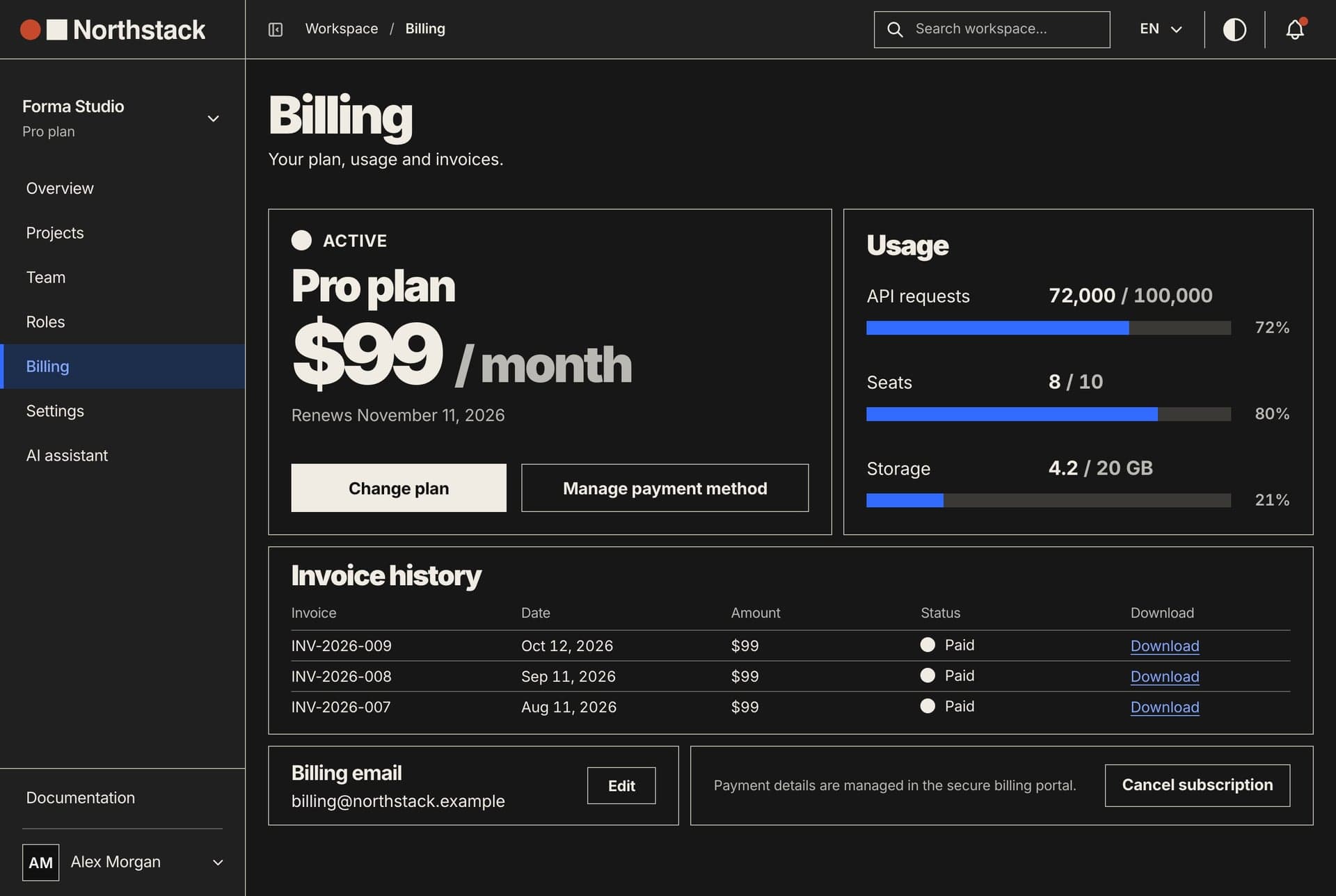
White Label SaaS: 8 Apps to Own, 4 Platforms to Rent (2026)
White label SaaS two ways: rent a reseller platform from $99 a month, or own a full-stack app for $149 that you rebrand, host and sell. Prices checked.
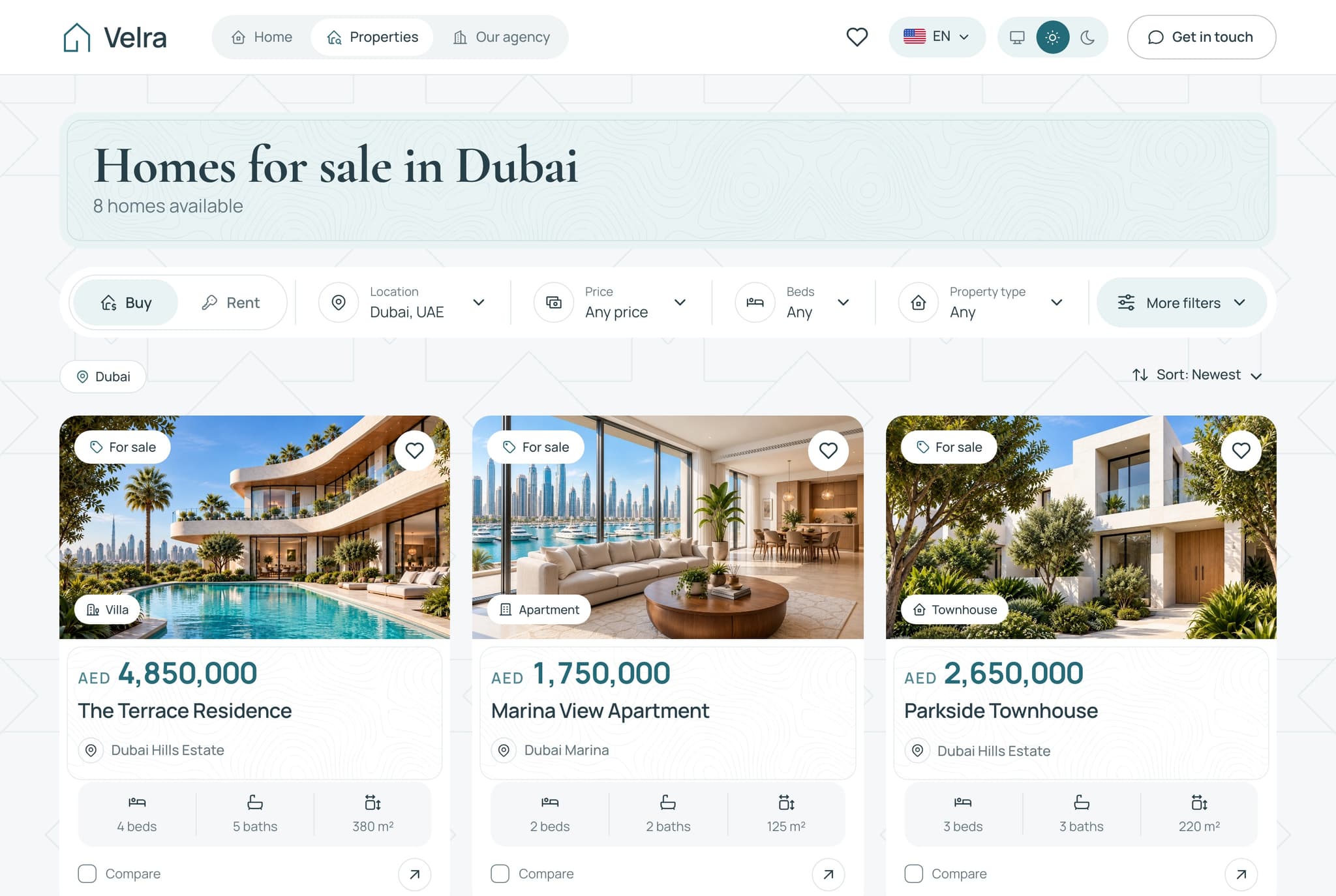
Next.js Website Templates for Small Businesses (2026)
Choose a Next.js website template by business type: restaurant, real estate, courses, shop, rentals, events or services. What to check, picks and prices.
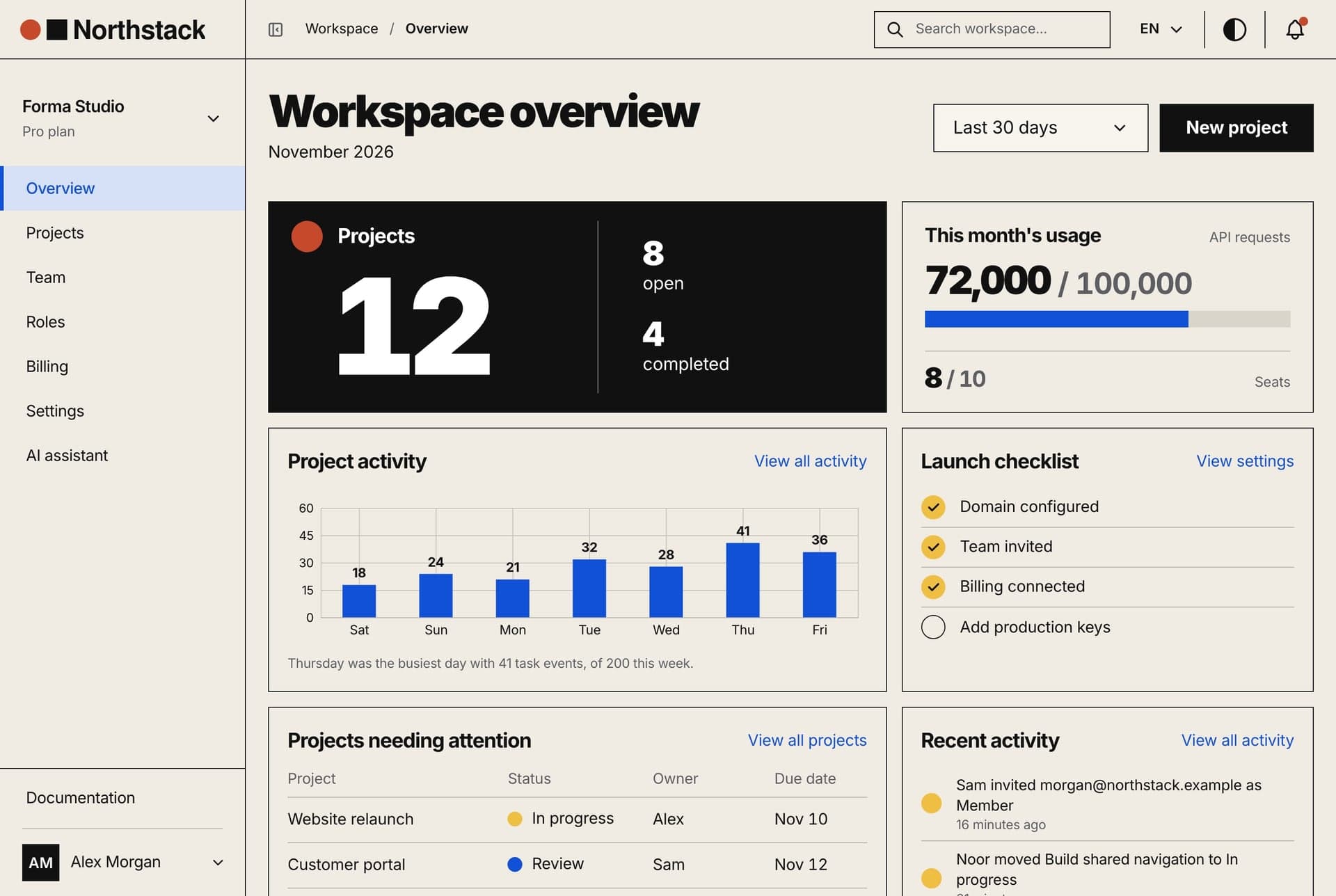
How to Start a SaaS Business in 2026, With or Without Code
How to start a SaaS business in 2026: validate the idea, compare five ways to get the product, price and launch it, with real costs and a first-year budget.
