Next.js Restaurant Template with Online Ordering and Kitchen Dashboard
Next.js Restaurant Template with Online Ordering and Kitchen Dashboard
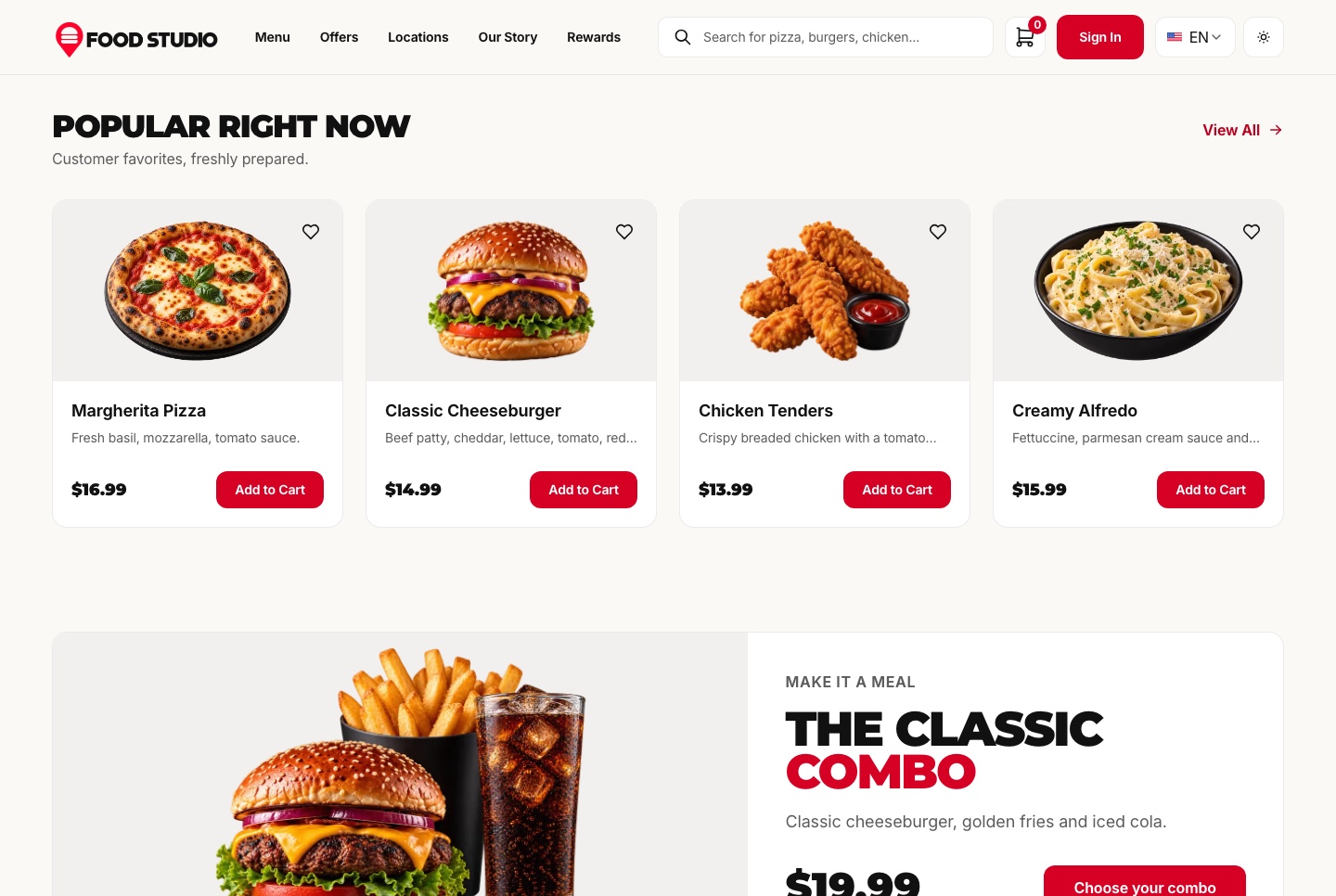
Food Studio is a full-stack Next.js restaurant template: an ordering website with menu, combos, cart, checkout and order tracking, a staff dashboard for orders, the menu and the kitchens, a NestJS API, AI tools for dish photos, and English and Arabic with RTL.
Food Studio is a full-stack Next.js restaurant template: an ordering website with menu, combos, cart, checkout and order tracking, a staff dashboard for orders, the menu and the kitchens, a NestJS API, AI tools for dish photos, and English and Arabic with RTL.

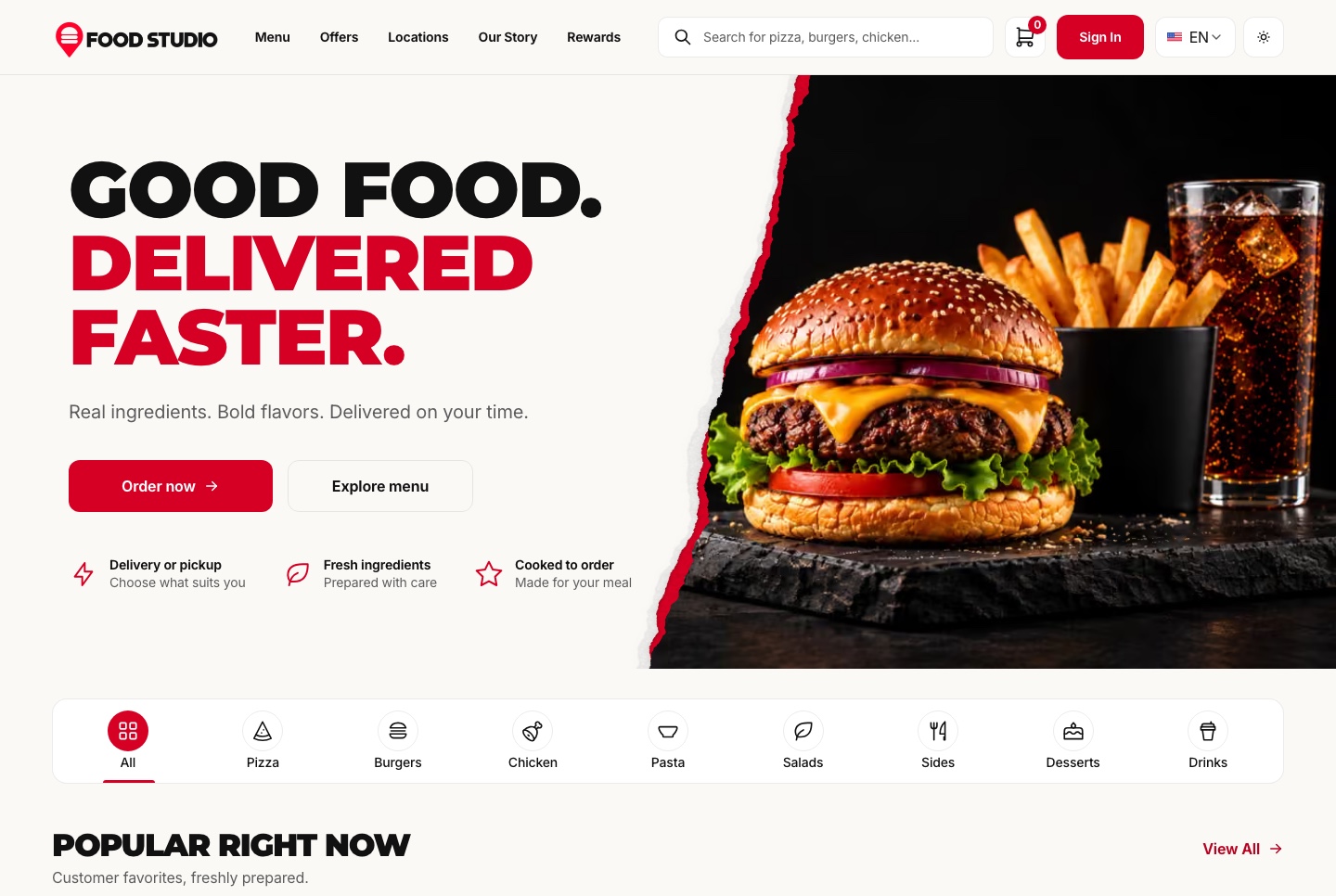
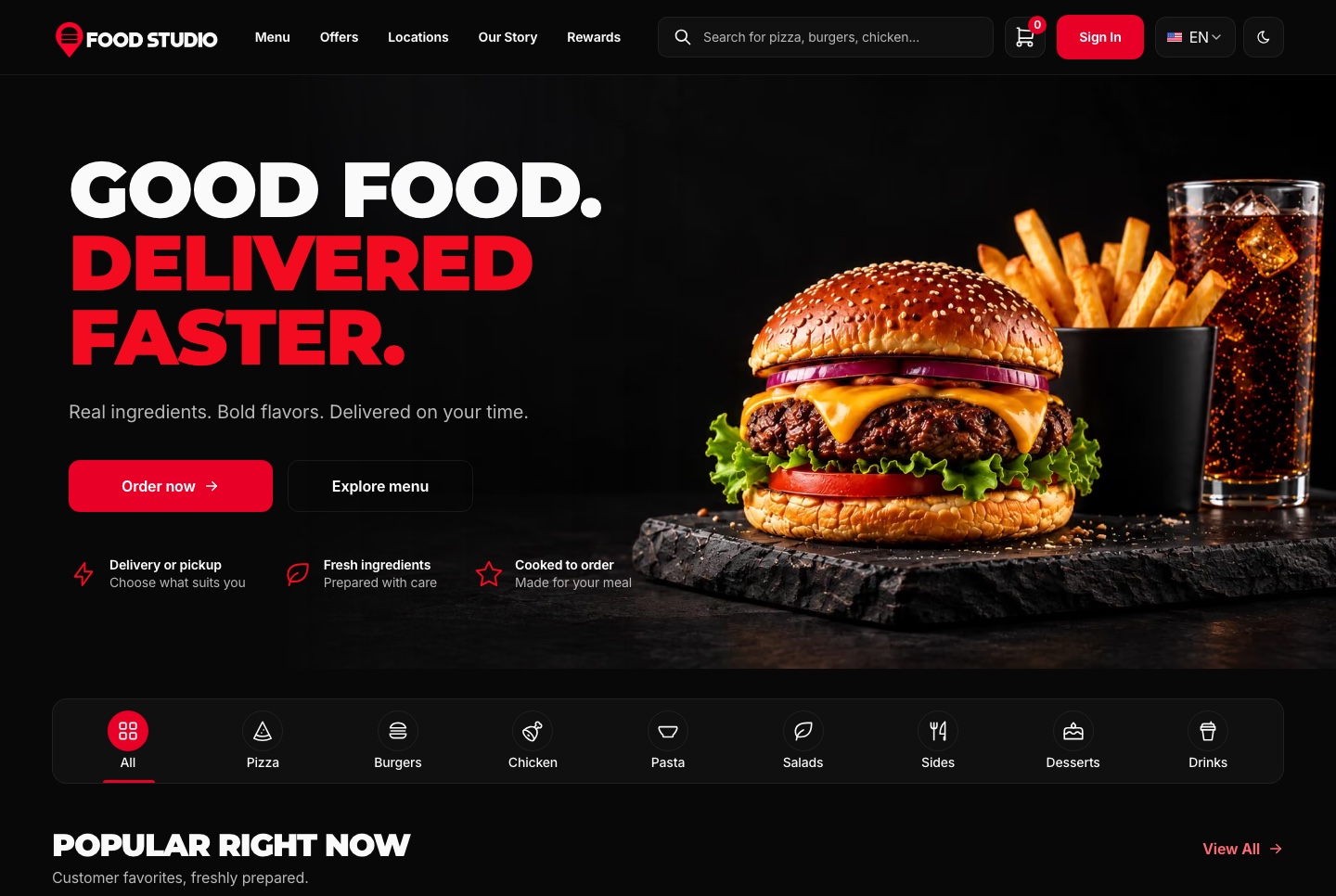
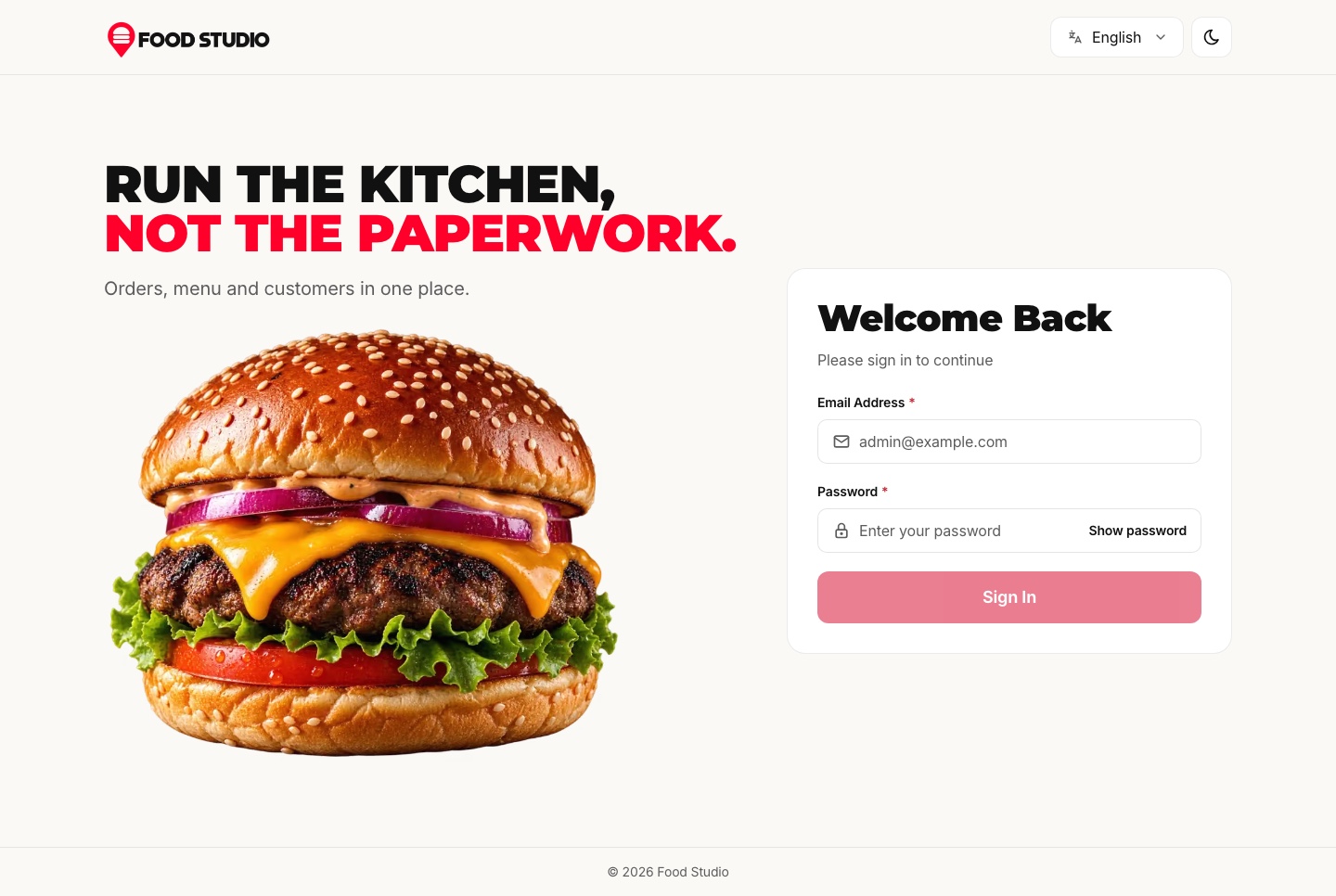
Food Studio is a full-stack restaurant template: a Next.js website where guests order for delivery or pickup and follow their order, a Next.js dashboard where the team runs orders, the menu and its kitchens, and a NestJS API behind both. Stripe and PayPal checkout, an AI studio for dish photos, an AI assistant, and English and Arabic with RTL come with it.
A restaurant's online ordering in one codebase
A connected foundation for a restaurant's own ordering site, a takeaway brand with several kitchens or an agency's client project, with source code you can customize. The full-stack package includes the website, the staff dashboard and the API behind them.
Ordering website
- A menu with search, filters and allergens
- Dish and combo pages with extras and instructions
- Cart, checkout and order tracking
- Accounts with reward points and saved dishes
Staff dashboard
- The day's sales and the kitchen queue
- Orders moved through their statuses
- A dish editor in English and Arabic
- AI studio, assistant, team and settings
NestJS API
- Staff and customer authentication, roles and permissions
- Prices, totals and availability decided on the server
- Stripe and PayPal with signed webhooks
- A seeder that builds a complete demo restaurant
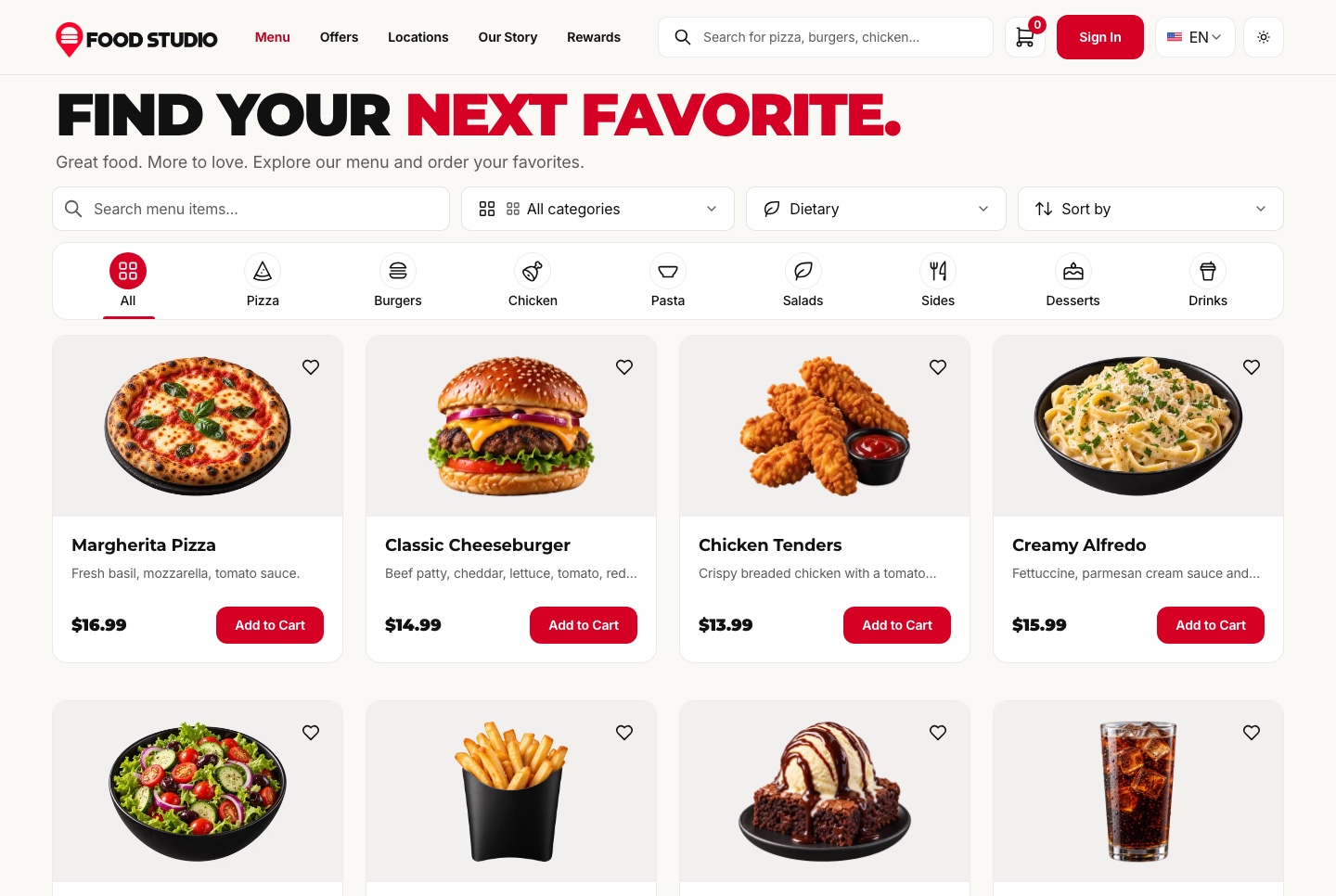
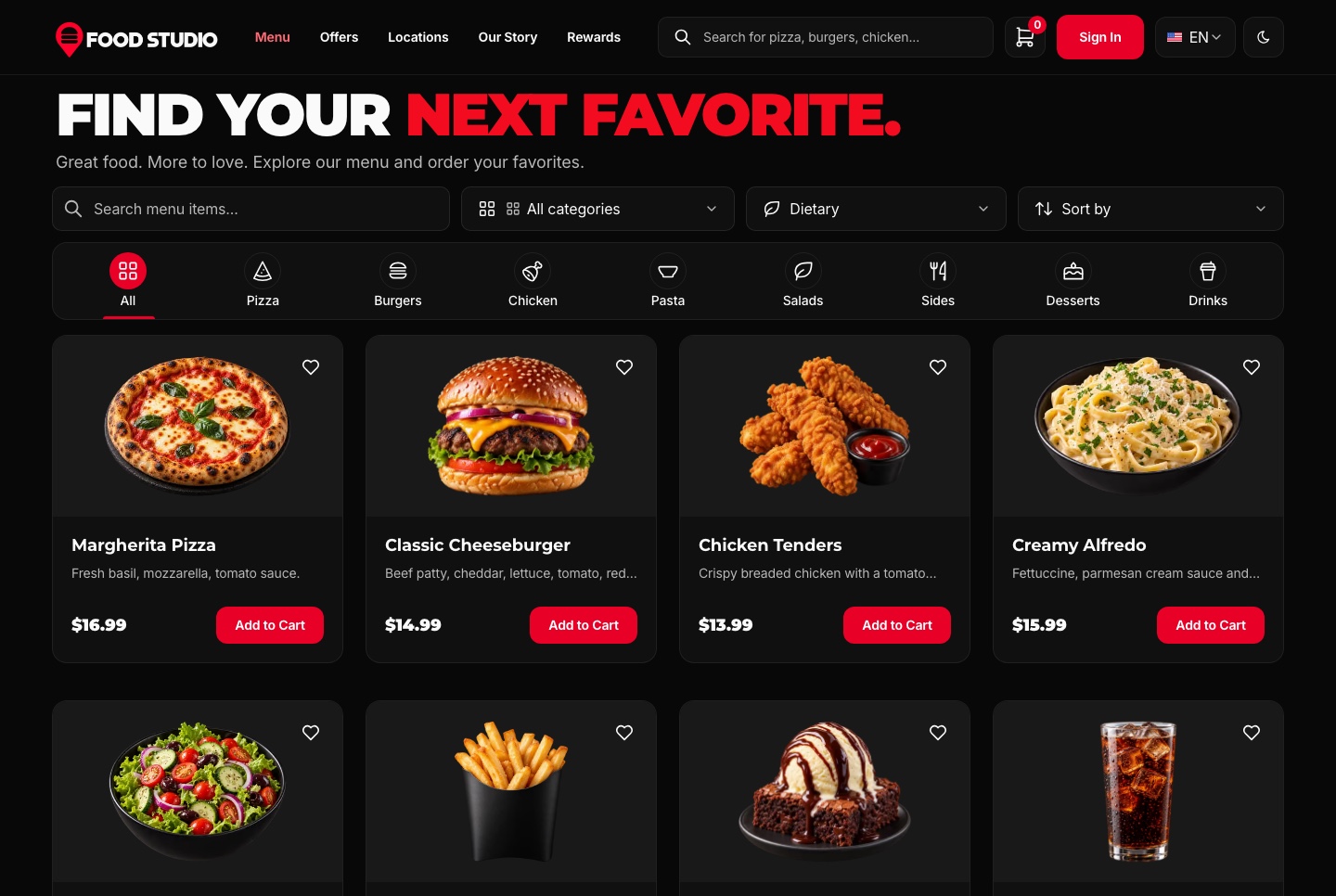
A menu guests can find their meal in
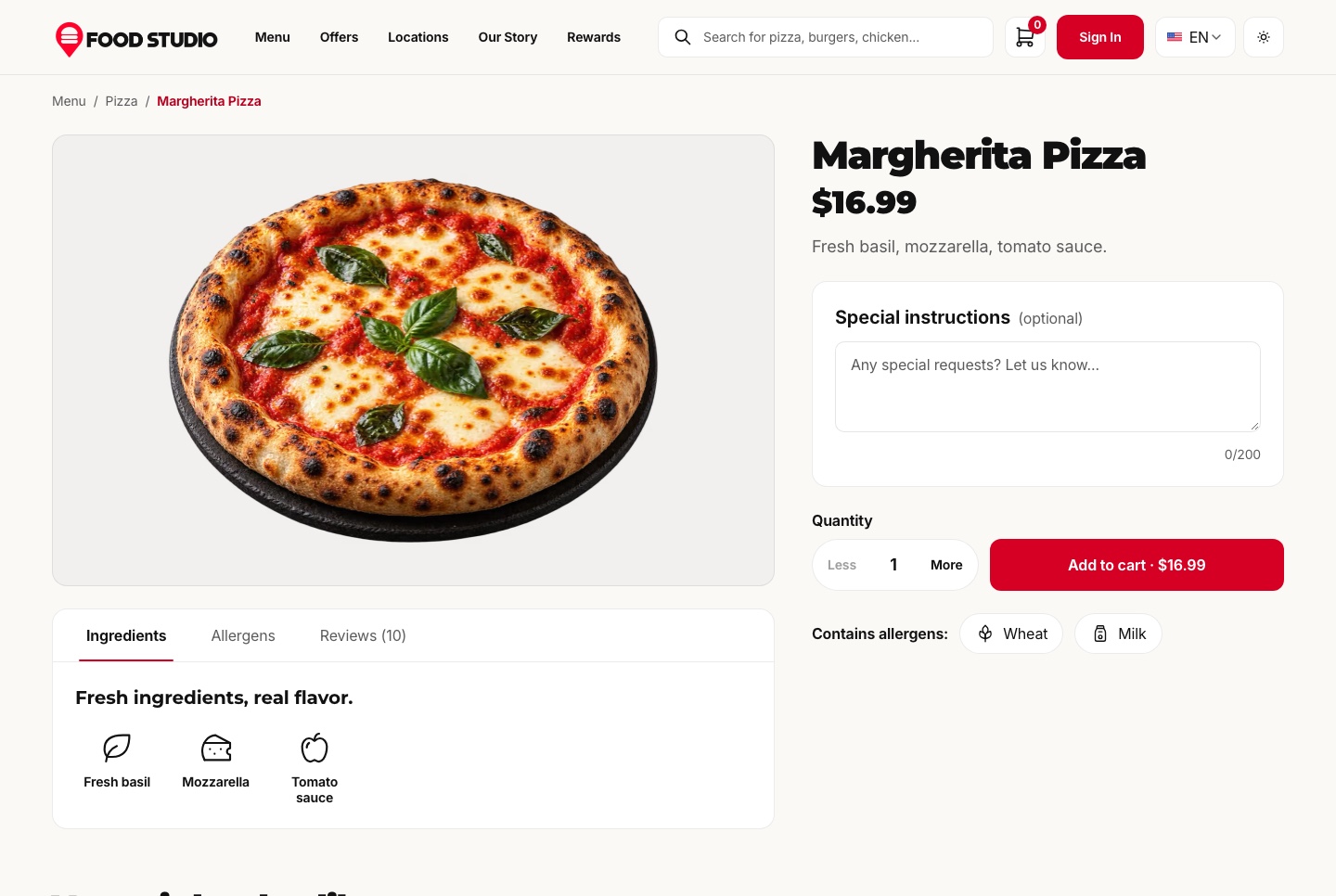
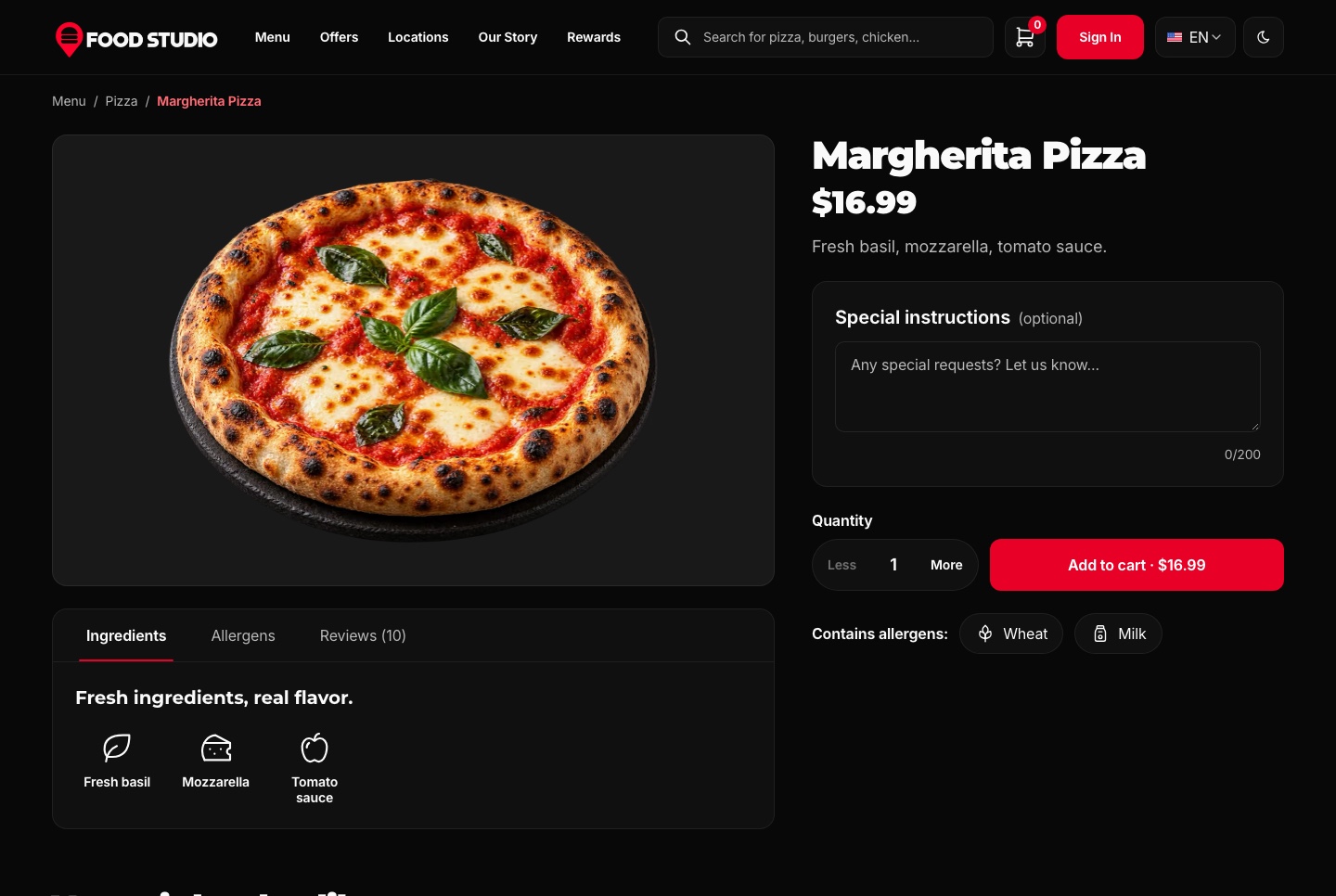
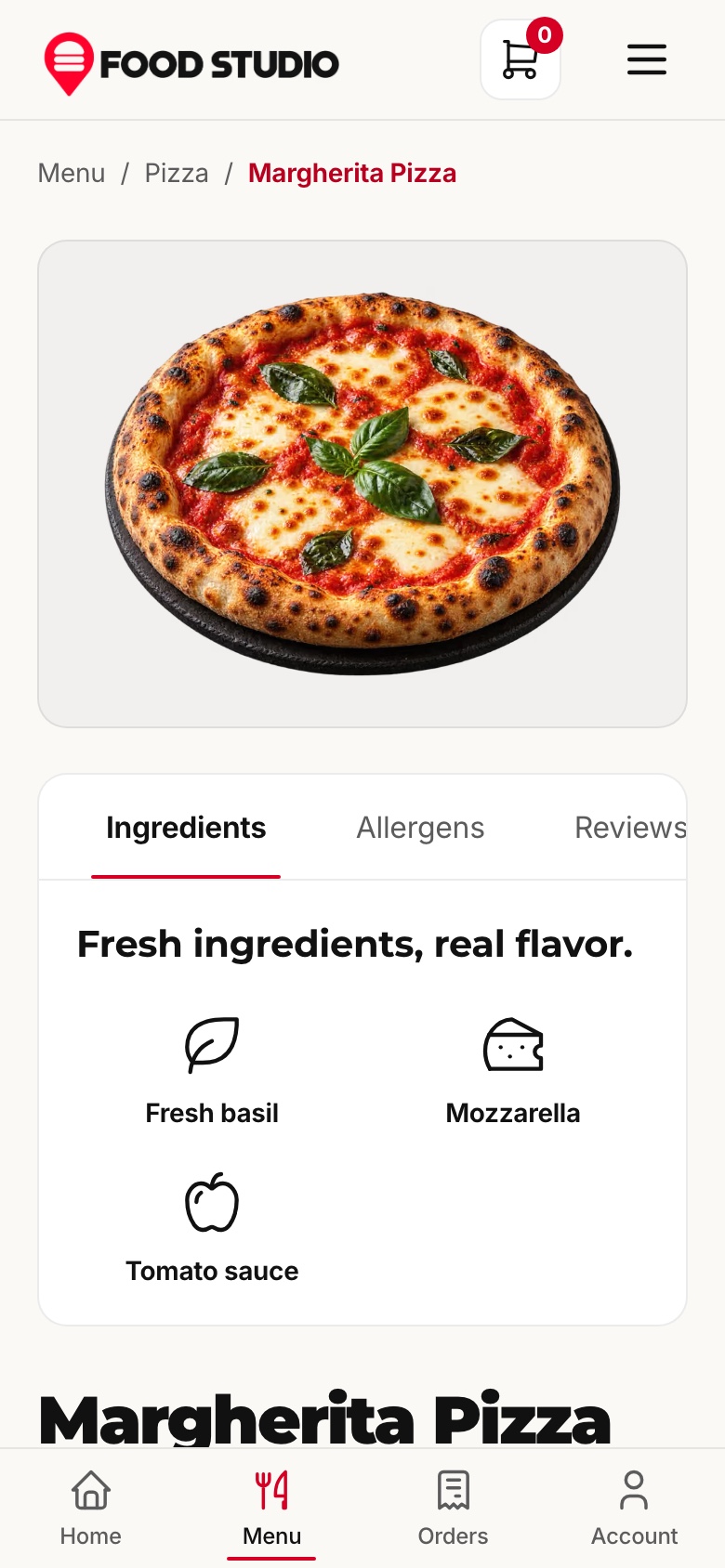
Search by name, narrow by category or diet, sort by popularity, price or name, and open any dish to see its ingredients, its allergens and its reviews. Every dish is a cut-out photograph on its own tile, never cropped.
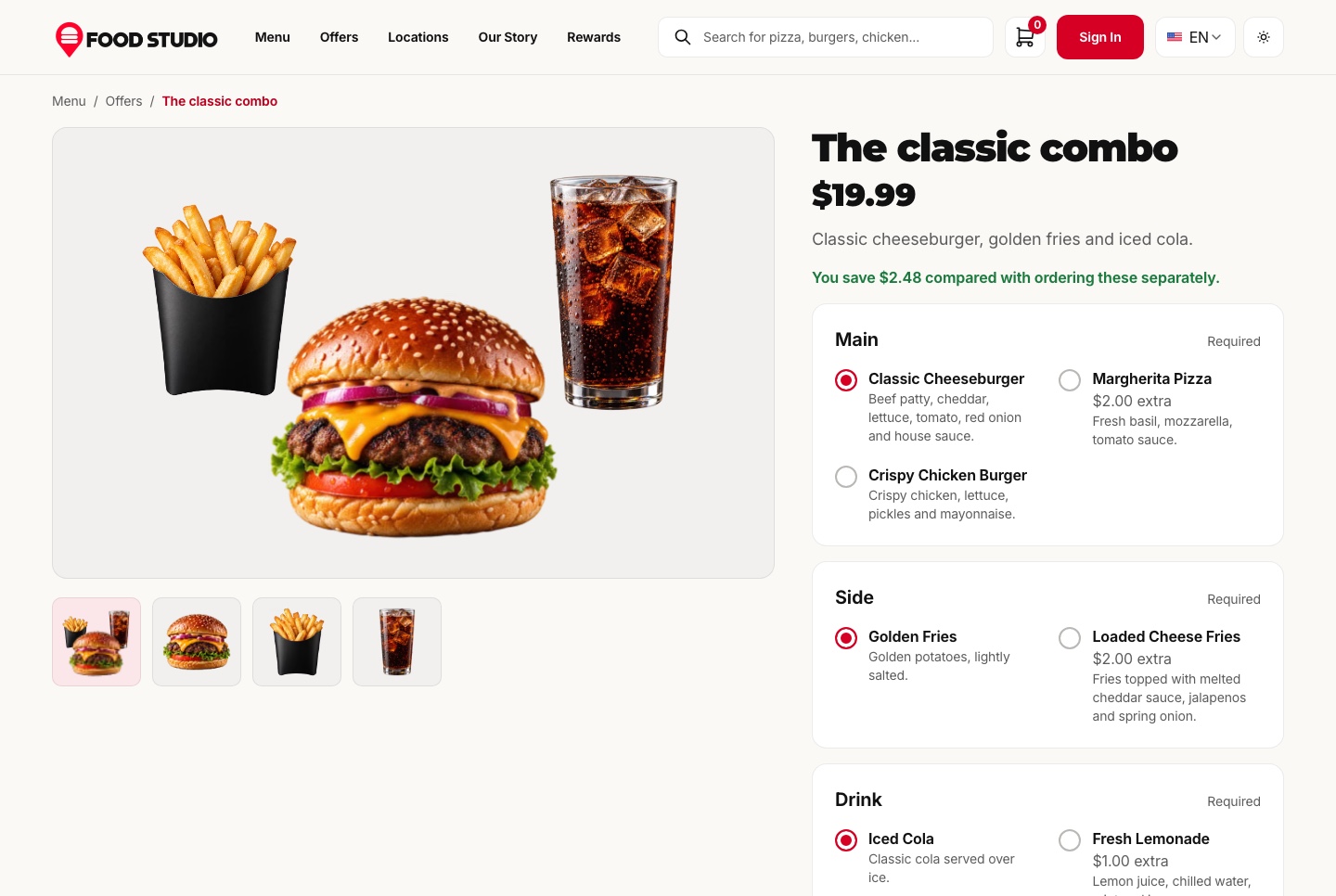
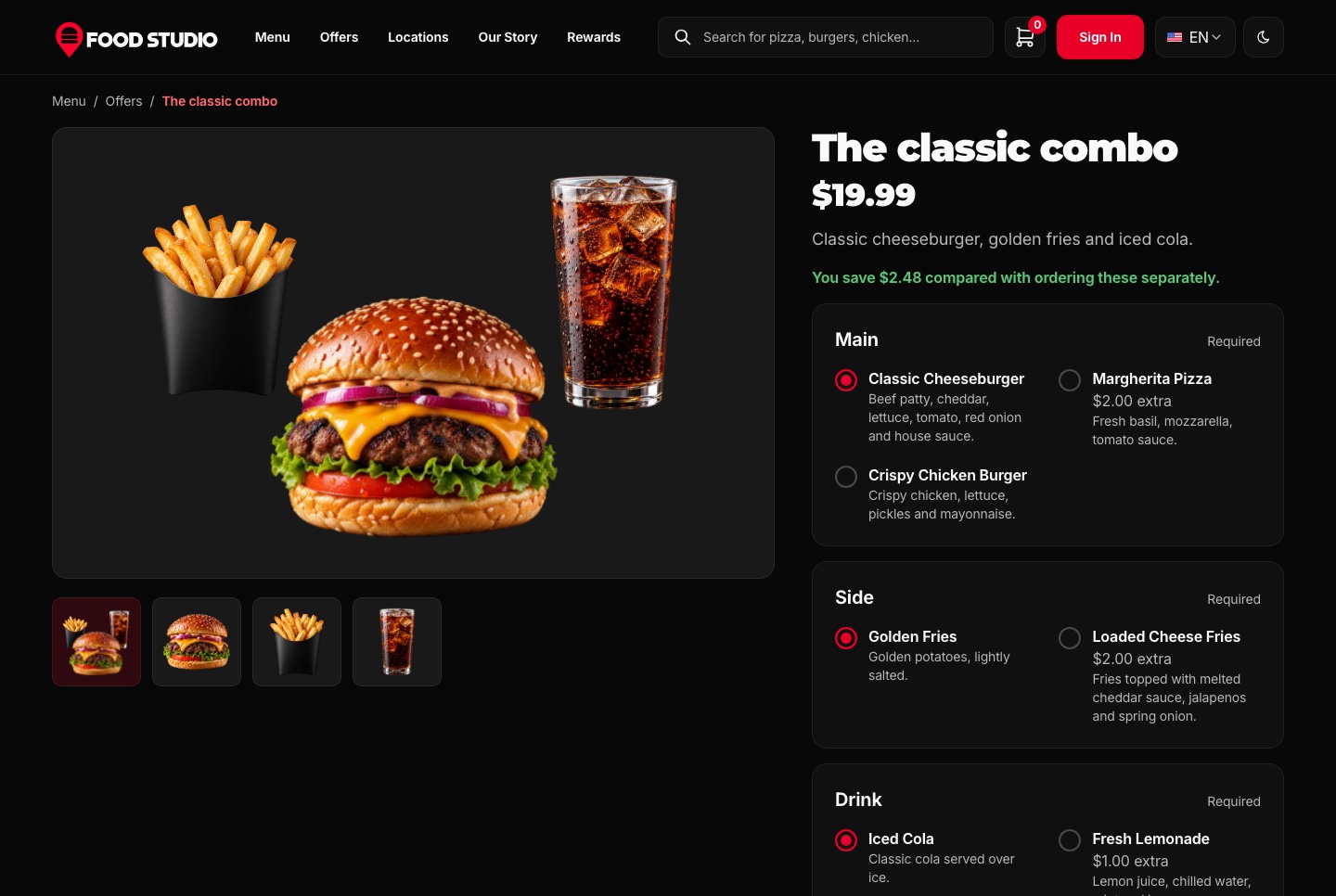
Combos with a choice for every course
A combo has one price and asks for a main, a side and a drink. Swapping a choice for a pricier one adds only the difference, and the page shows the saving against ordering the same dishes separately.
- Required choices checked before anything reaches the cart
- Extras priced in words, never with a plus sign
- The same pricing rules on the page and on the server
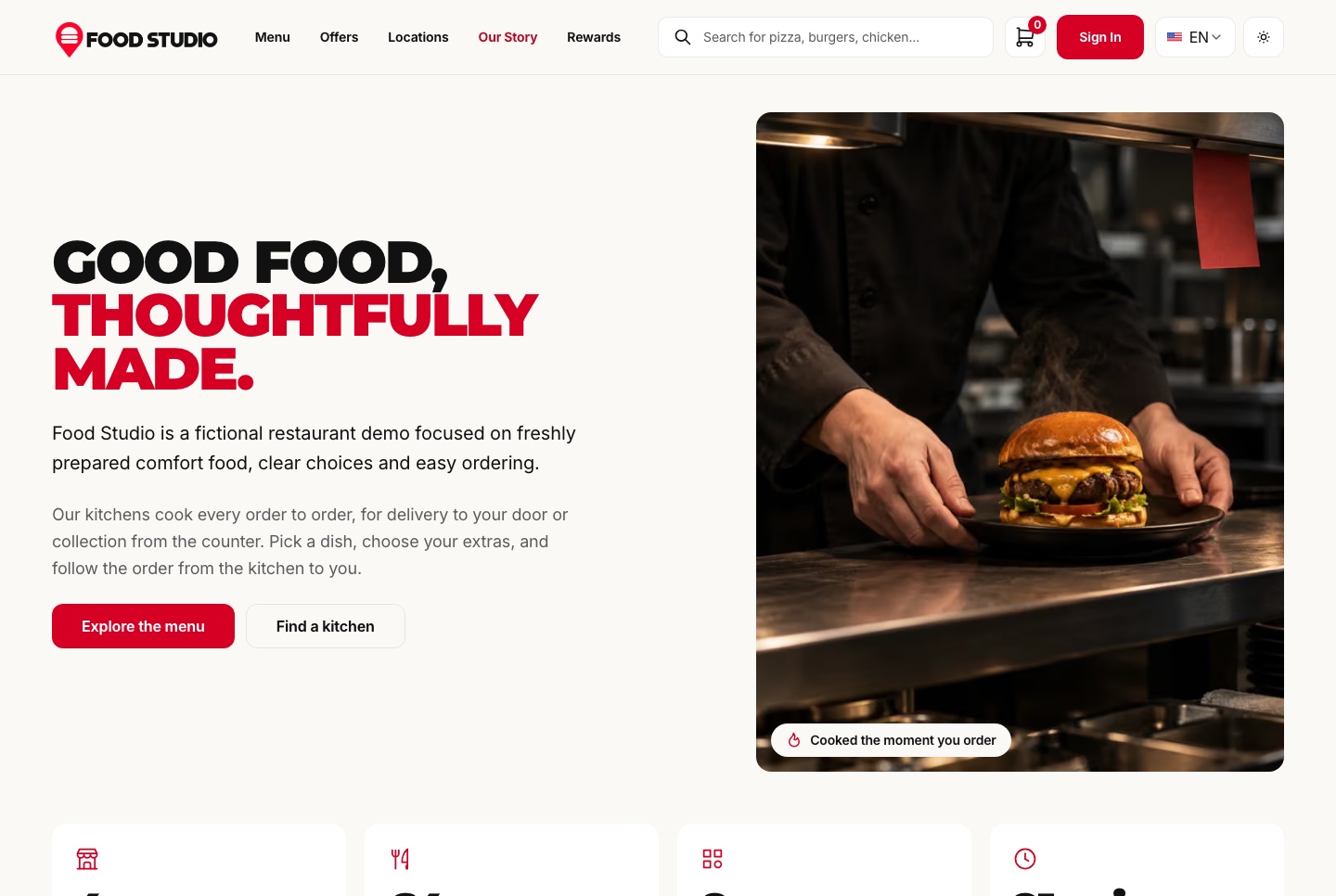
A meal builder on the home page
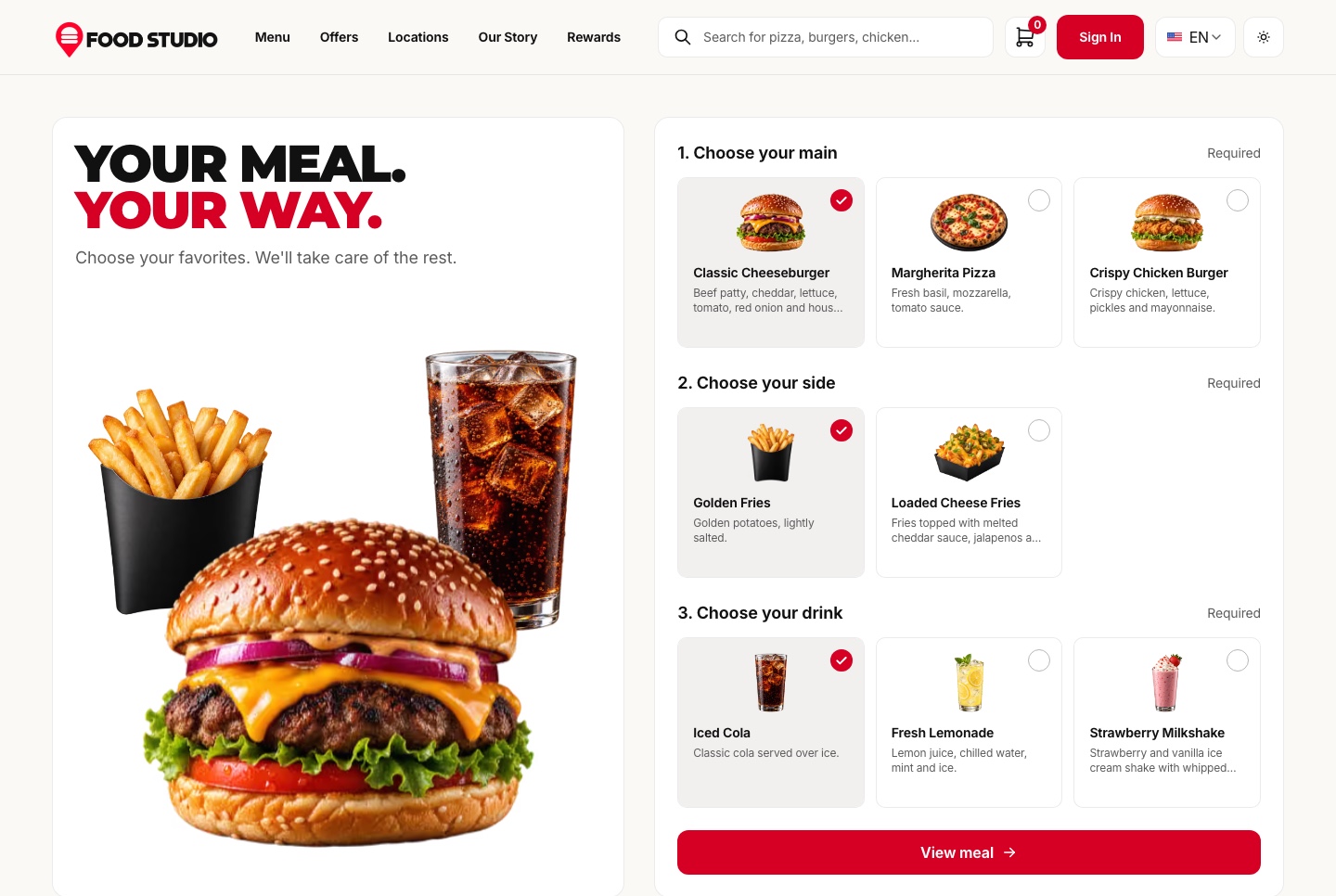
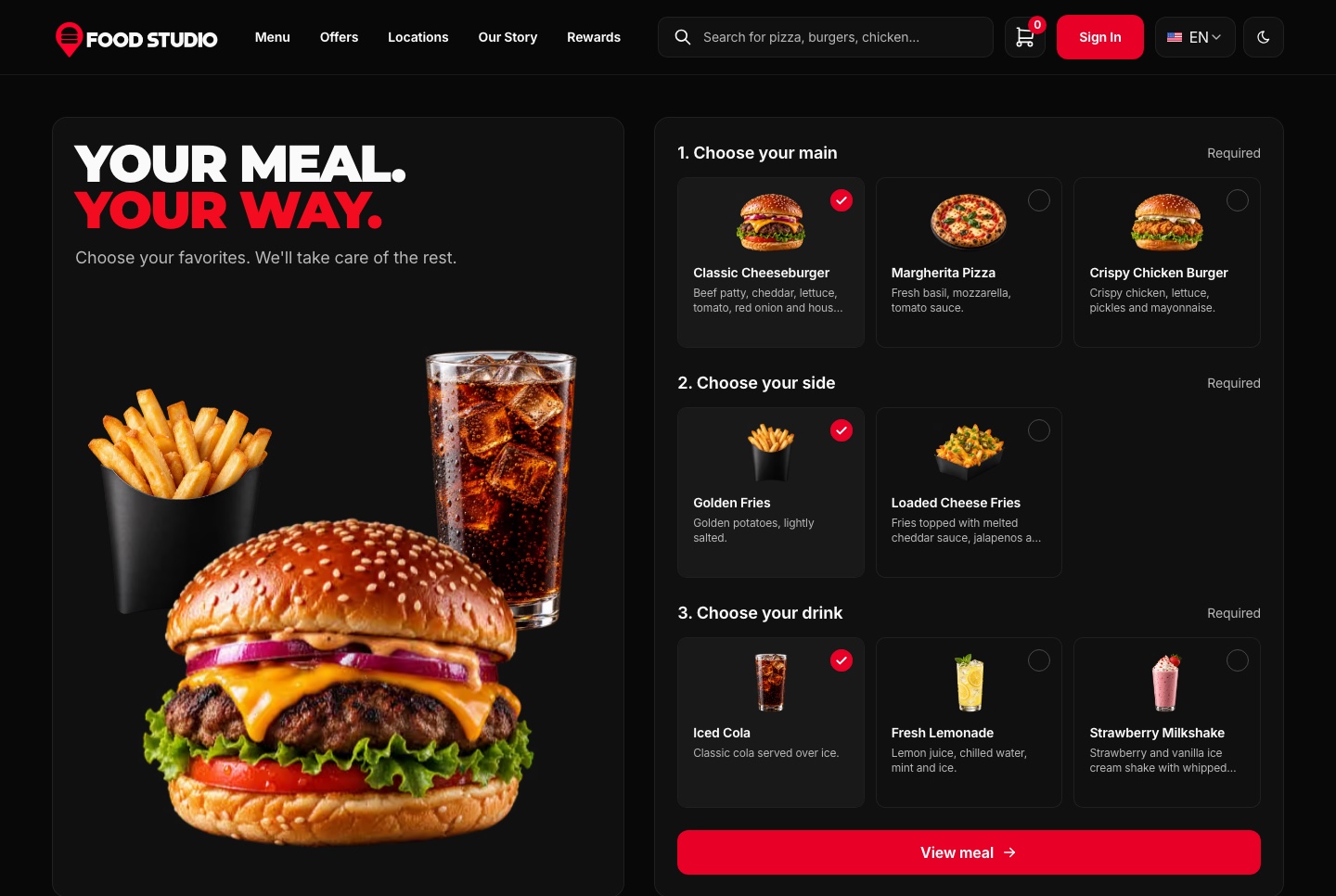
Guests pick a main, a side and a drink as cards and see them drawn together as one meal. While nobody touches it, the builder moves through combinations on its own, and View meal opens the combo with those choices already made.
- Dishes drawn from the combo the staff set up
- Chosen and arranged in the homepage editor
- Works the same in Arabic, right to left
From the cart to a paid order
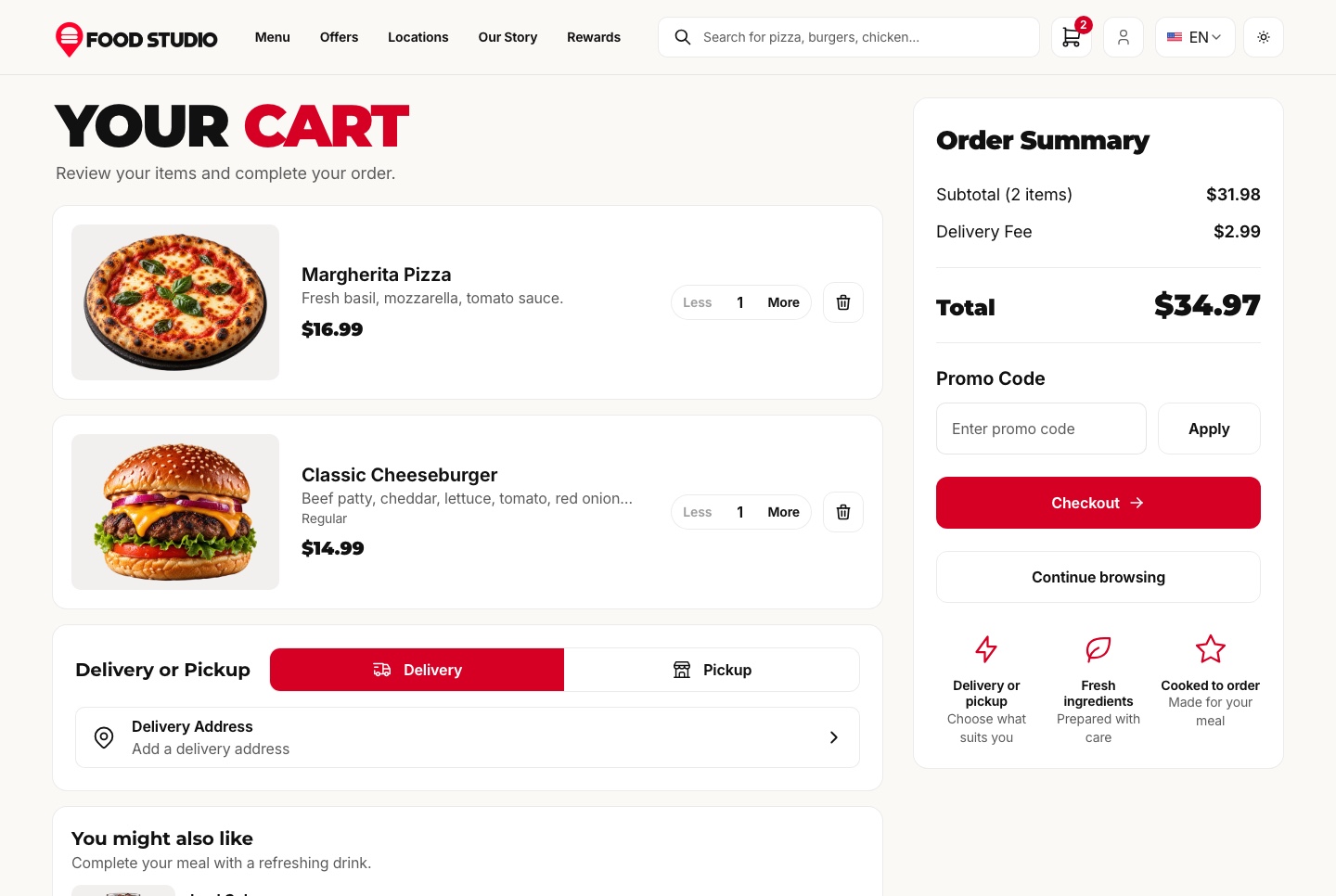
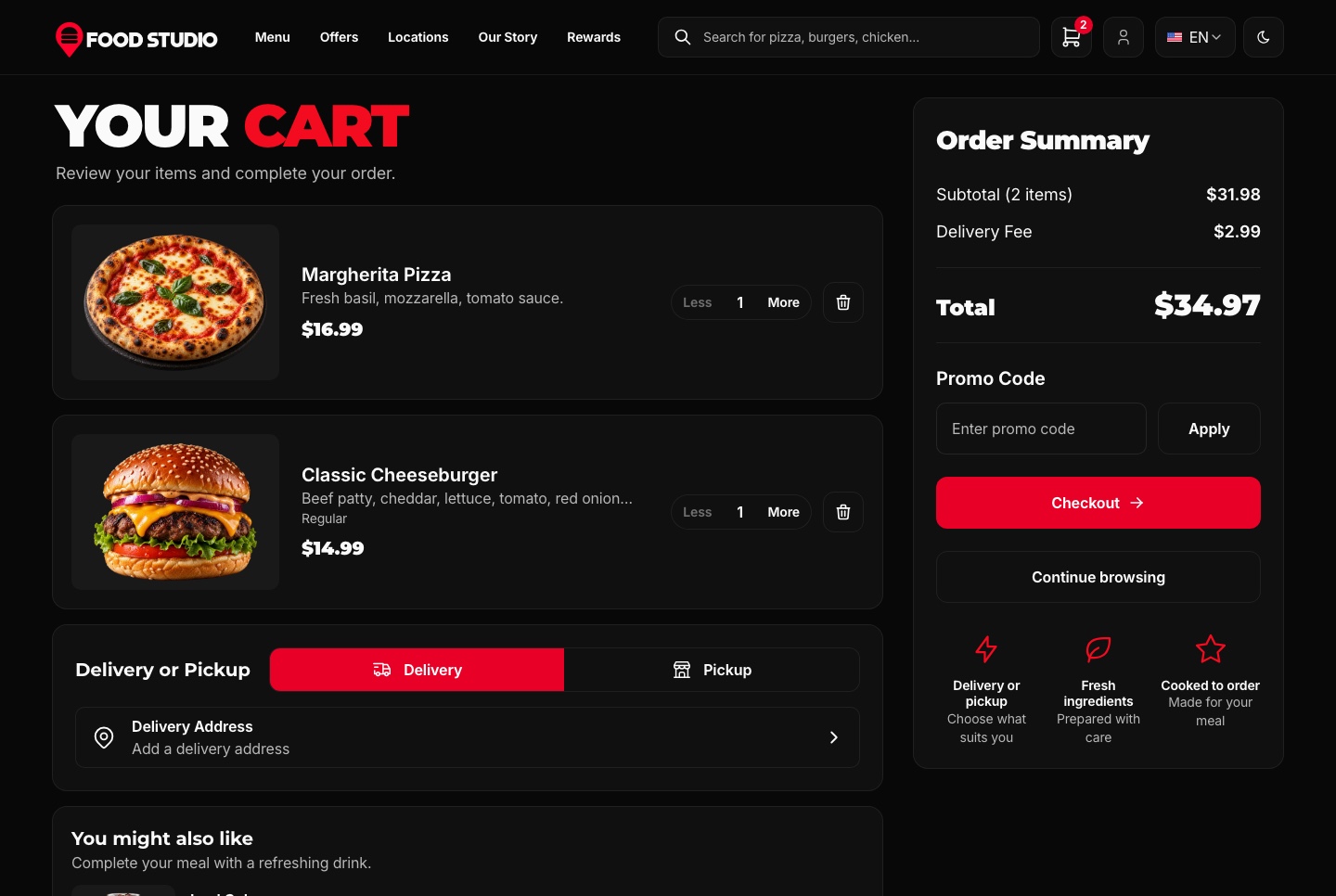
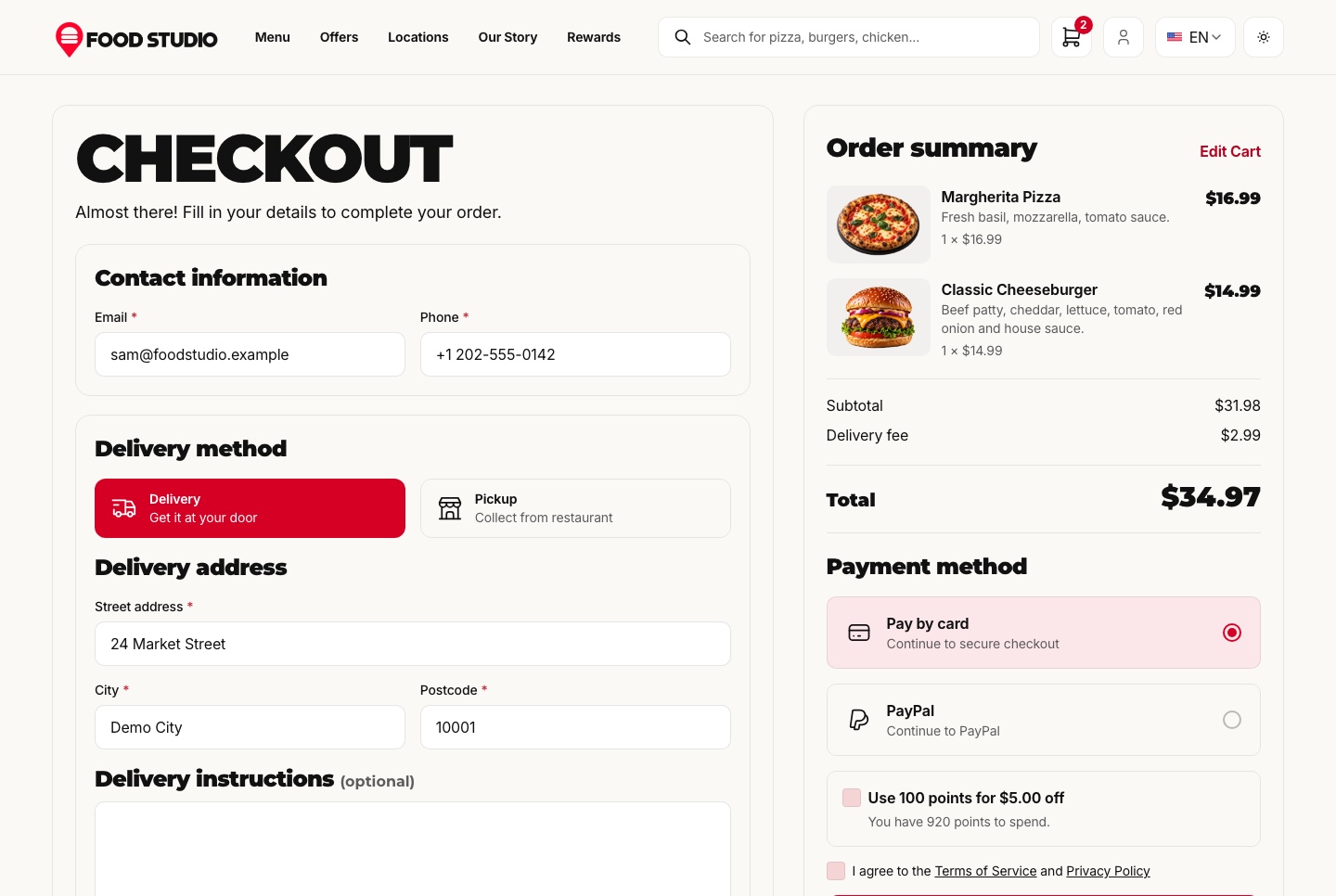
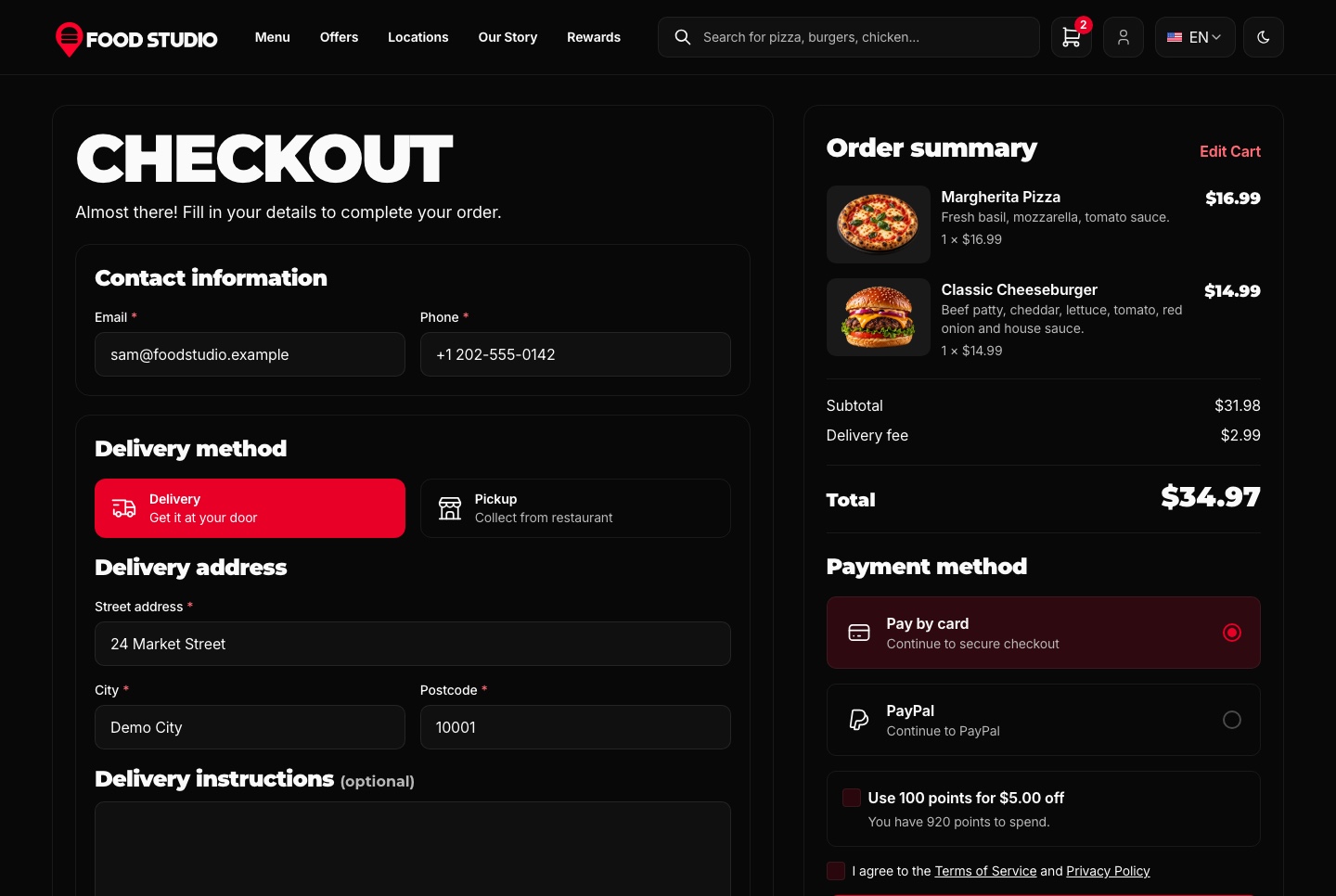
Guests choose delivery or pickup, and delivery is checked against the kitchen's postcodes, opening hours and minimum order before checkout. Promo codes, fees and reward discounts are applied by the server, which computes every price in cents.
Payment on the provider's own page
Checkout sends the guest to Stripe's hosted Checkout or to PayPal and confirms the order from the provider's signed webhook, so the website never shows a card field.
- One order per checkout, however many times it is submitted
- A demo payment while no real processor is configured
- Stock held for a pending order and released if payment fails
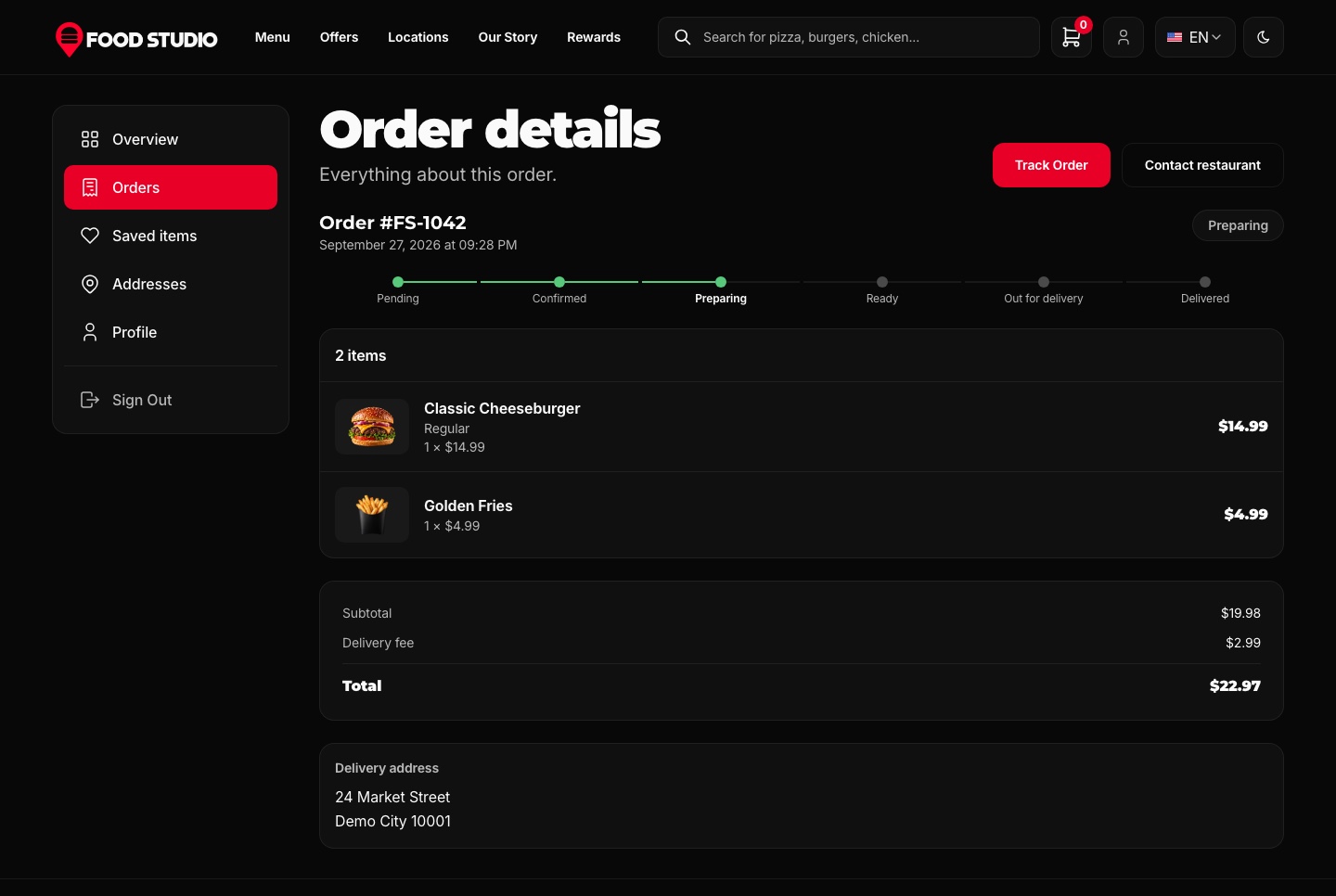
- A status timeline that refreshes every ten seconds
Accounts that bring guests back
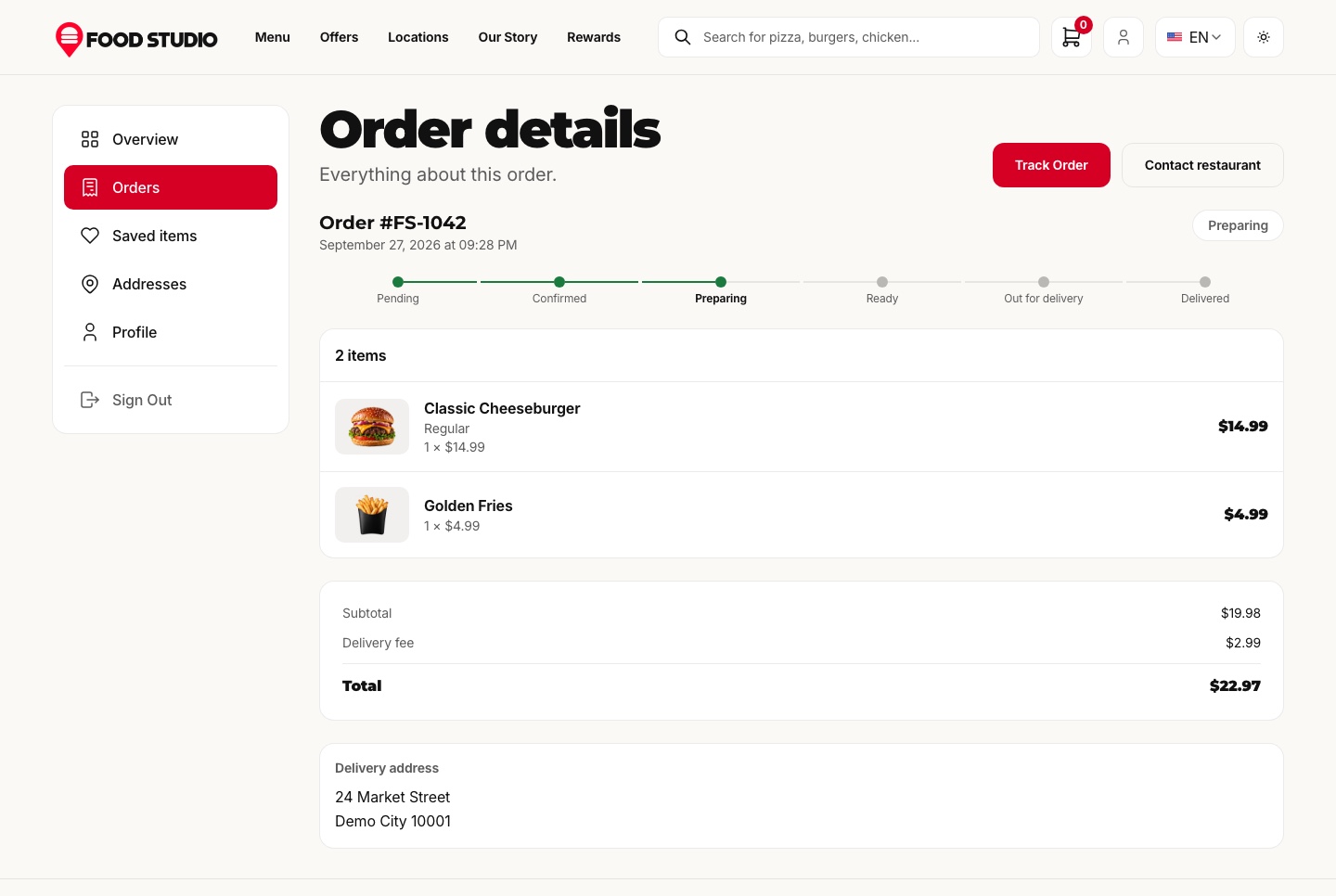
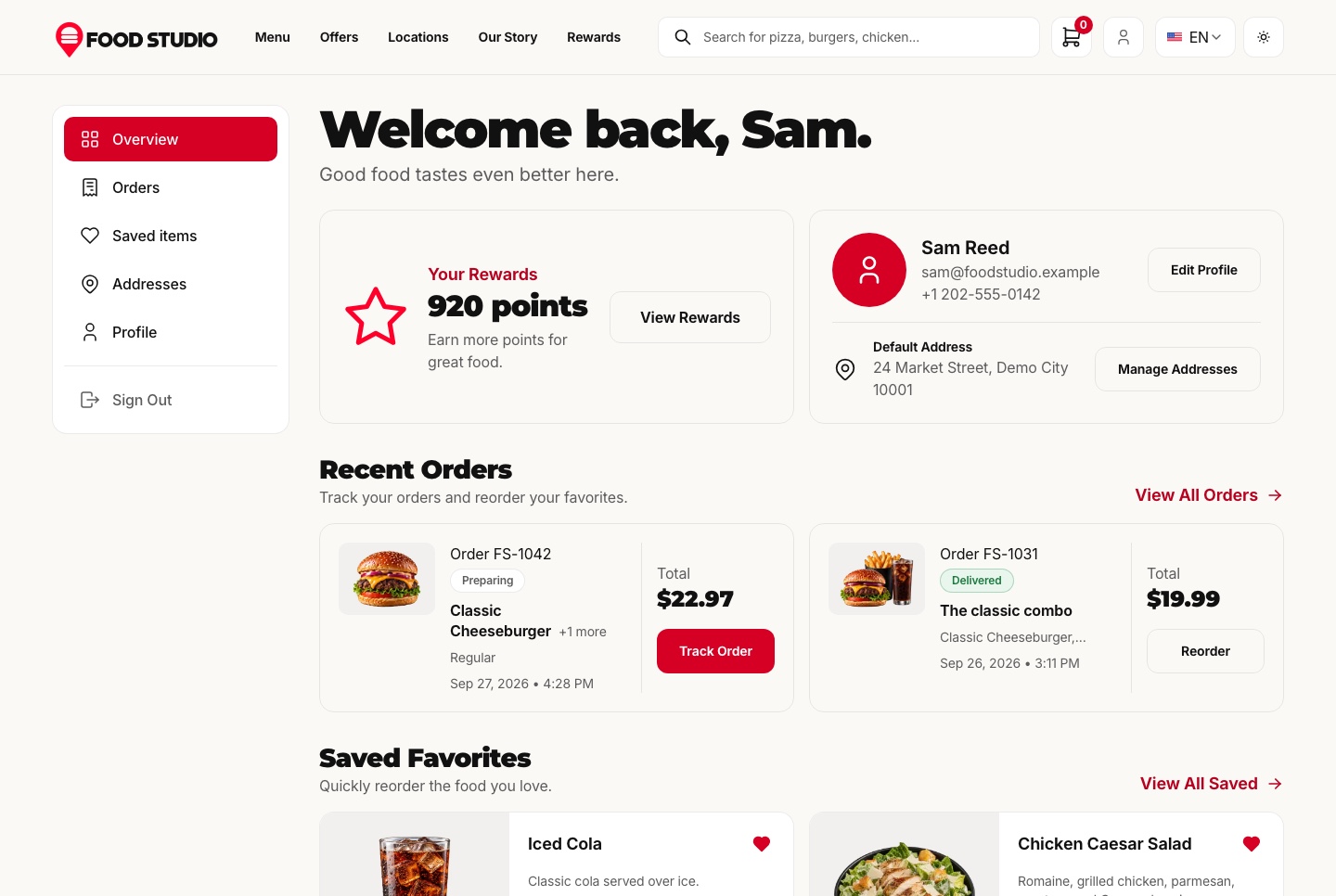
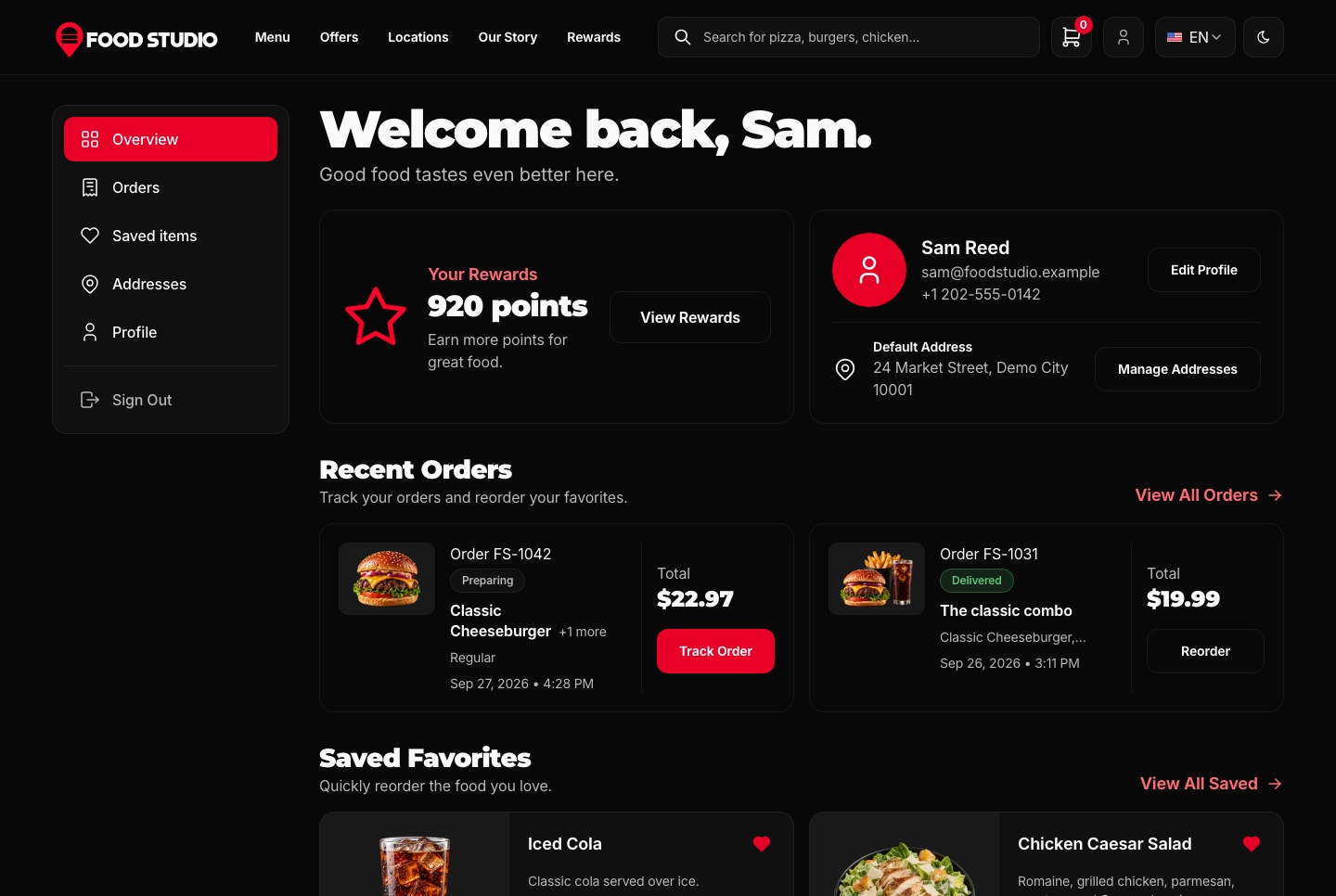
A customer account keeps the bag on the server, the saved dishes, the addresses and every past order with a reorder button. Guests can still order and track without signing up.
- One point per dollar, credited when an order is delivered
- 100 points take $5 off, once per order
- A guest's bag and saved dishes kept when they sign in
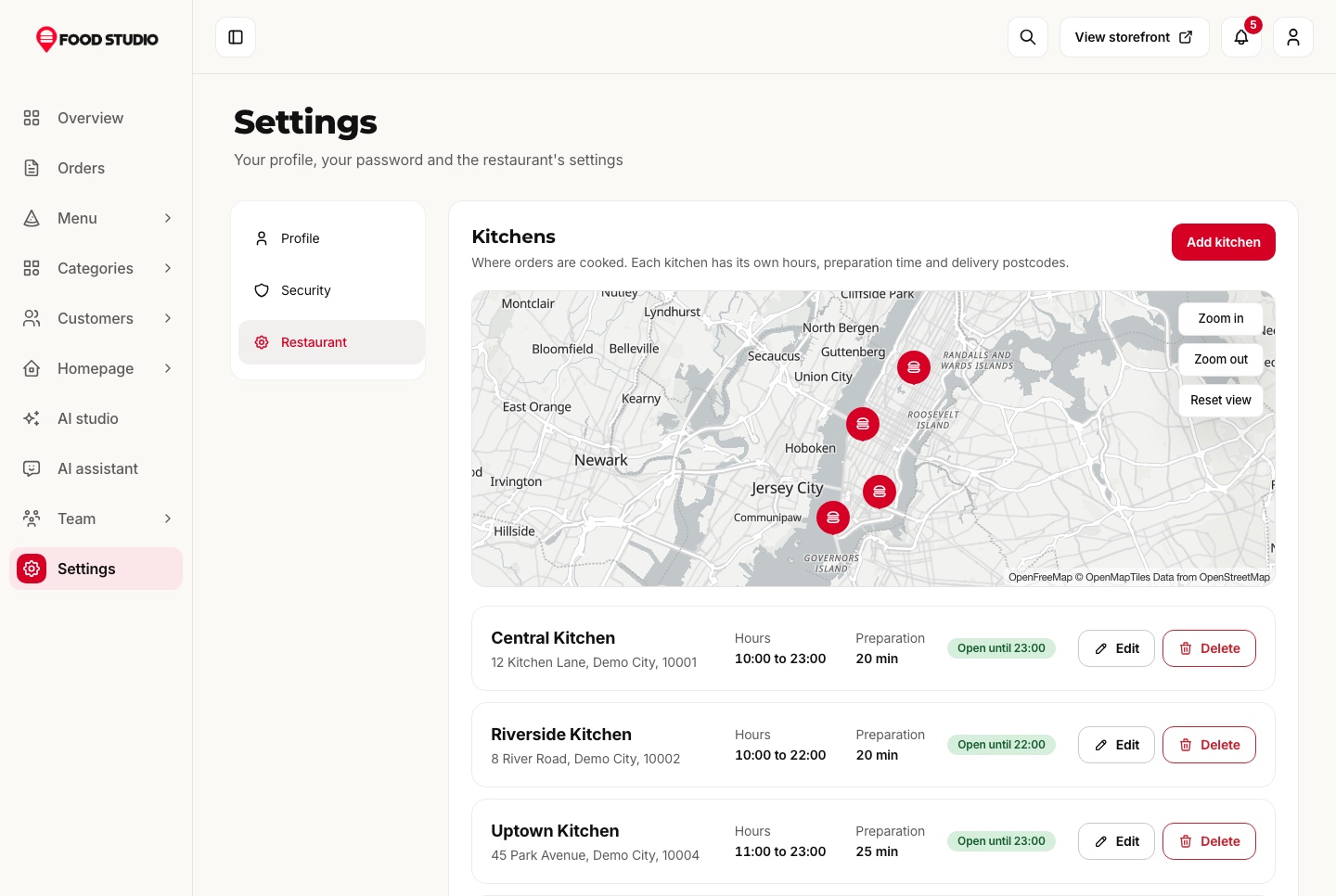
Several kitchens, each with its own area
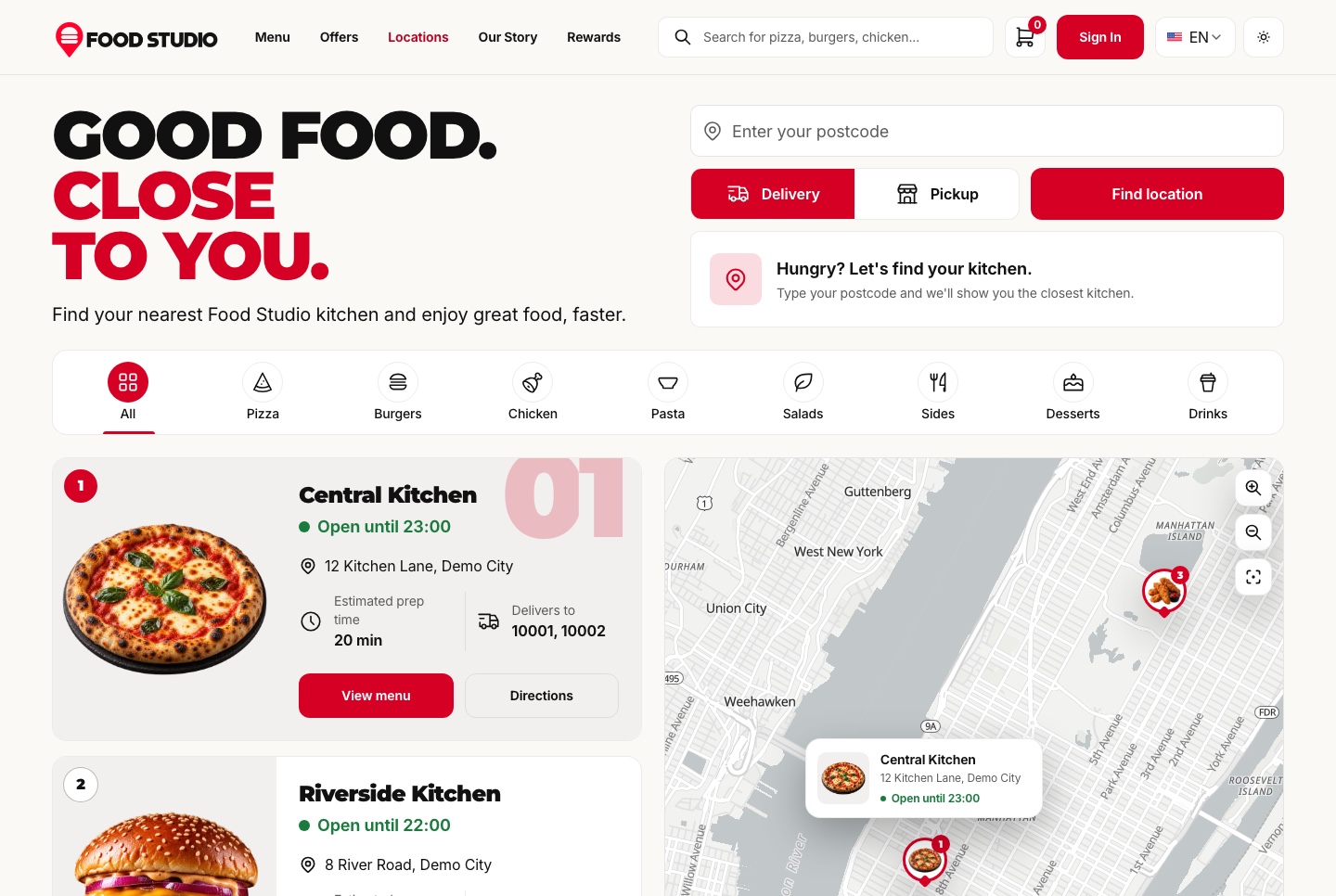
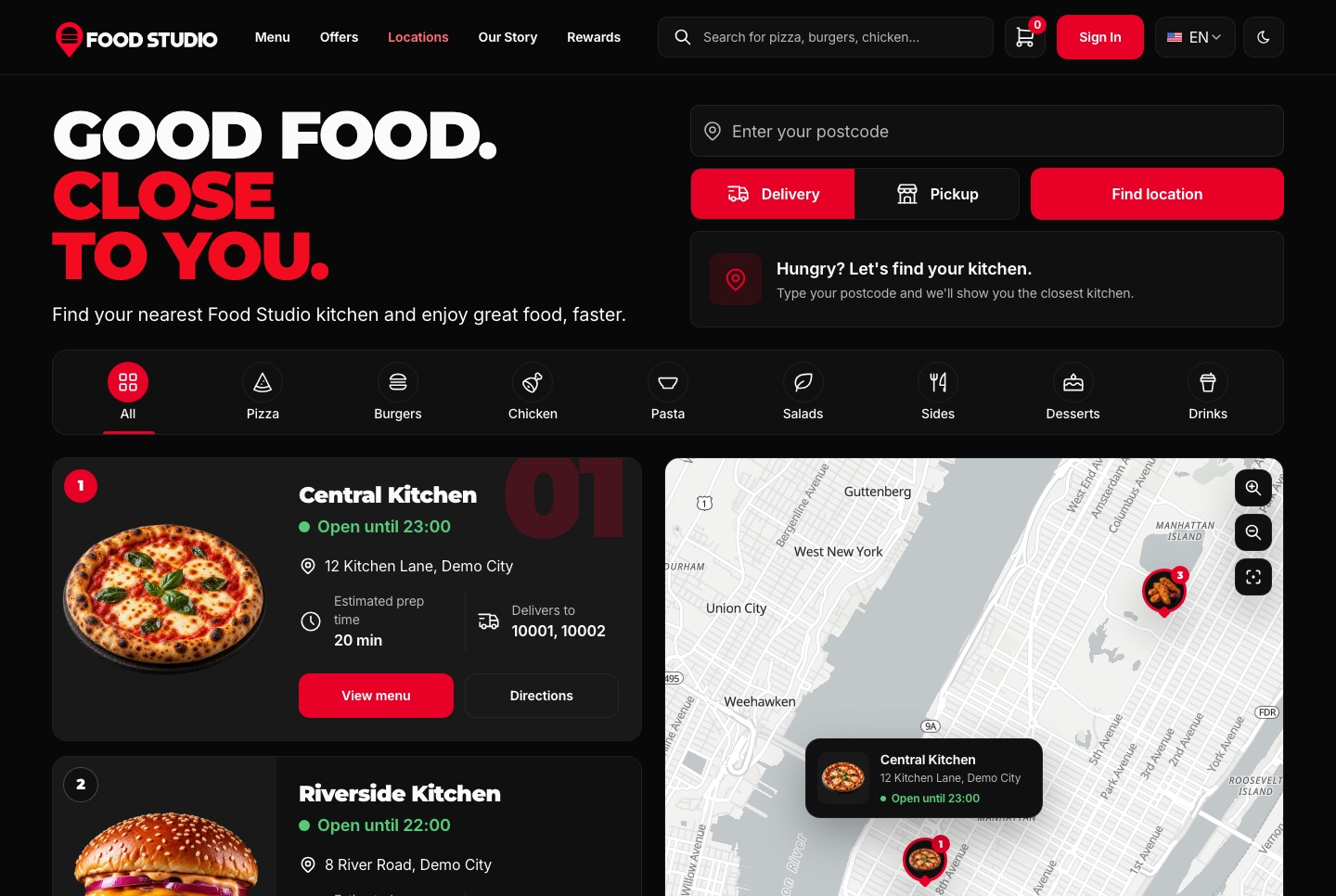
Each kitchen has its opening hours in its own time zone, overnight shifts included, and the postcodes it delivers to. A postcode search tells the guest whether a kitchen delivers there, is closed right now, or which other kitchen can take the order, on a real map.
A dashboard built around orders and the kitchen
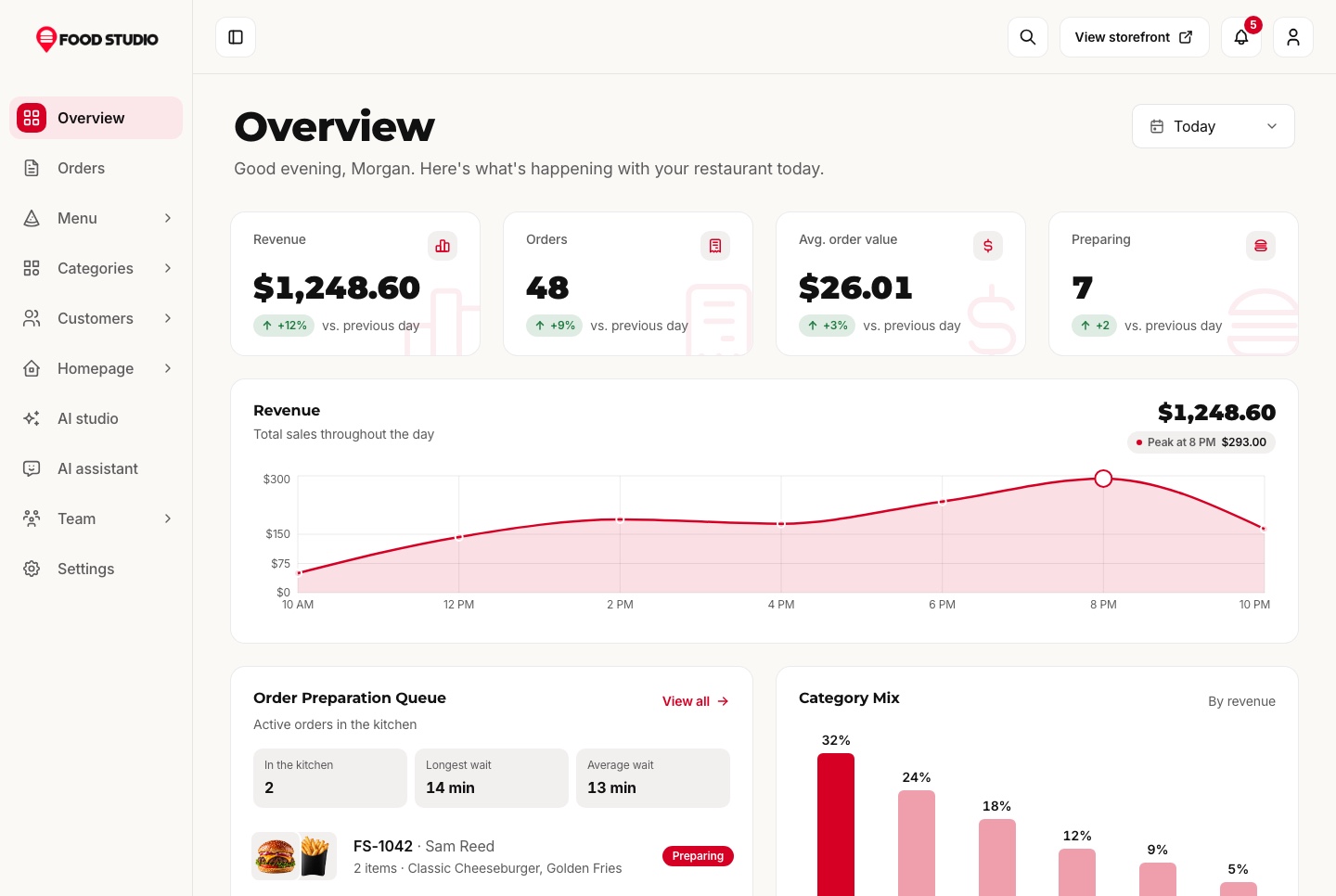
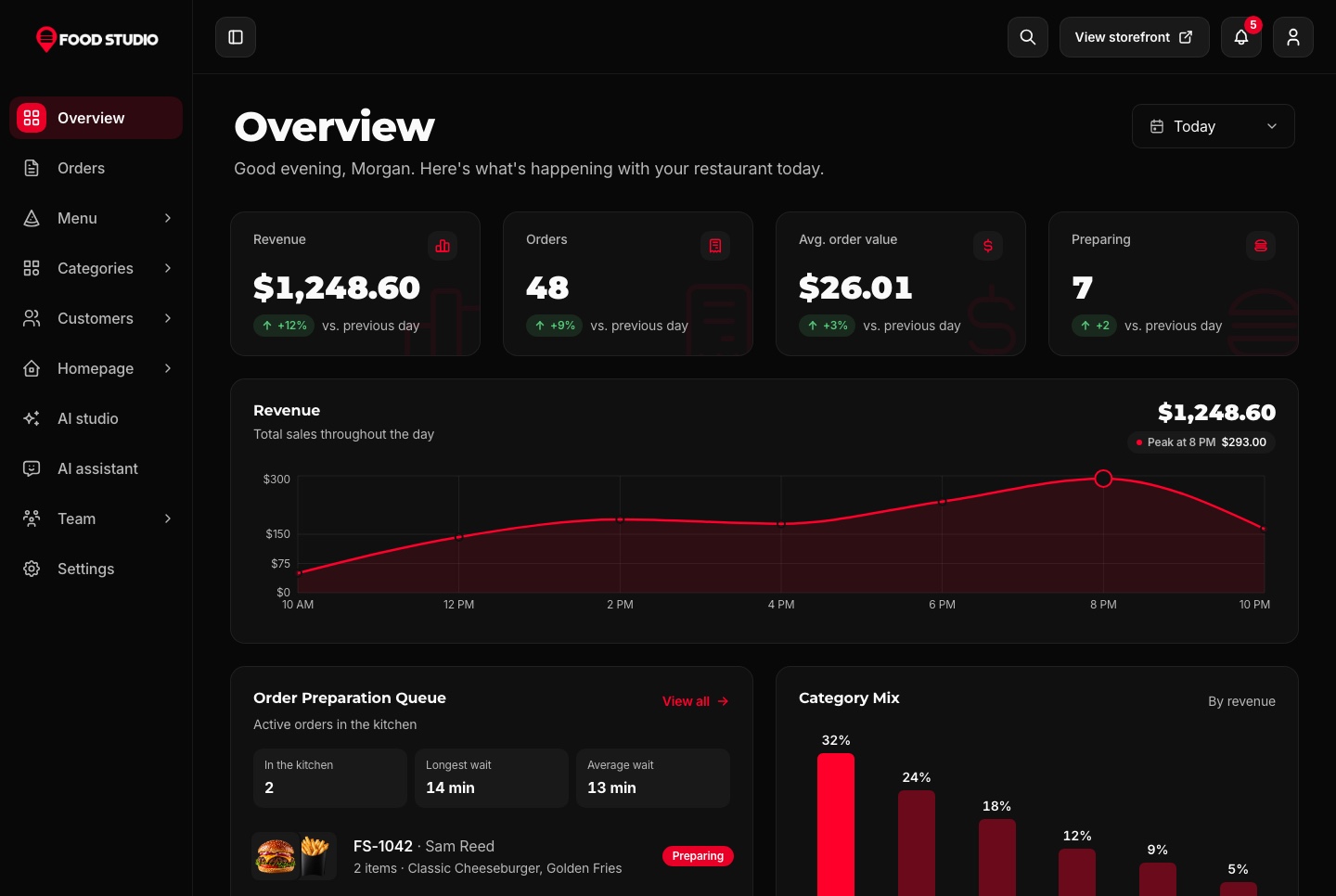
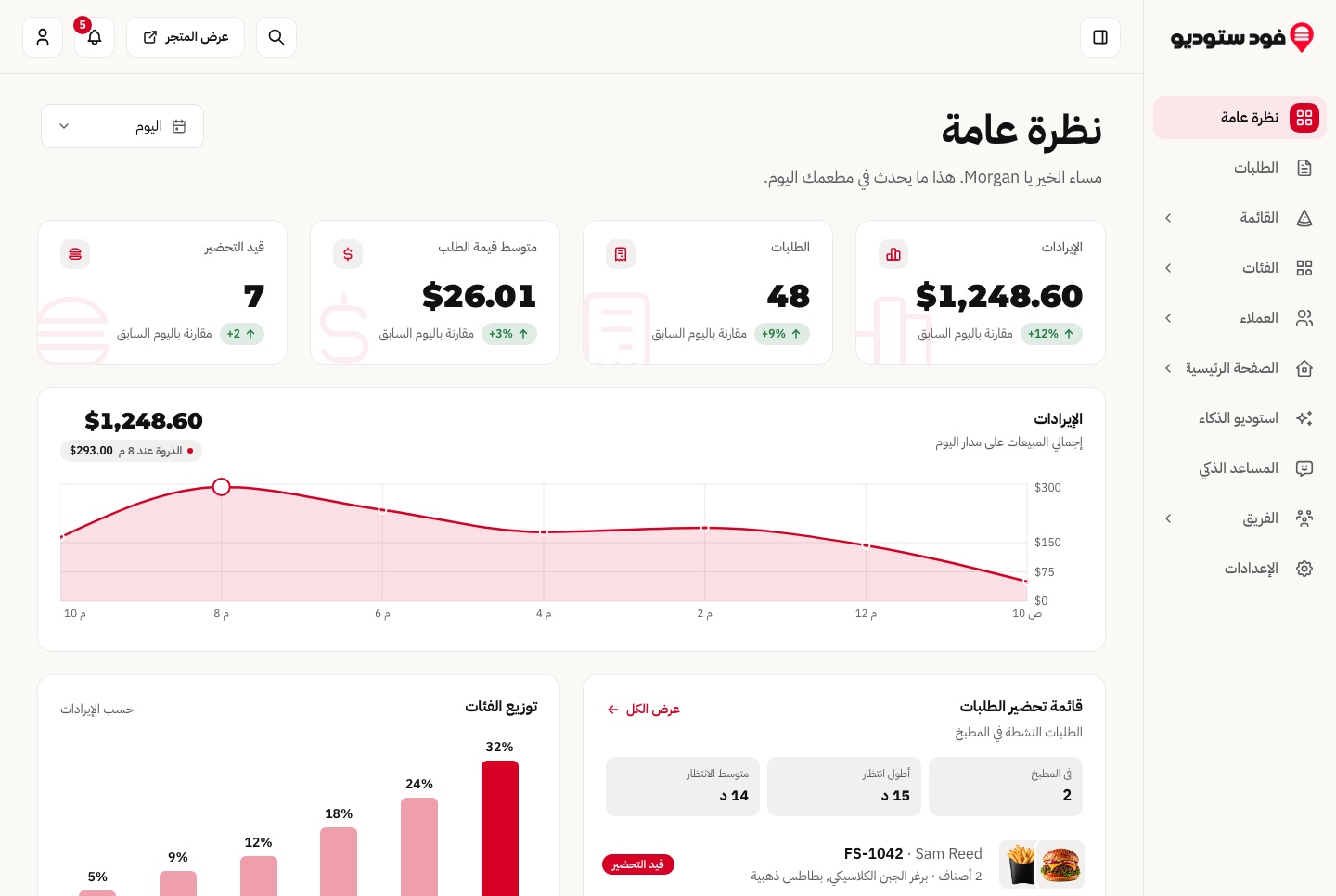
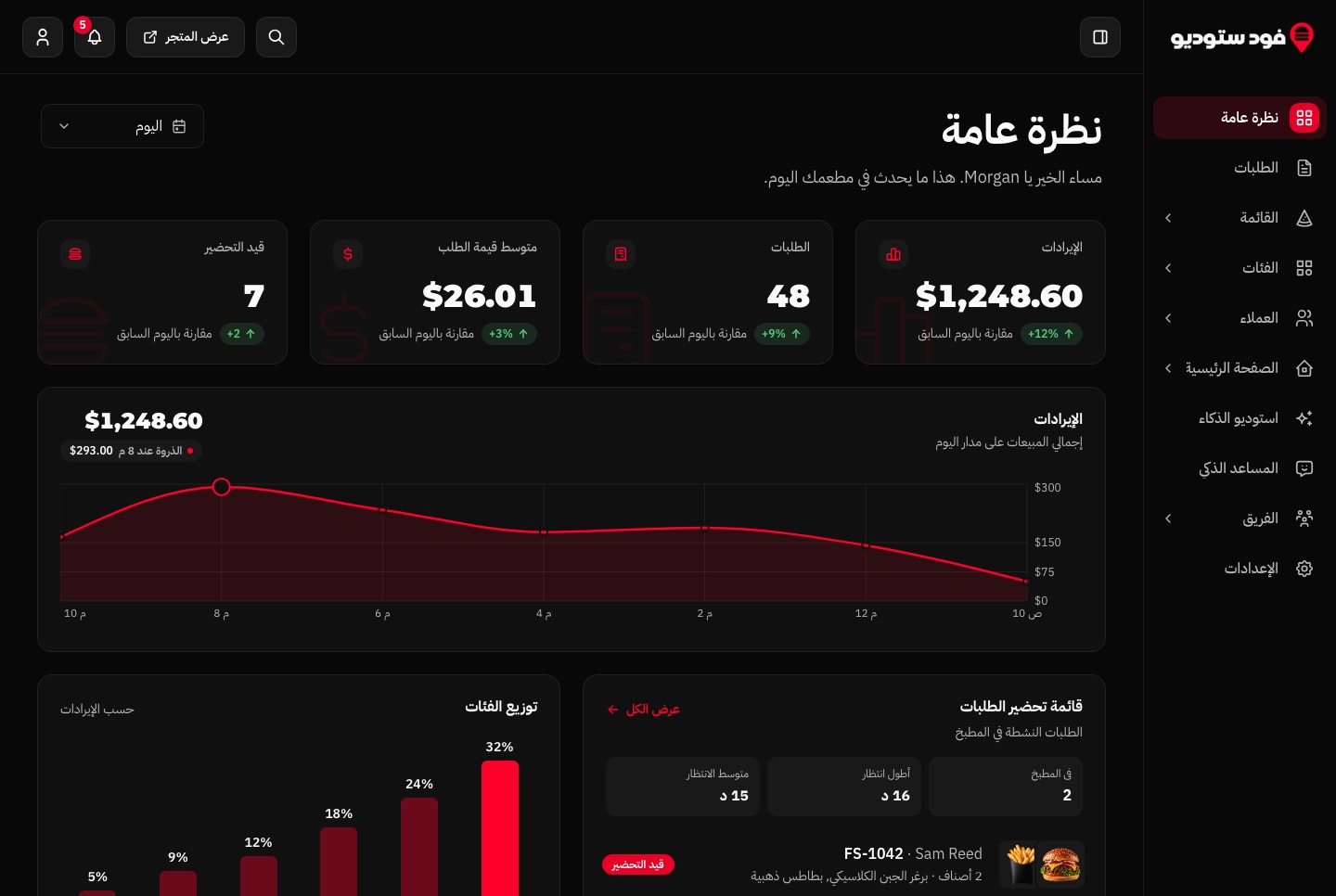
The overview opens on today's revenue, orders, average order value and the orders in preparation against the day before, with the revenue through the day, the category mix, the most popular dishes and the kitchen queue. A new order refreshes it the moment it arrives.
Orders with a timeline
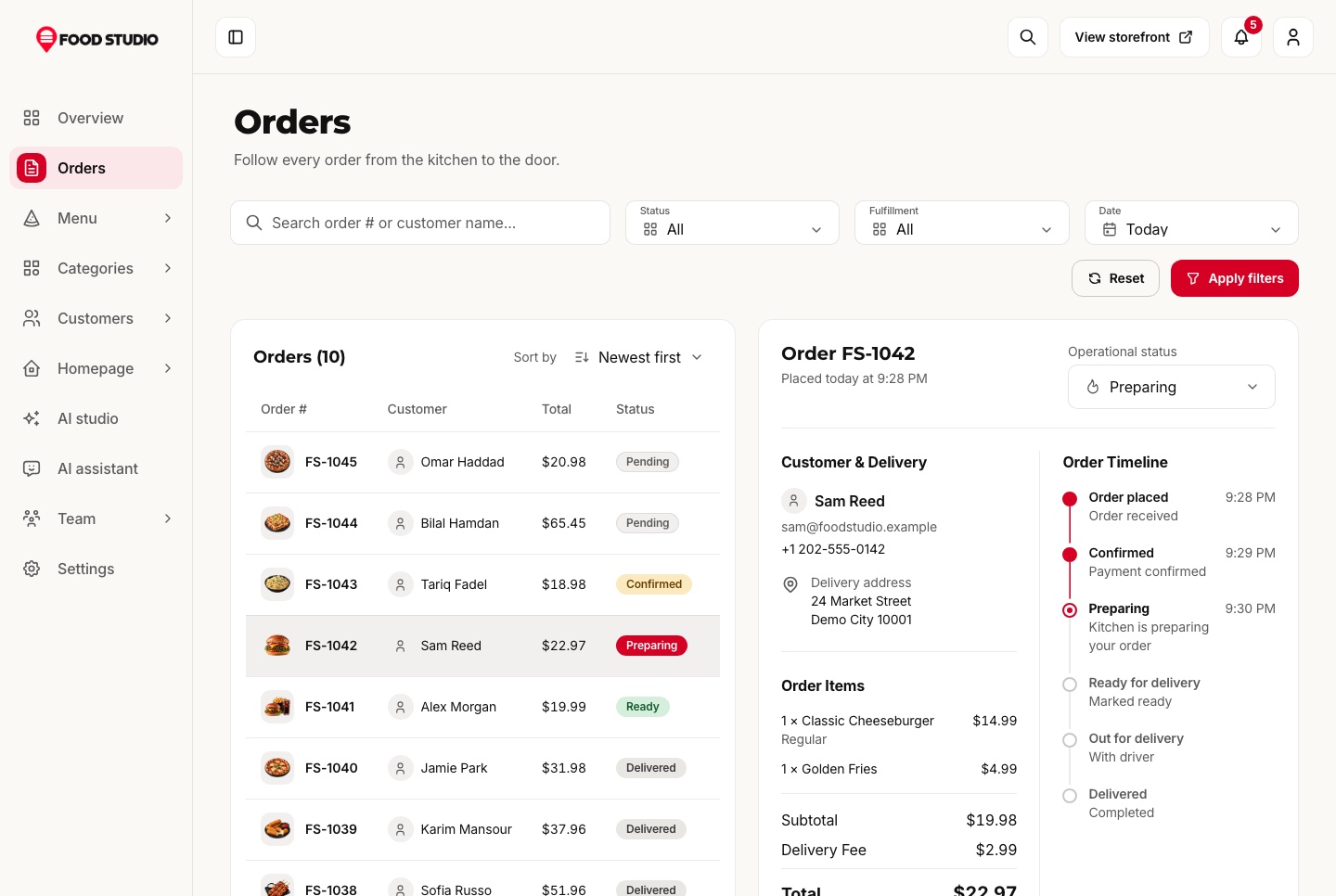
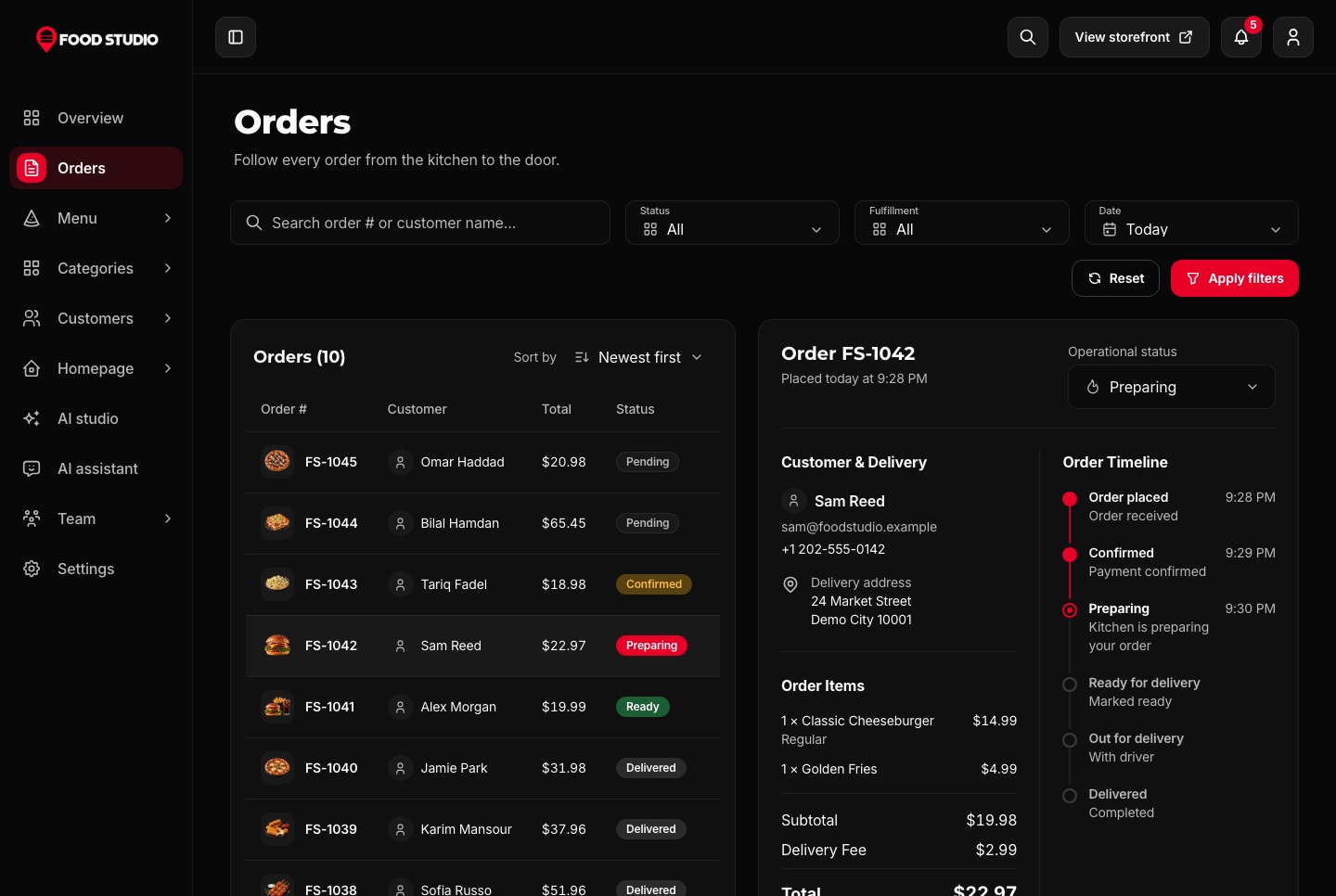
Every order opens in a panel with its items, the customer, the totals and a timeline of each change. Only the next steps that make sense are offered, and the server refuses any other.
- Pickup orders skip the delivery step
- A reason required to cancel
- A notification the moment an order arrives
A dish editor in two languages
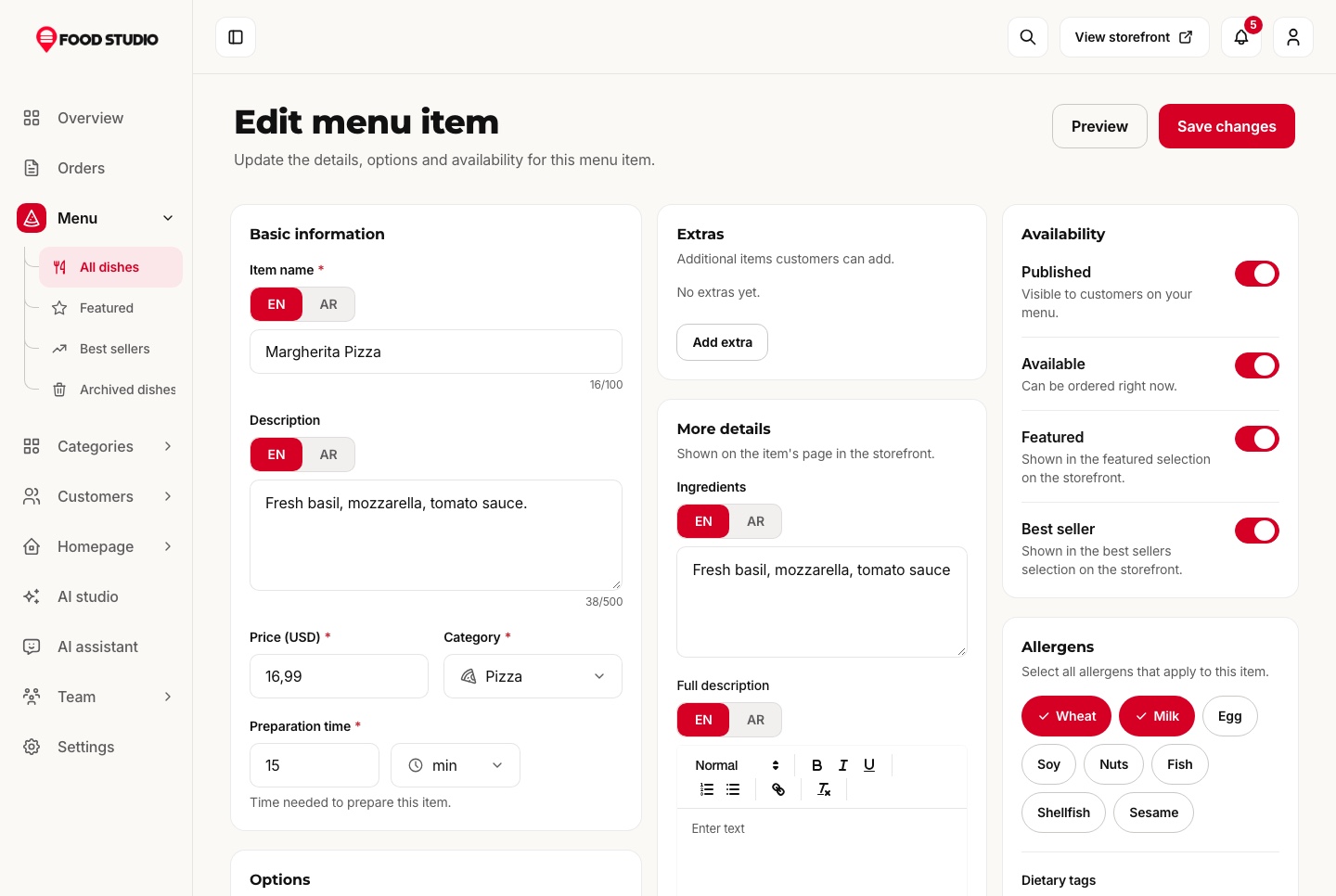
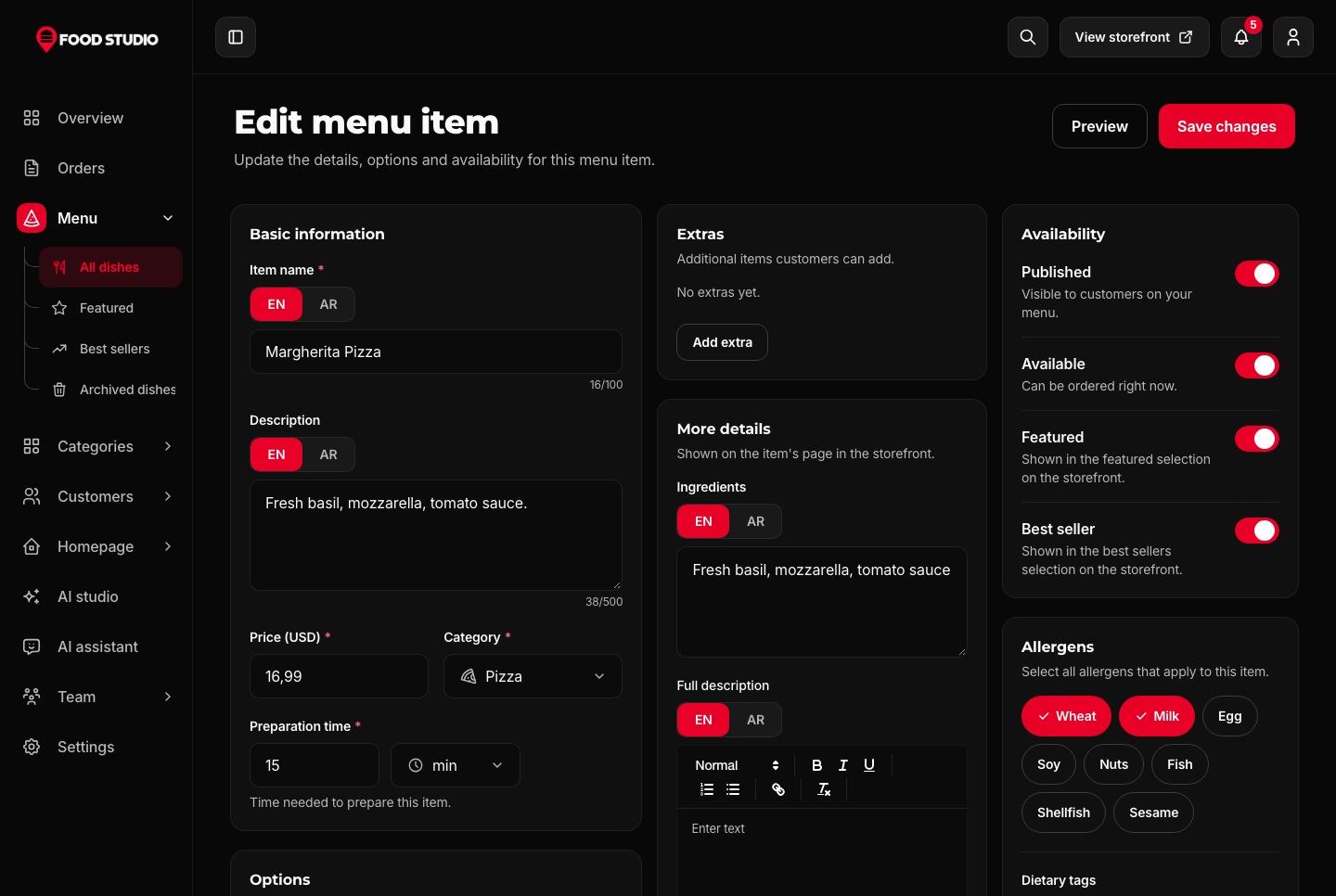
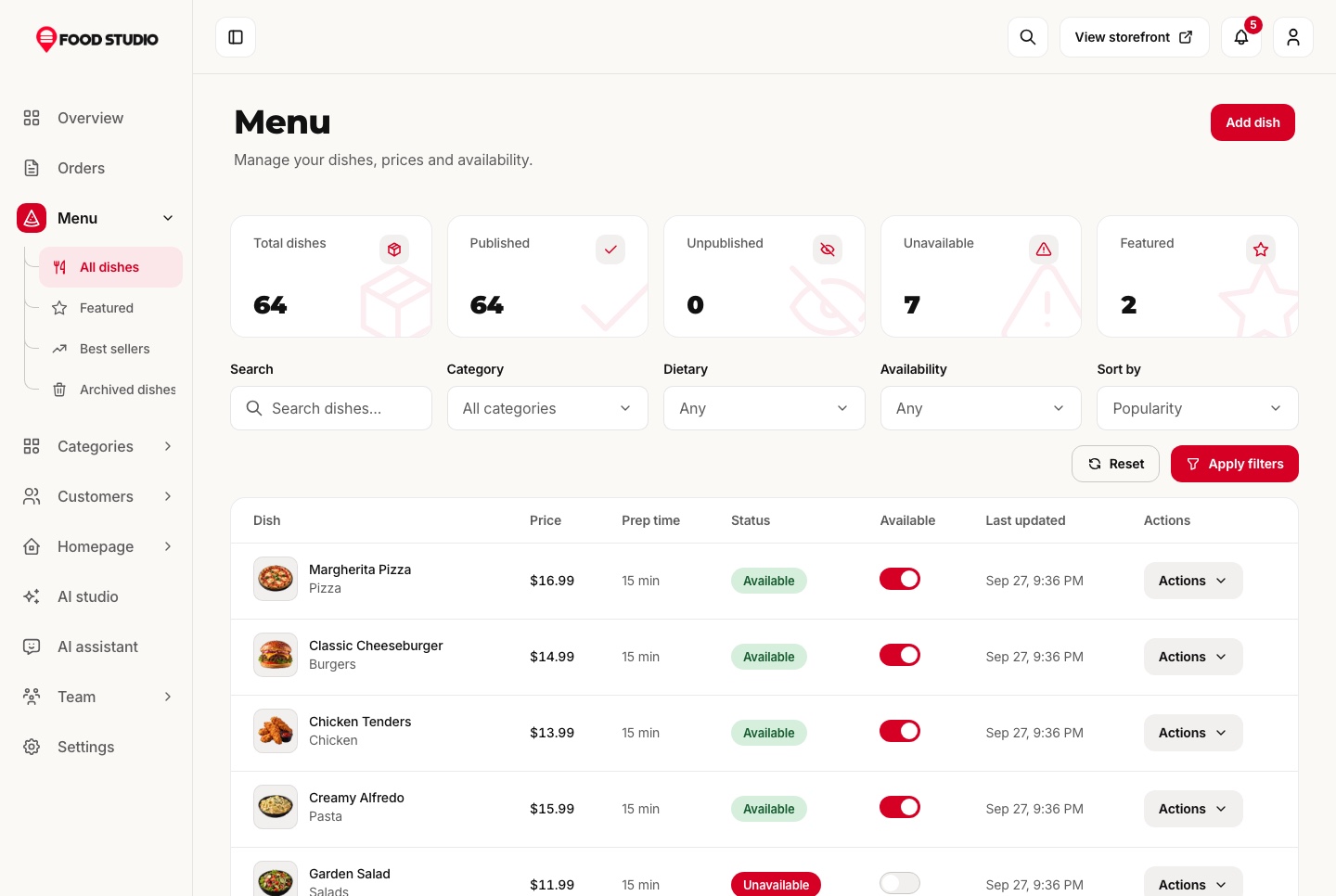
Name, description and ingredients in English and Arabic, photos or a video, a category, a preparation time, allergens and dietary tags, and extras as groups with their own minimum, maximum and prices.
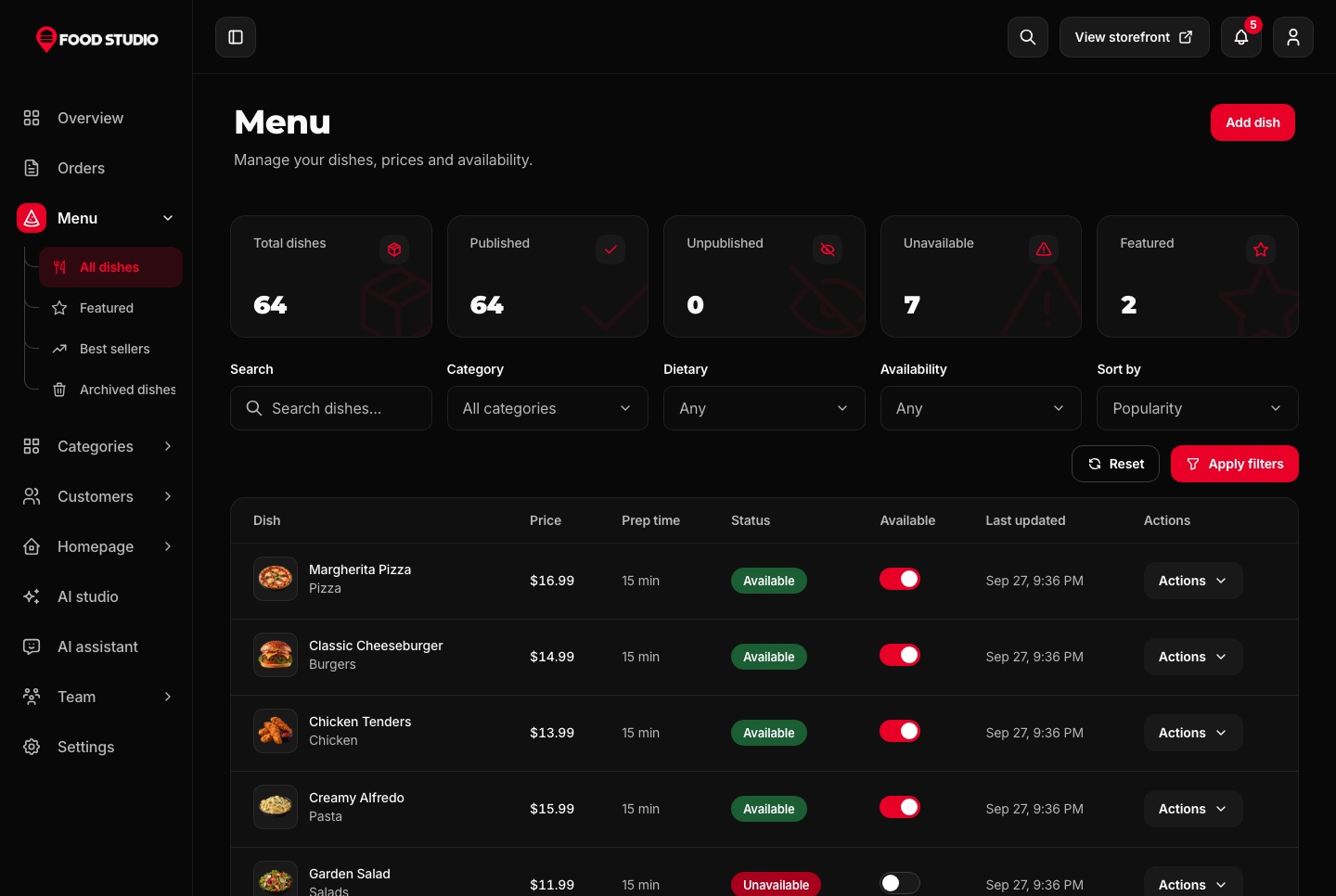
- Availability switched on each row of the menu
- Optional stock that refuses an order it cannot fill
- Featured, best seller and archived lists
The home page, section by section
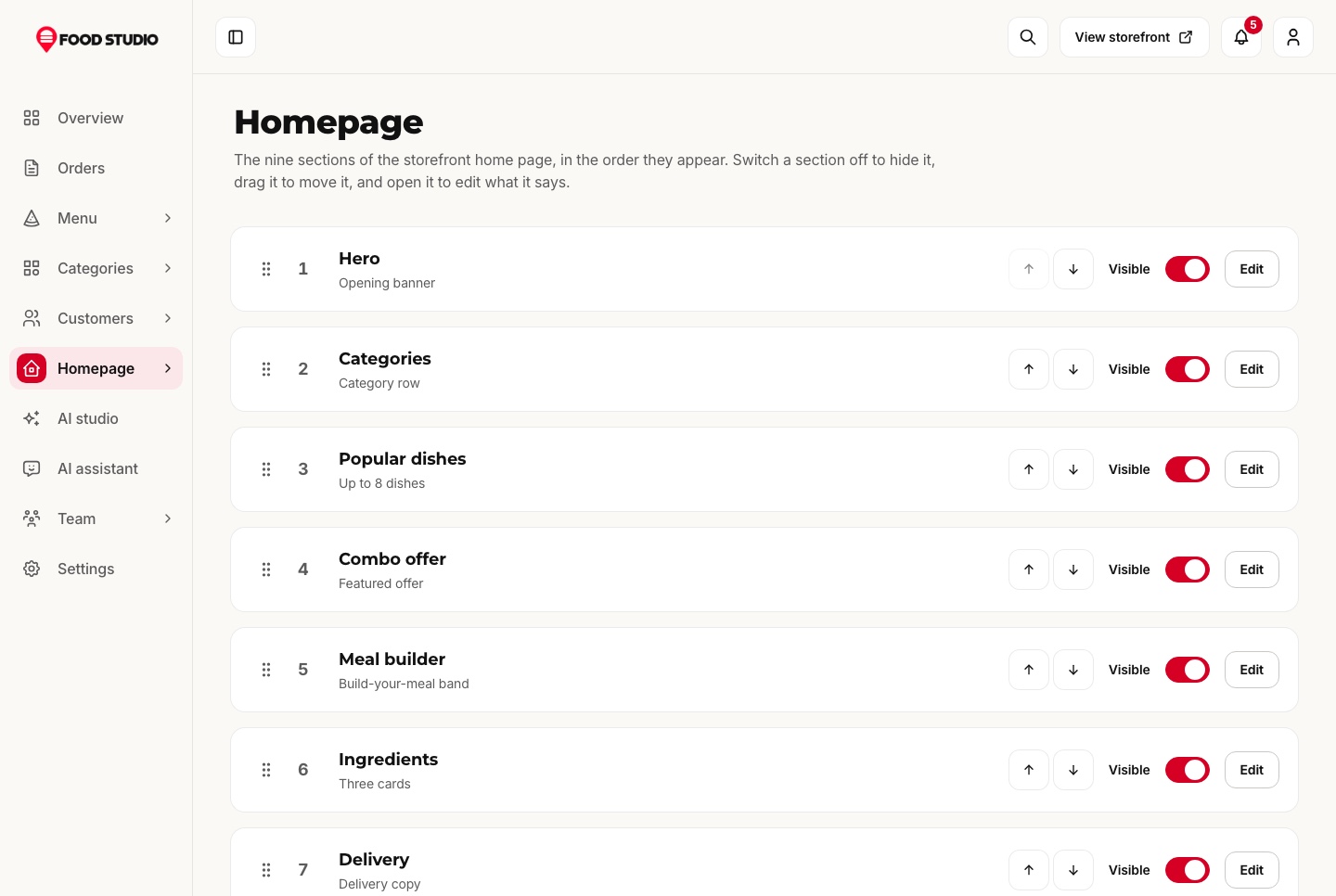
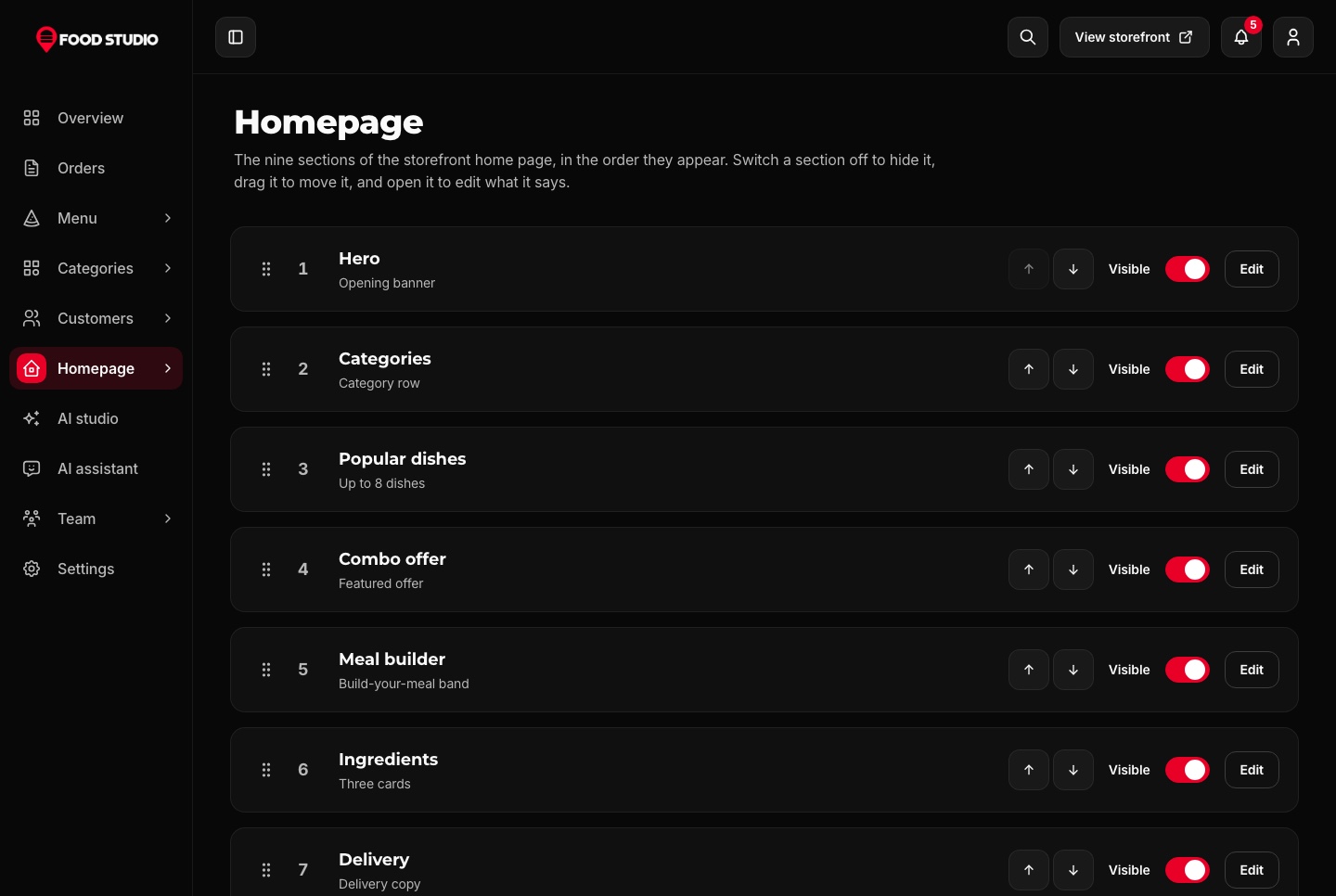
The nine sections of the home page are switched on or off, moved up or down and edited in place: the hero, the categories, the popular dishes, the combo, the meal builder, the ingredients, delivery, rewards and the questions.
- Every text in English and Arabic
- Popular dishes picked from the menu
- No code change to rearrange the page
Customers and their points
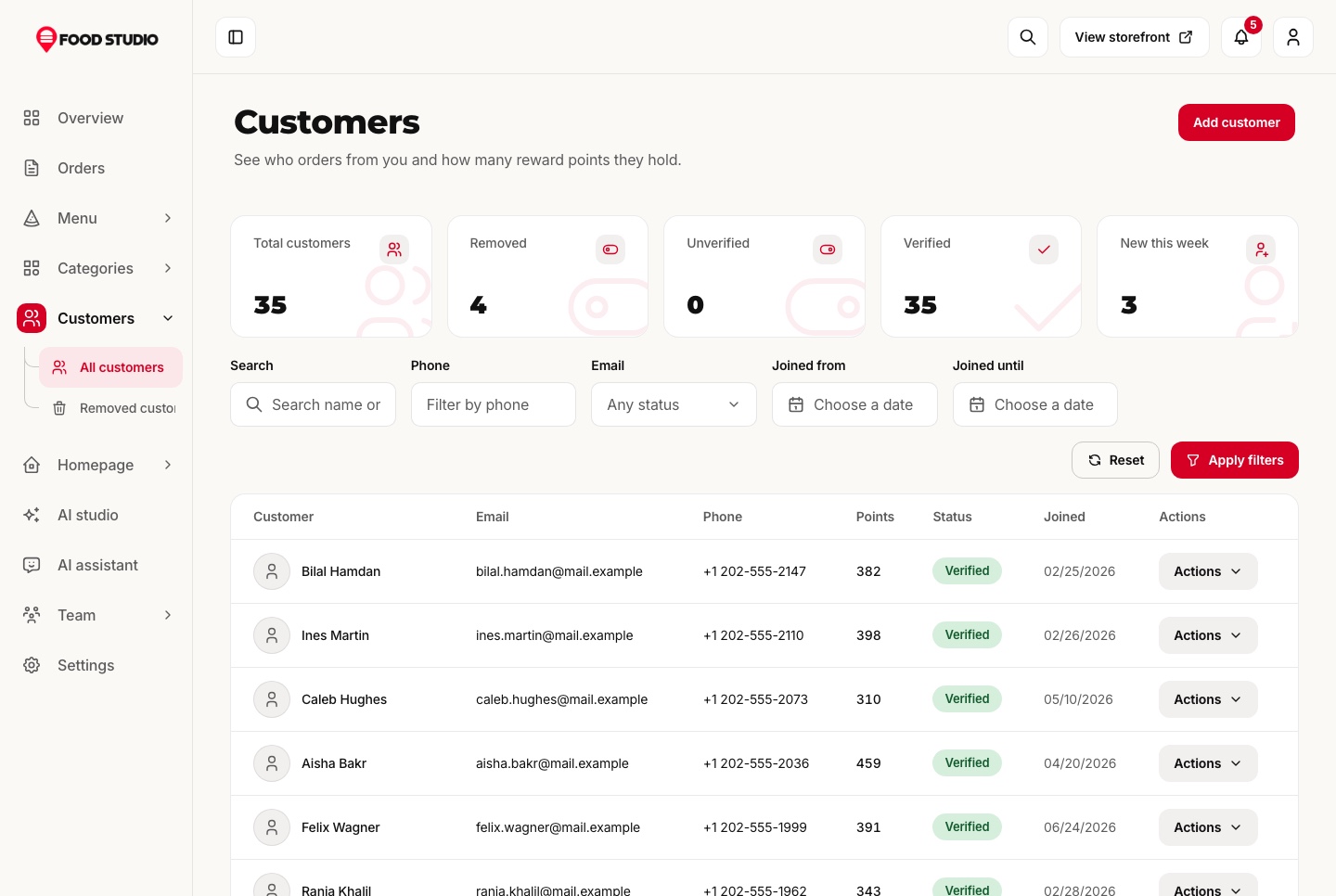
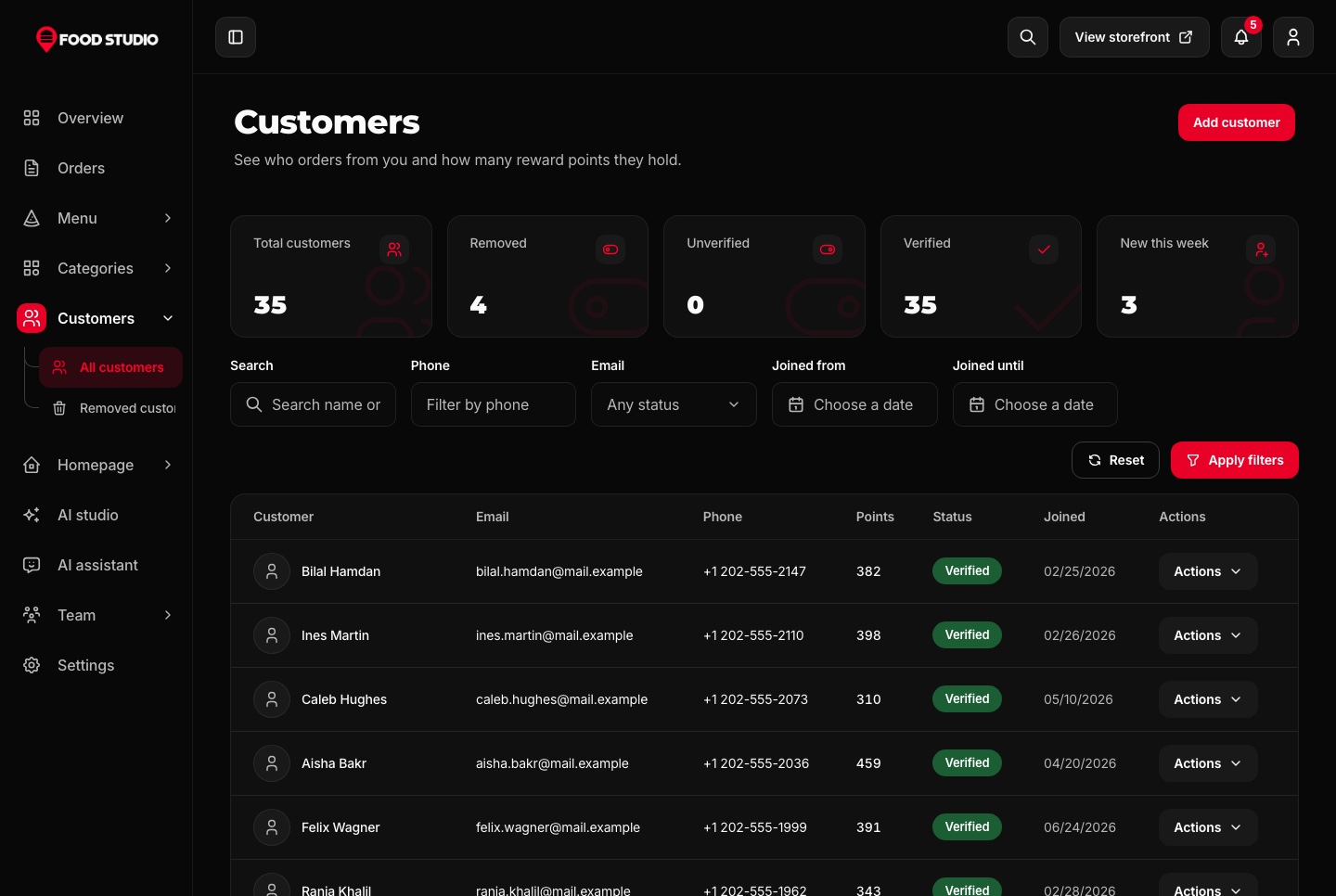
Every customer with their contact details, their reward points and when they joined, filtered by name, phone, email and date.
- A detail page per customer
- Removed customers kept apart and restorable
- Points recorded in a ledger for each order
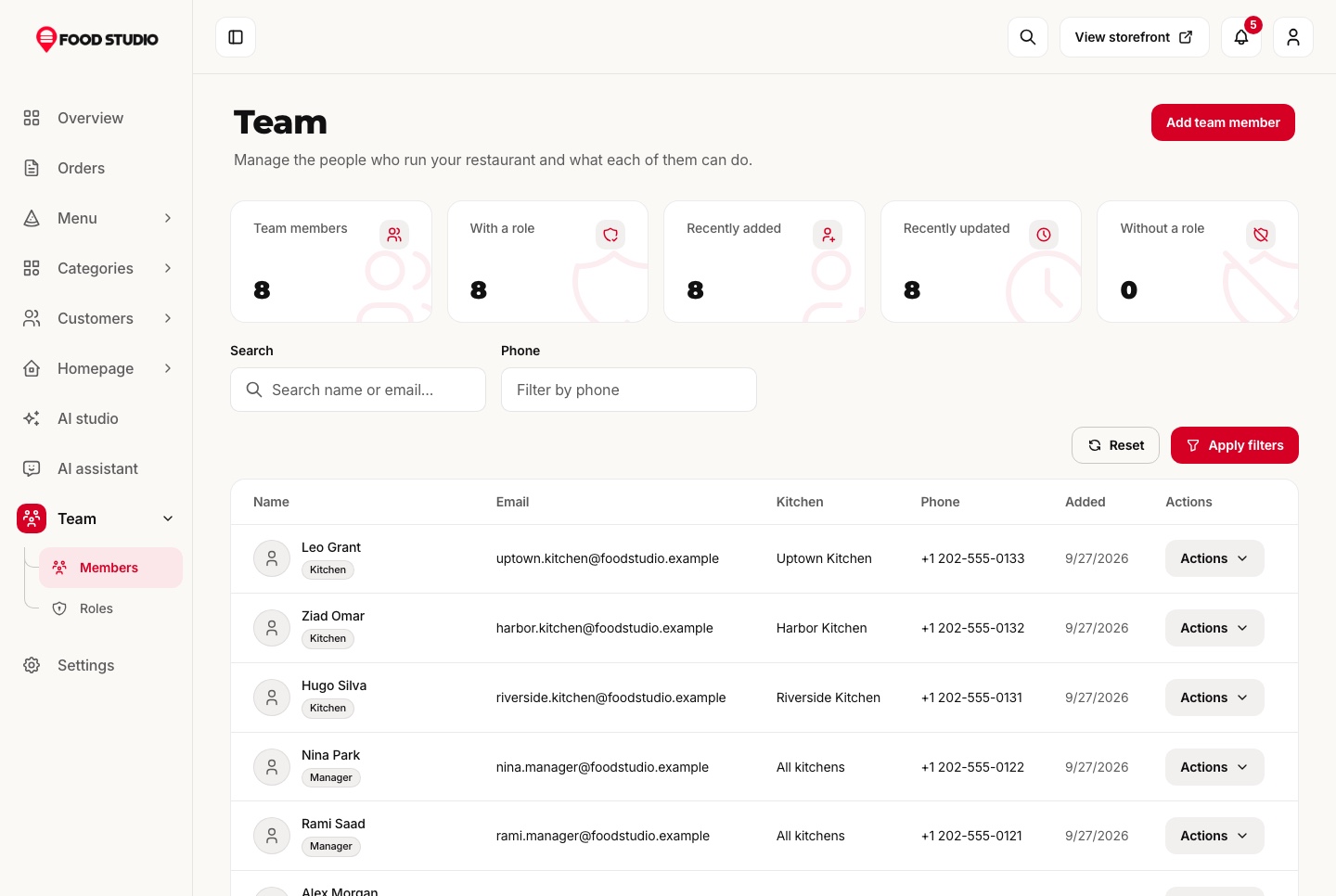
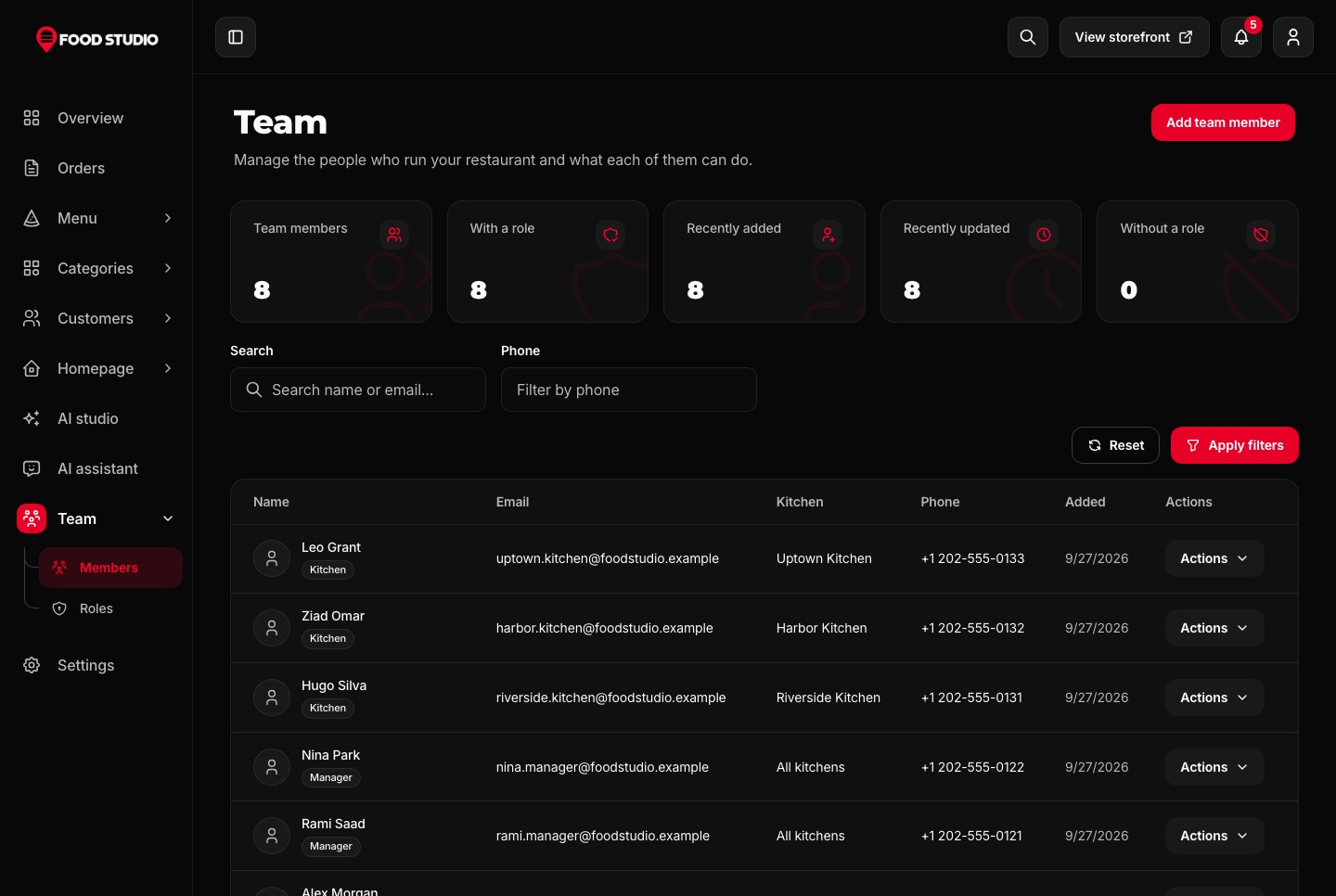
A team with roles and kitchens
Owners, managers and kitchen staff each get the permissions their role allows, and roles are edited permission by permission. A kitchen account sees only its own kitchen's orders, without prices, and moves them from confirmed to ready.
- Menu items and actions hidden without the permission
- Roles created and edited from the dashboard
- Each kitchen account tied to one kitchen
Settings the restaurant owns
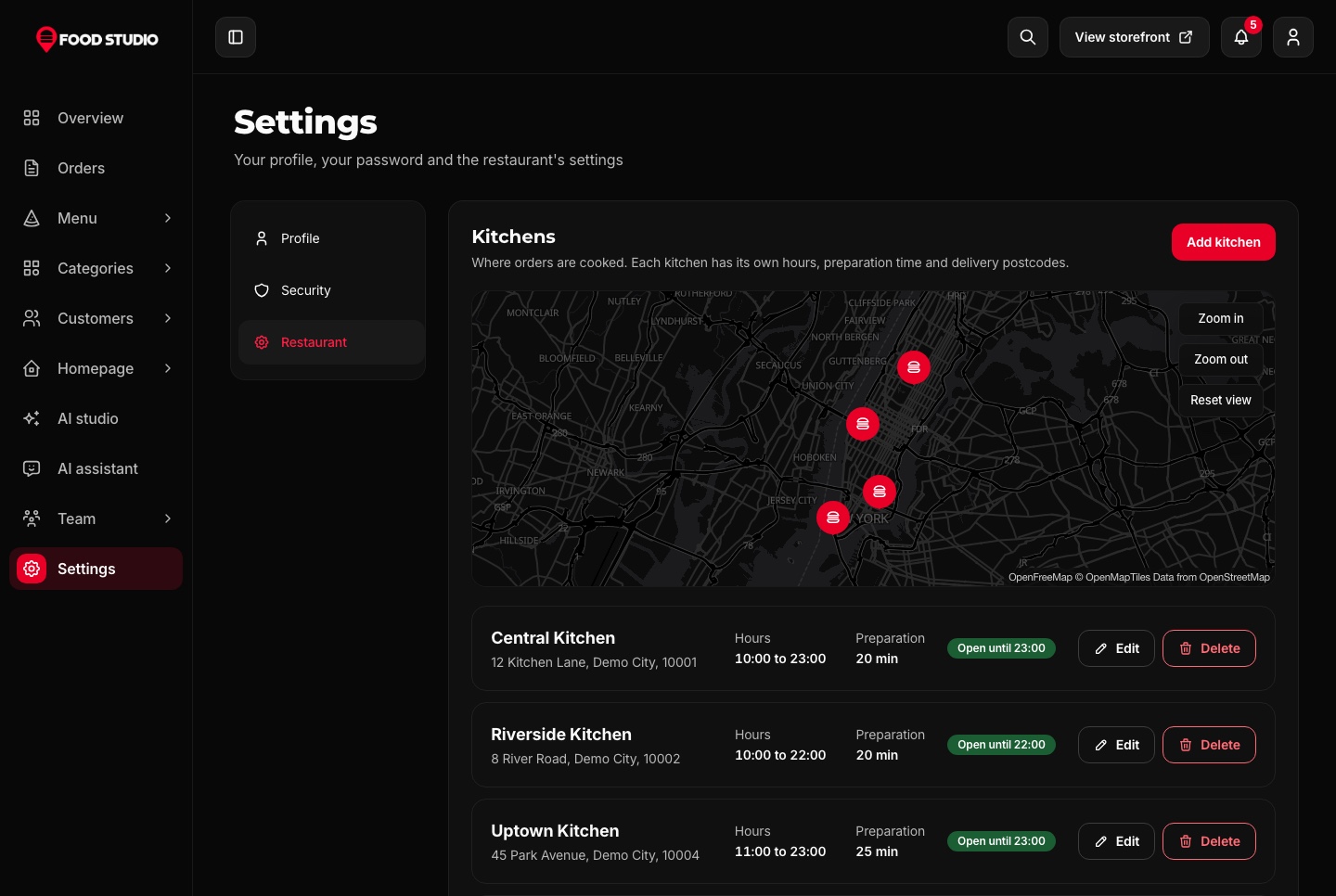
Kitchens pinned on a map with their hours and postcodes, delivery and pickup fees, the minimum order, the reward rules, promo codes and the payment methods offered at checkout.
- A location picker on a real map
- Promo codes that can combine with rewards or not
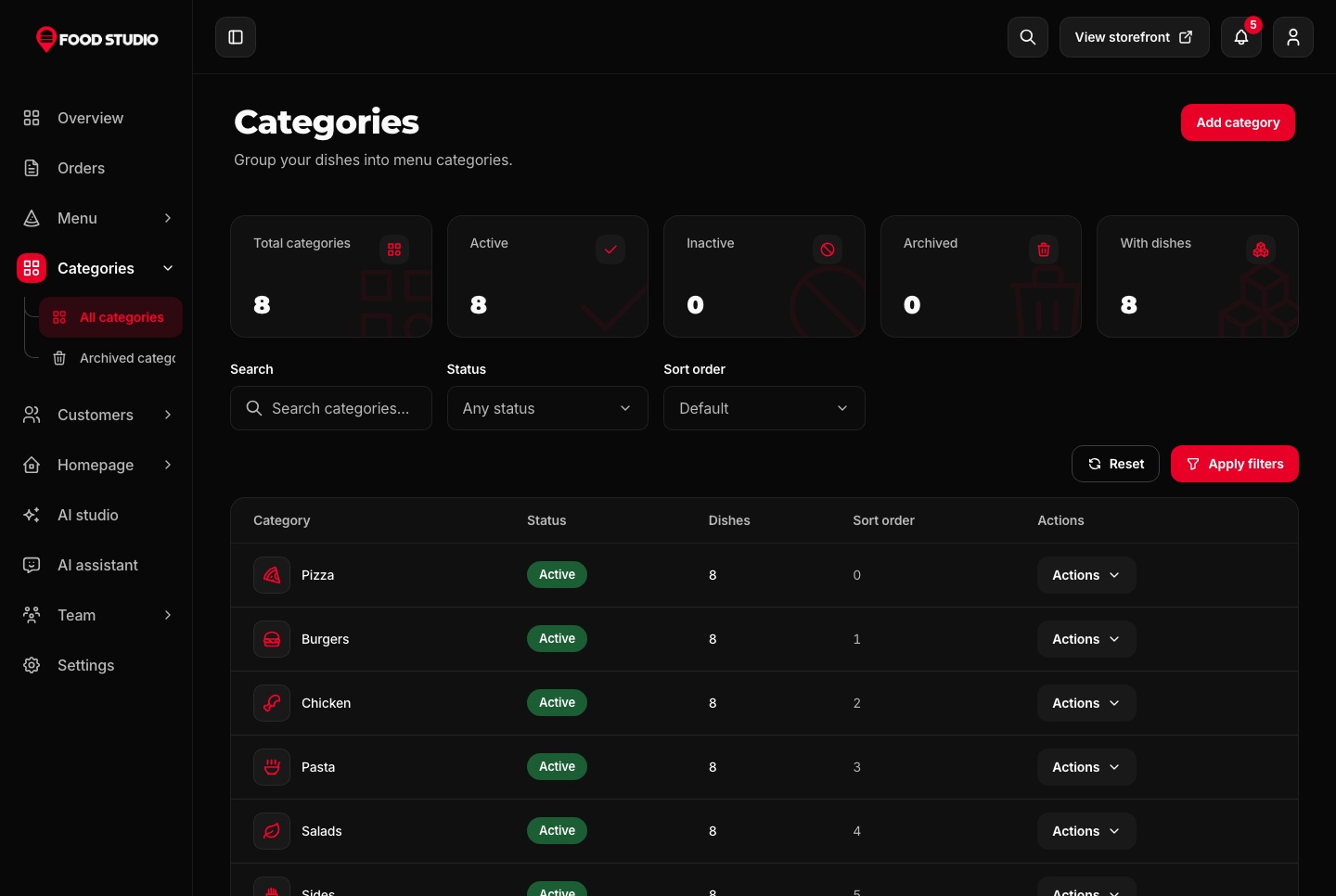
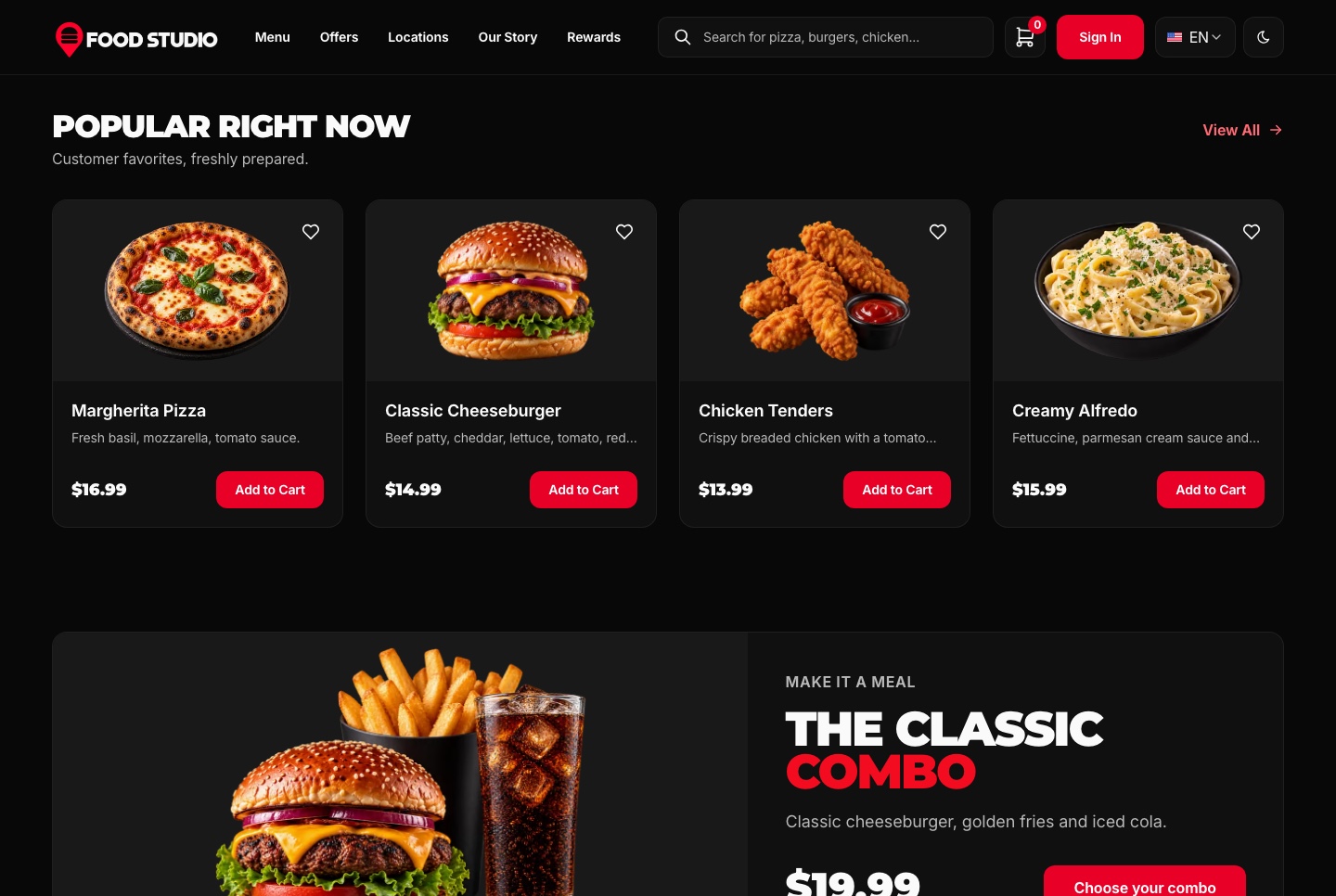
- The dashboard's language and theme
Dish photos and listings without a photo studio
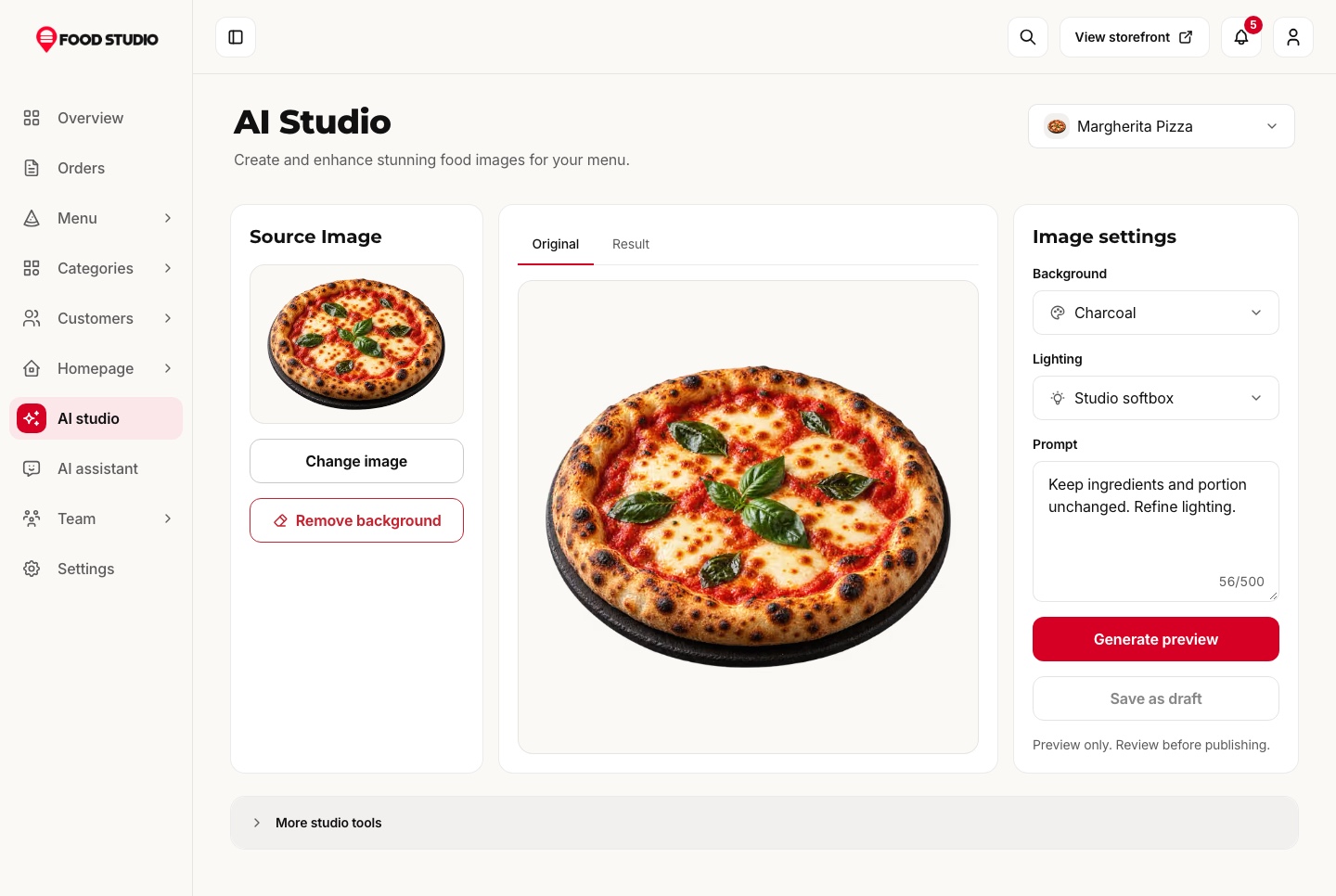
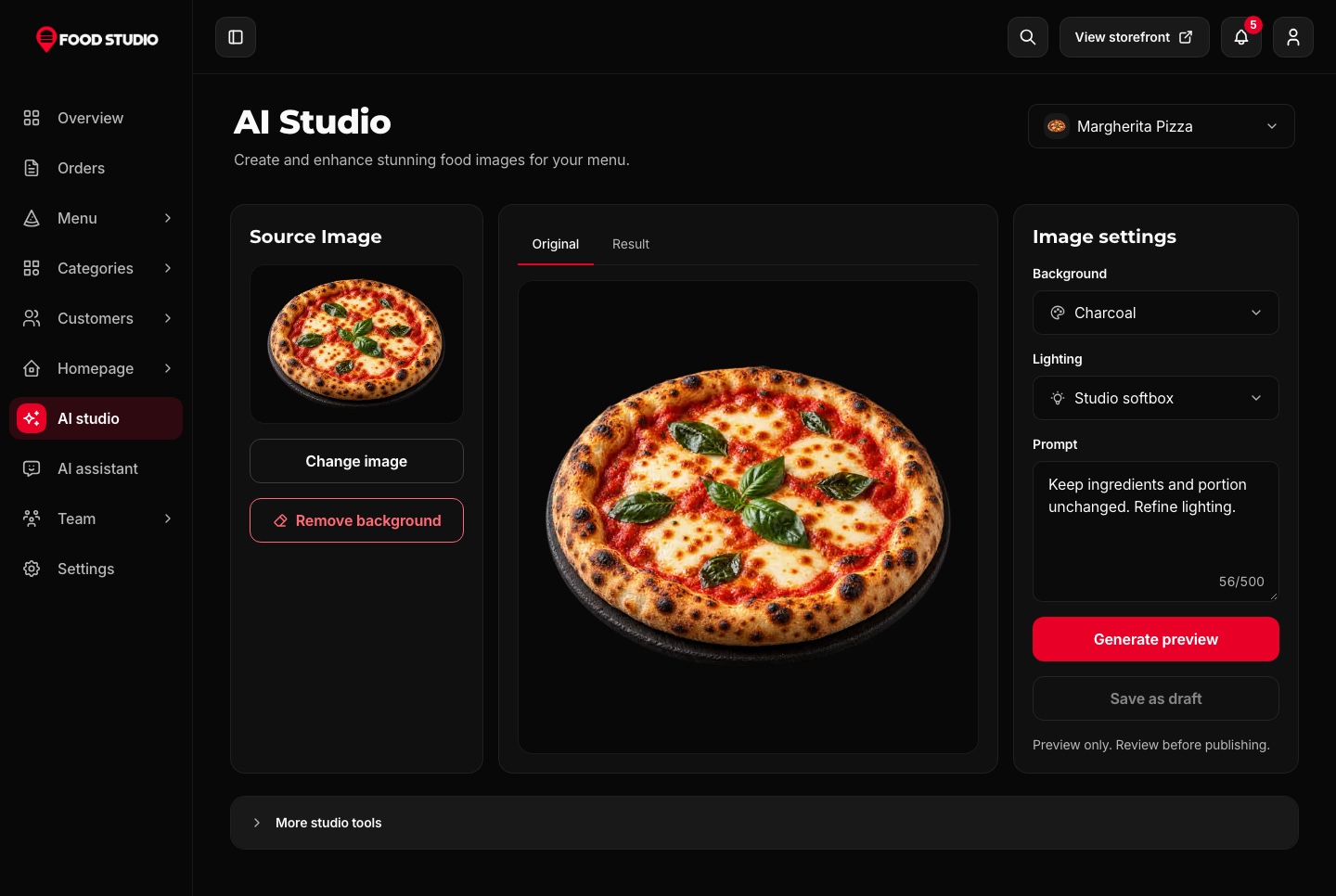
The AI studio drafts a dish's name, description and details from a prompt or up to four photos, and restyles a dish photo with Google Gemini in a chosen shot, background and light.
Background removal on your own server
Cutting a dish out of its background runs on the API with a local model. It needs no key and costs nothing per photo, which is how every dish on the menu sits on its own tile.
- A before and after slider on every result
- Shot presets for a menu hero, top down, close up or cut-out
- Optional clips from a dish photo with your own Higgsfield key
An assistant that knows the restaurant
Ask how many orders came in today or which dishes sell best this week. The assistant answers from the restaurant's own data through MCP tools, limited to what the person asking may see, and draws a chart when the question is about a trend.
- Changes proposed with a before and after, applied only once confirmed
- Google Gemini models with your own key
- The same 56 tools open to coding agents at the MCP endpoint
English and Arabic, in both directions
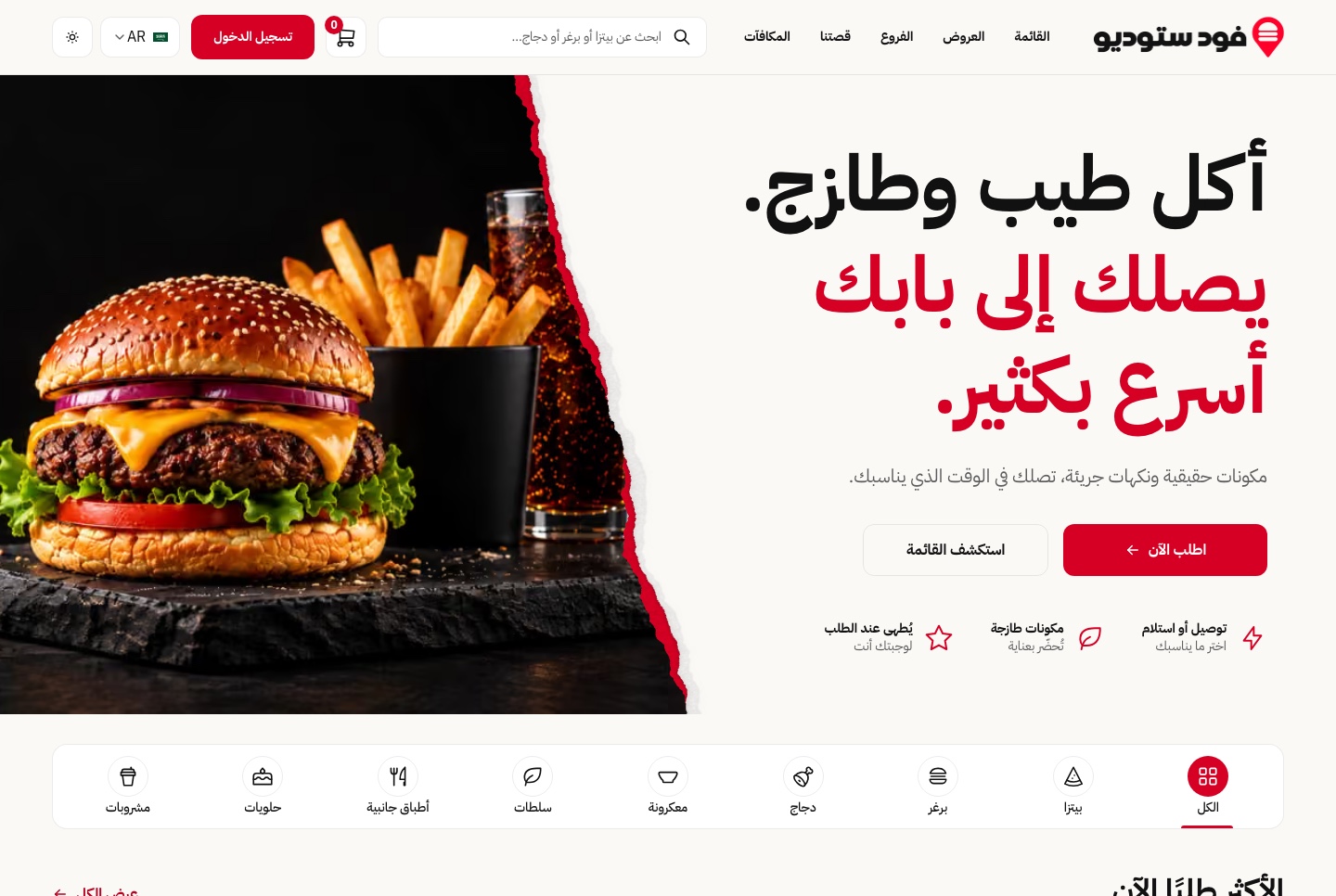
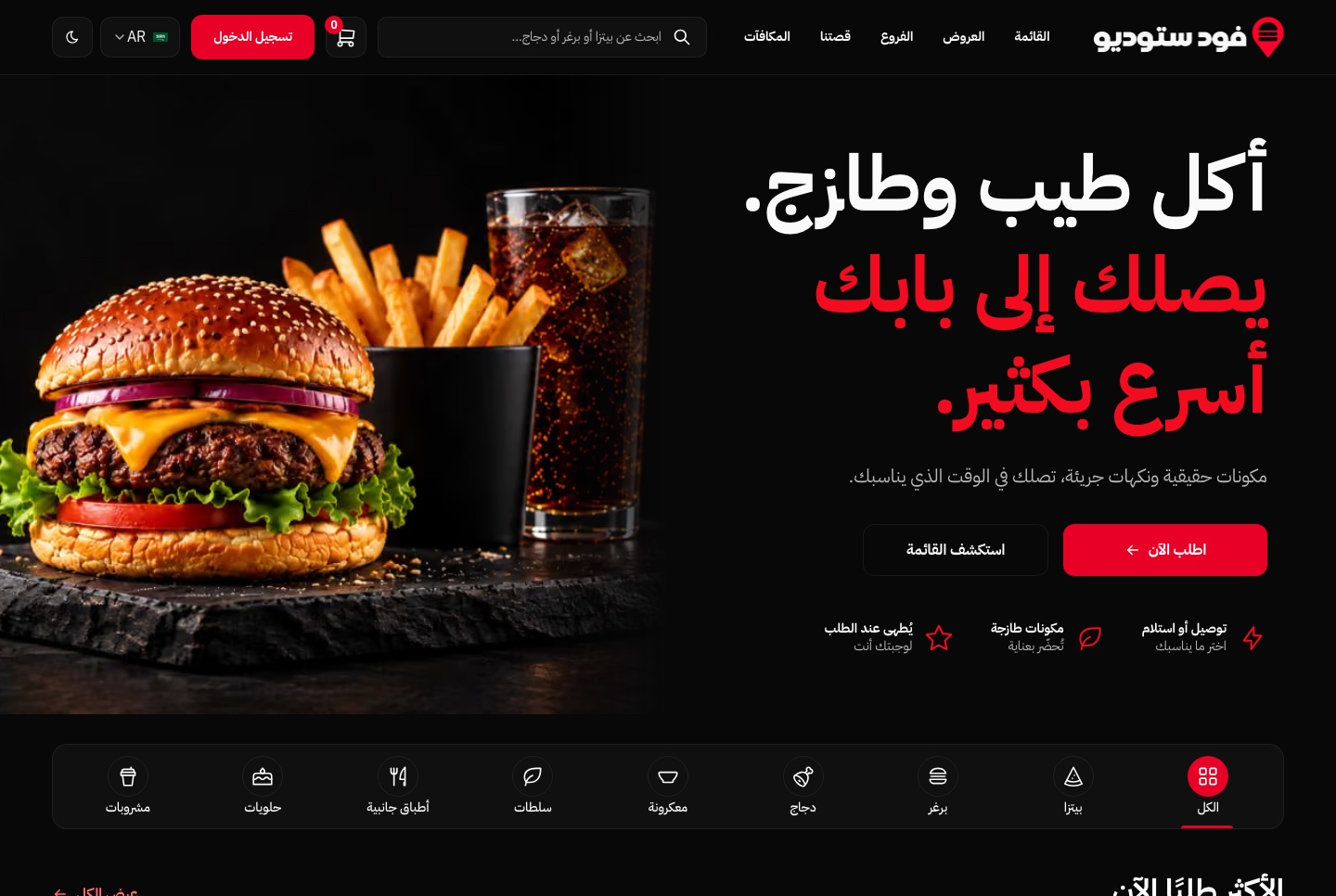
Every screen of the website and the dashboard is written in both languages and mirrors for Arabic, and the menu itself is stored in both languages, with prices and figures kept in Latin digits.
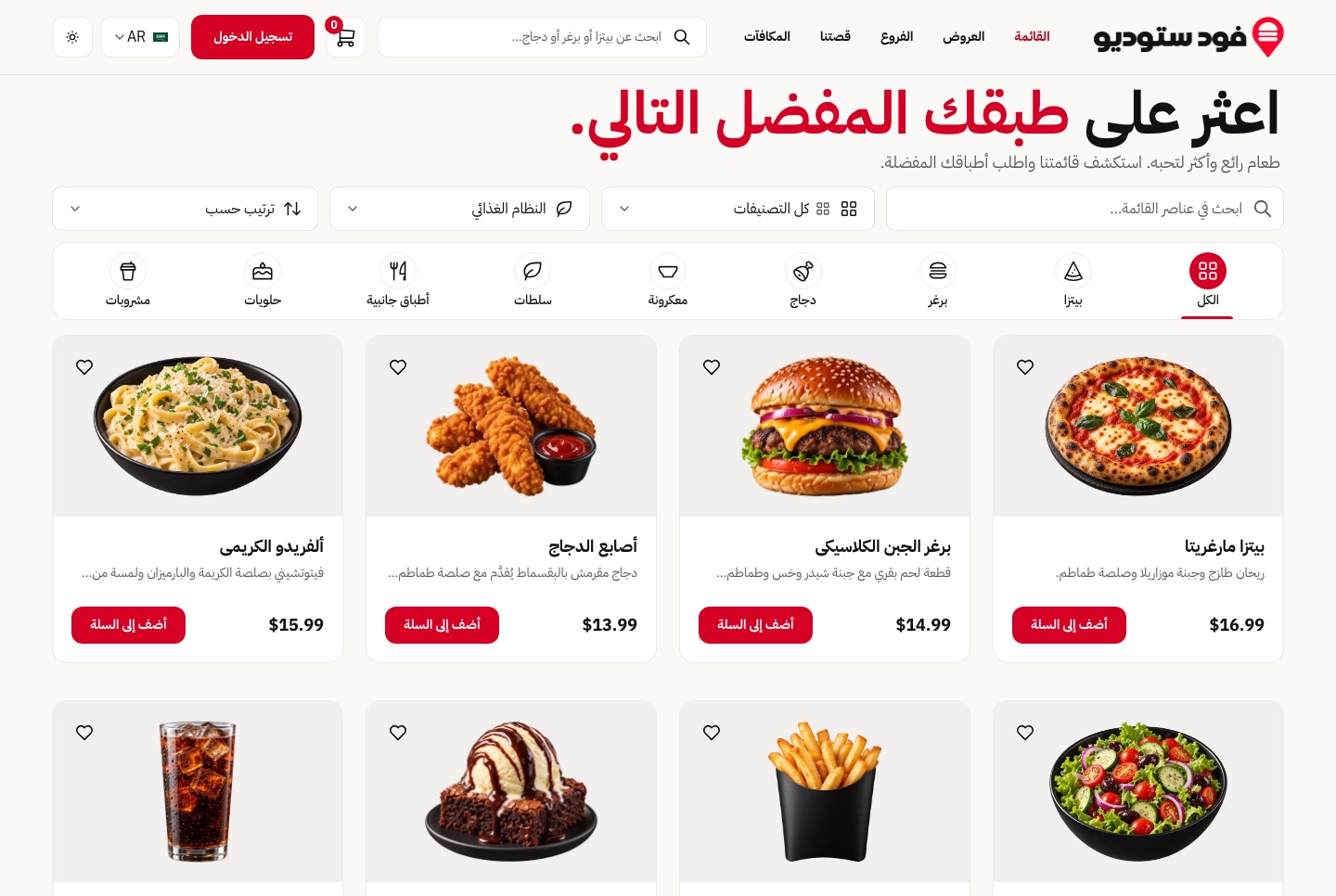
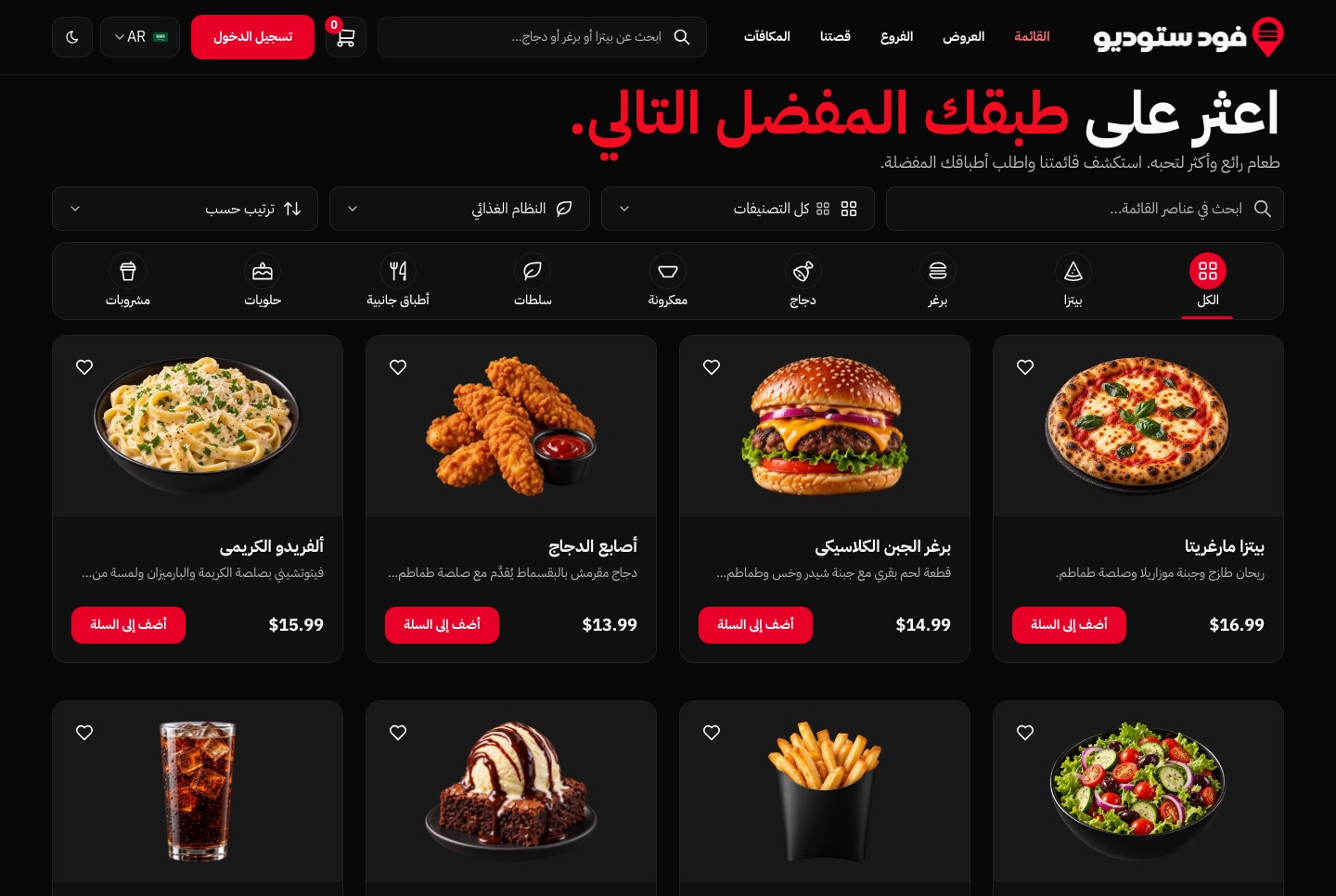
The dashboard in Arabic
The same components run right to left, so there is no second layout to maintain.
- Dishes written in both languages from one editor
- Charts, tables and menus mirrored for Arabic
- Figures in Latin digits in both locales
Made for the phone a hungry guest is holding
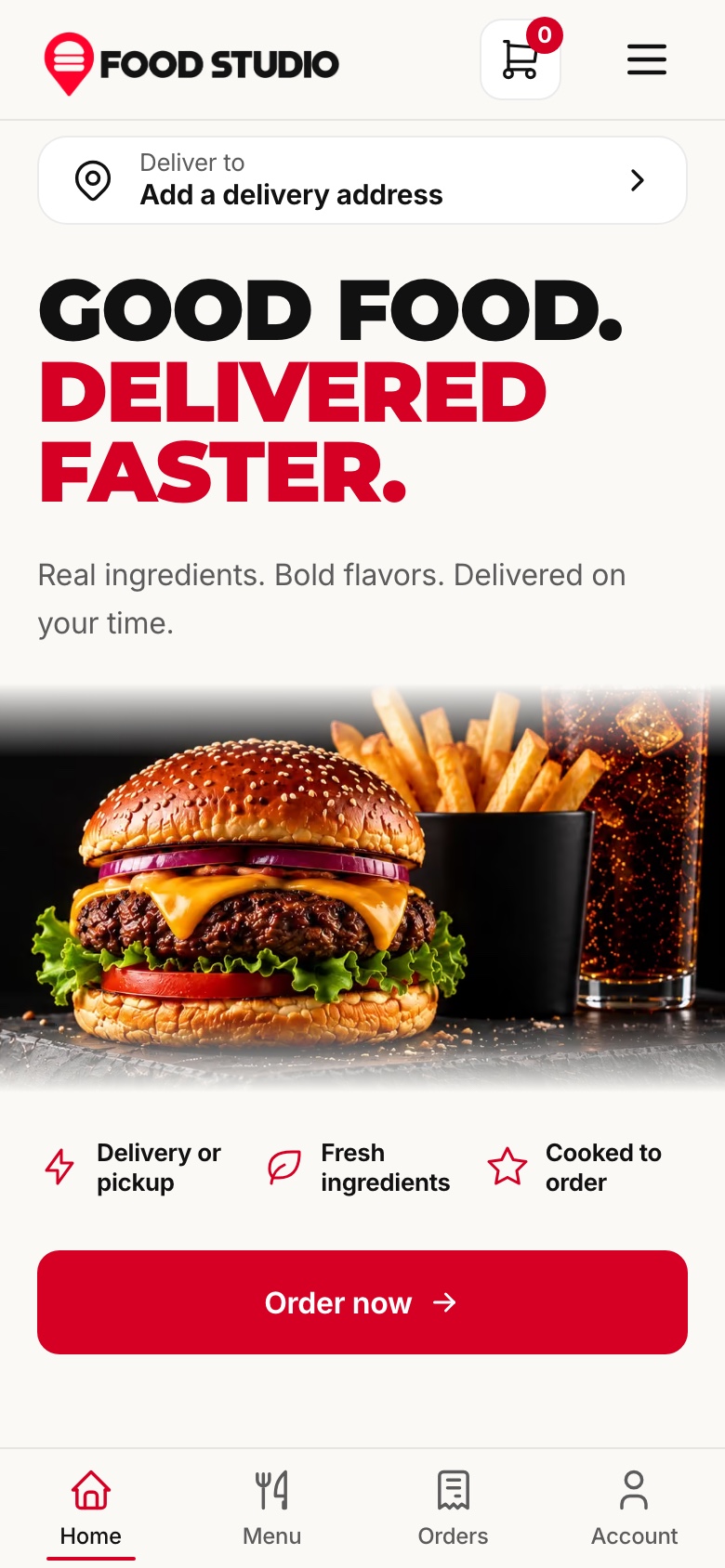
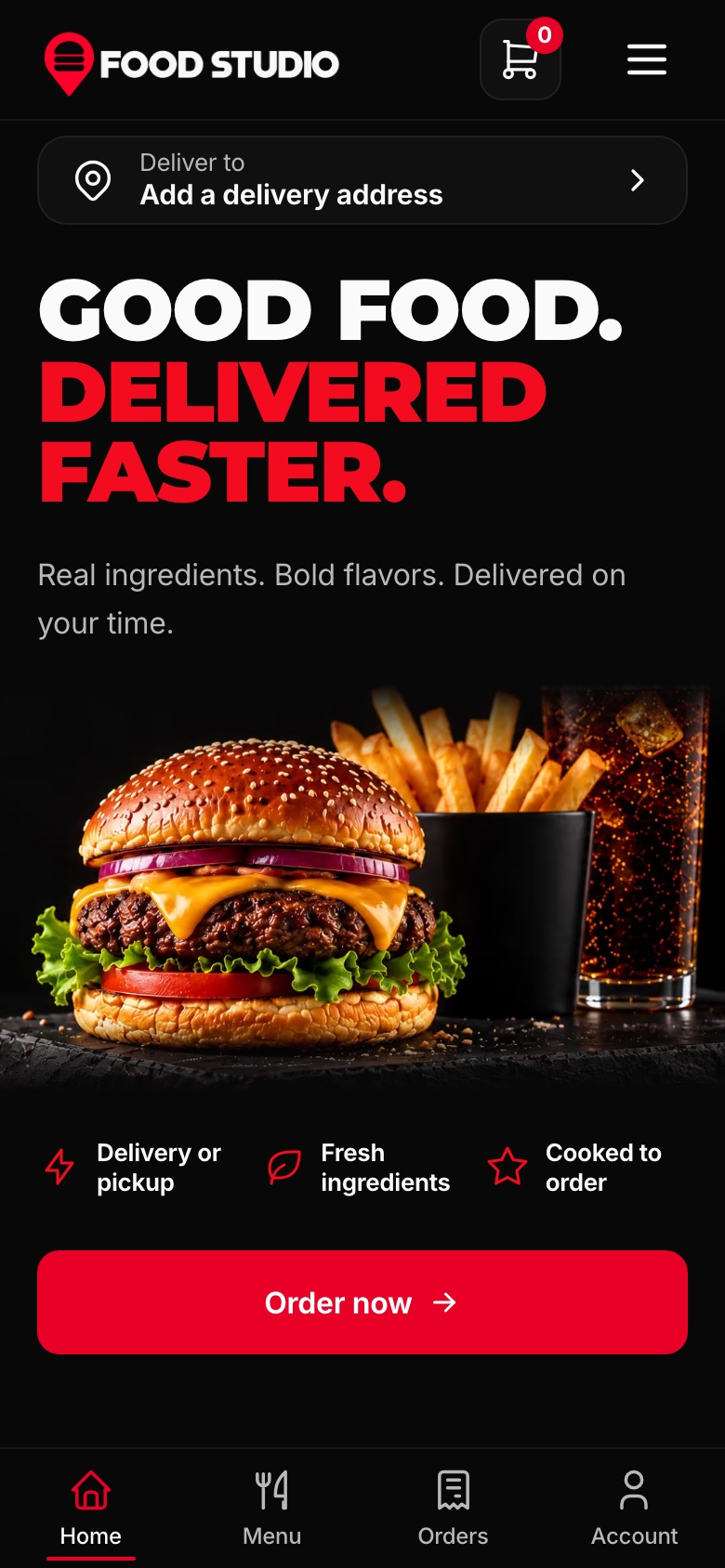
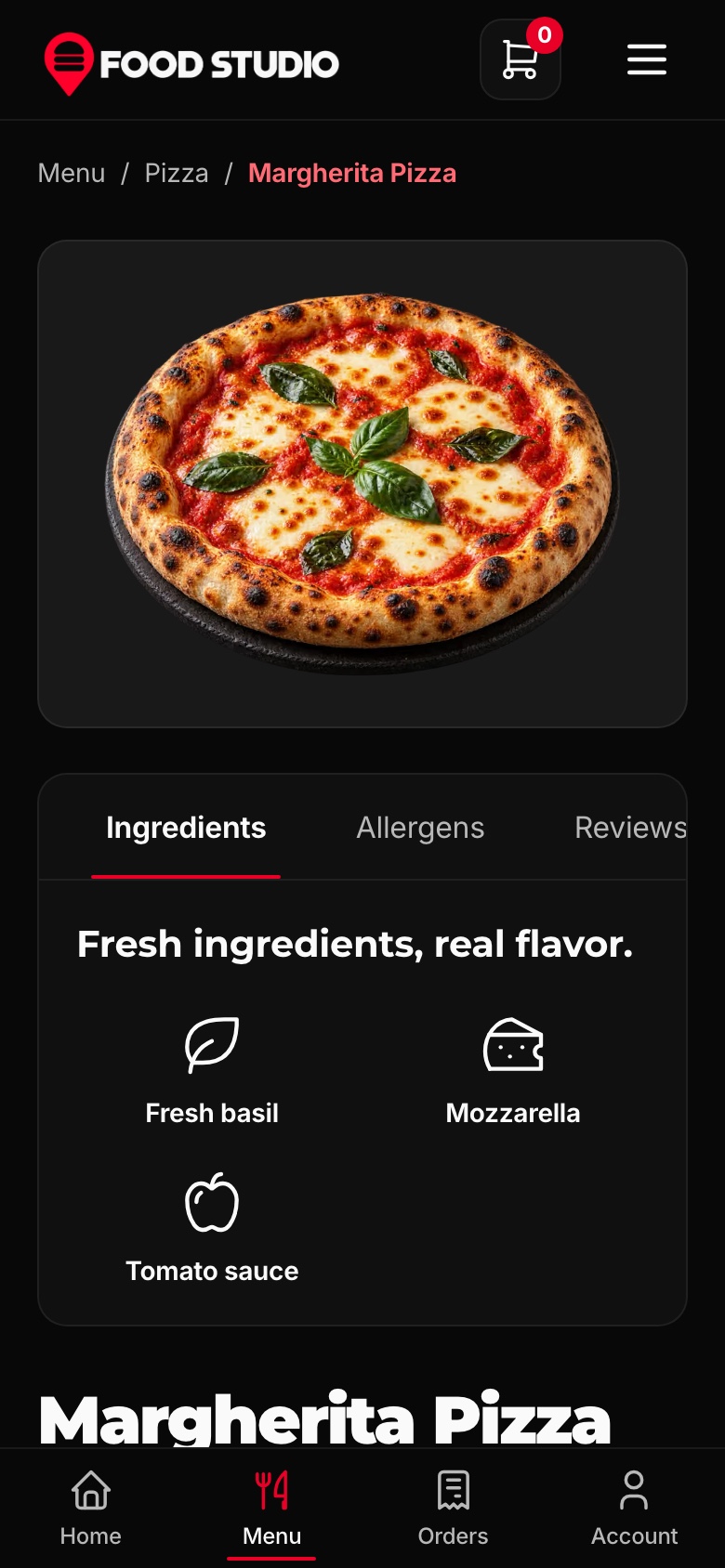
The menu, the dish pages, the cart and the checkout are laid out for a narrow screen, with a delivery address row at the top and a navigation bar at the bottom within reach of a thumb.
Everything to run it, not only the screens
Source code for all three apps, the data to start from and the documentation to take it further.
Source code
- The website, the staff dashboard and the API
- TypeScript throughout, with exact pinned dependencies
- A commercial license for your project
Data
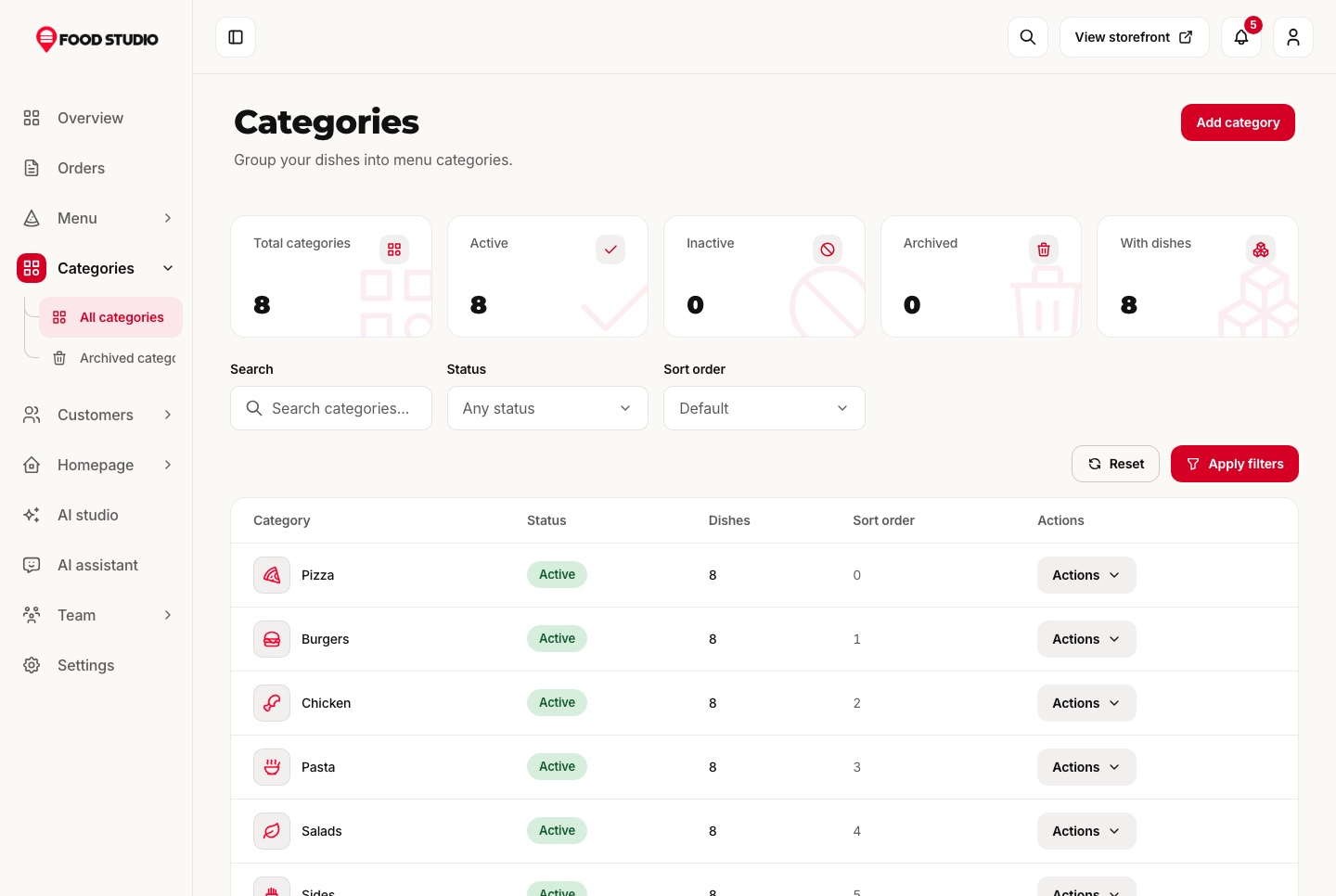
- A seeder with 64 dishes, 8 categories and 4 kitchens
- Six weeks of orders, reviews and customers
- An owner, a manager, a kitchen account and a customer
Docs and demo mode
- A quick start for the stack and for each app
- A guide per API module and one for branding each frontend
- A demo mode for public previews, off by default and removed with one command
Build on a familiar full-stack foundation
Next.js 16, React 19, TypeScript, Tailwind CSS 4, and a modular NestJS backend.
Frontend
- Next.js 16 App Router, React 19, TypeScript
- Tailwind CSS 4
- TanStack Query for API data
- React Hook Form and Zod for forms
- next-intl for localization, MapLibre for maps
Backend
- NestJS with per-domain modules
- TypeORM with SQLite, or MySQL through configuration
- JWT authentication with roles and permissions
- Socket.io for live notifications
- An MCP server behind an API key
Search and media
- Page metadata, hreflang, a sitemap and robots rules
- Restaurant structured data
- Uploads to a local folder or a Cloudflare R2 bucket
What you configure yourself
Food Studio is a source-code template, not a managed ordering service. Configure your hosting, database, media storage, payment accounts and the external services you choose to use.
Hosting and data
- A Node host for the API and the two Next.js apps
- SQLite on a persistent disk, or MySQL
- A persistent folder or an R2 bucket for uploads
Payments and AI
- Your own Stripe and PayPal accounts
- Your own Google Gemini key for the studio and the assistant
- Provider and payment fees are not included
Not included
- Order confirmation emails
- Ordering for a later time
- Tips, tax lines and cash on delivery
- A review form on the website
Explore Food Studio before you build
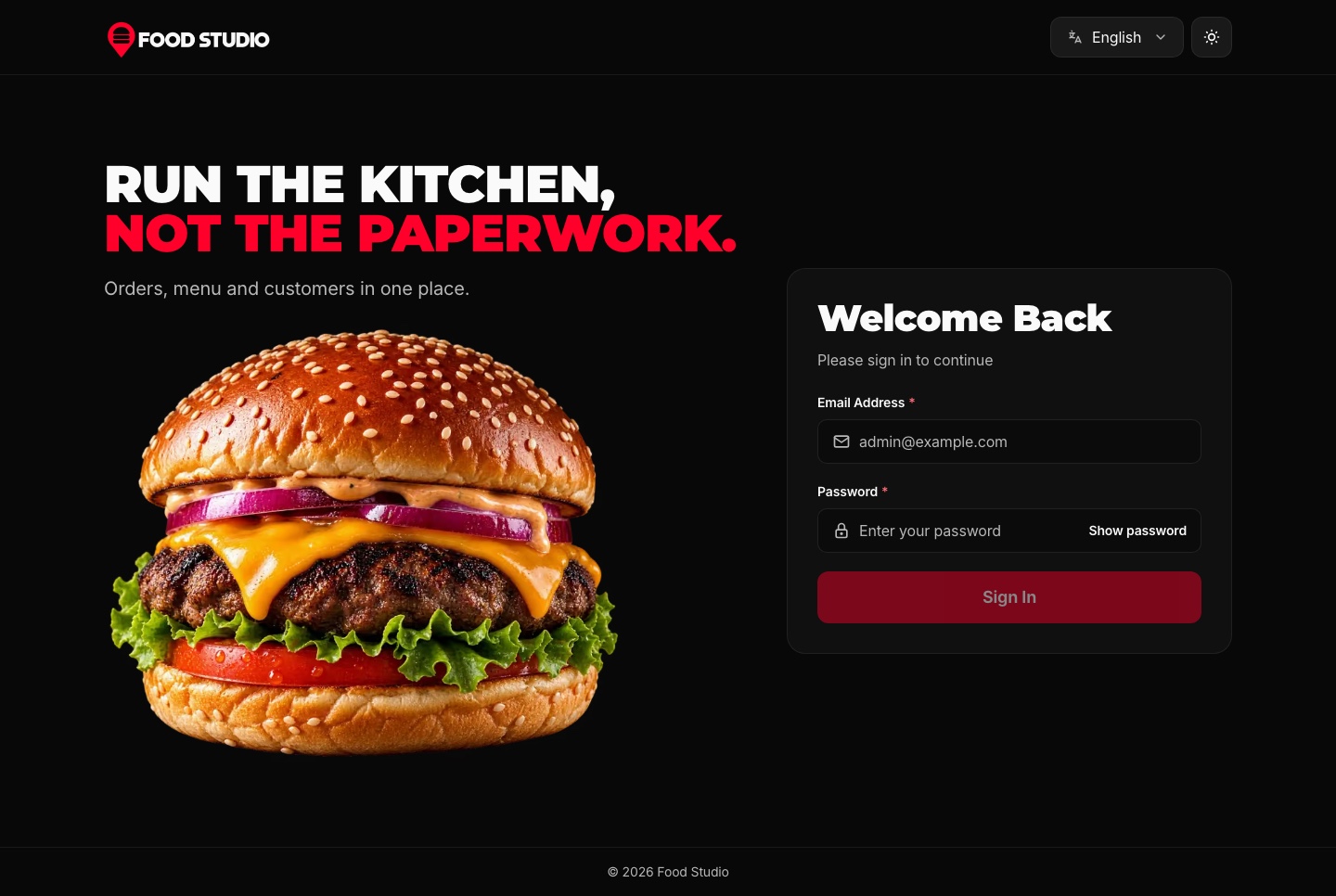
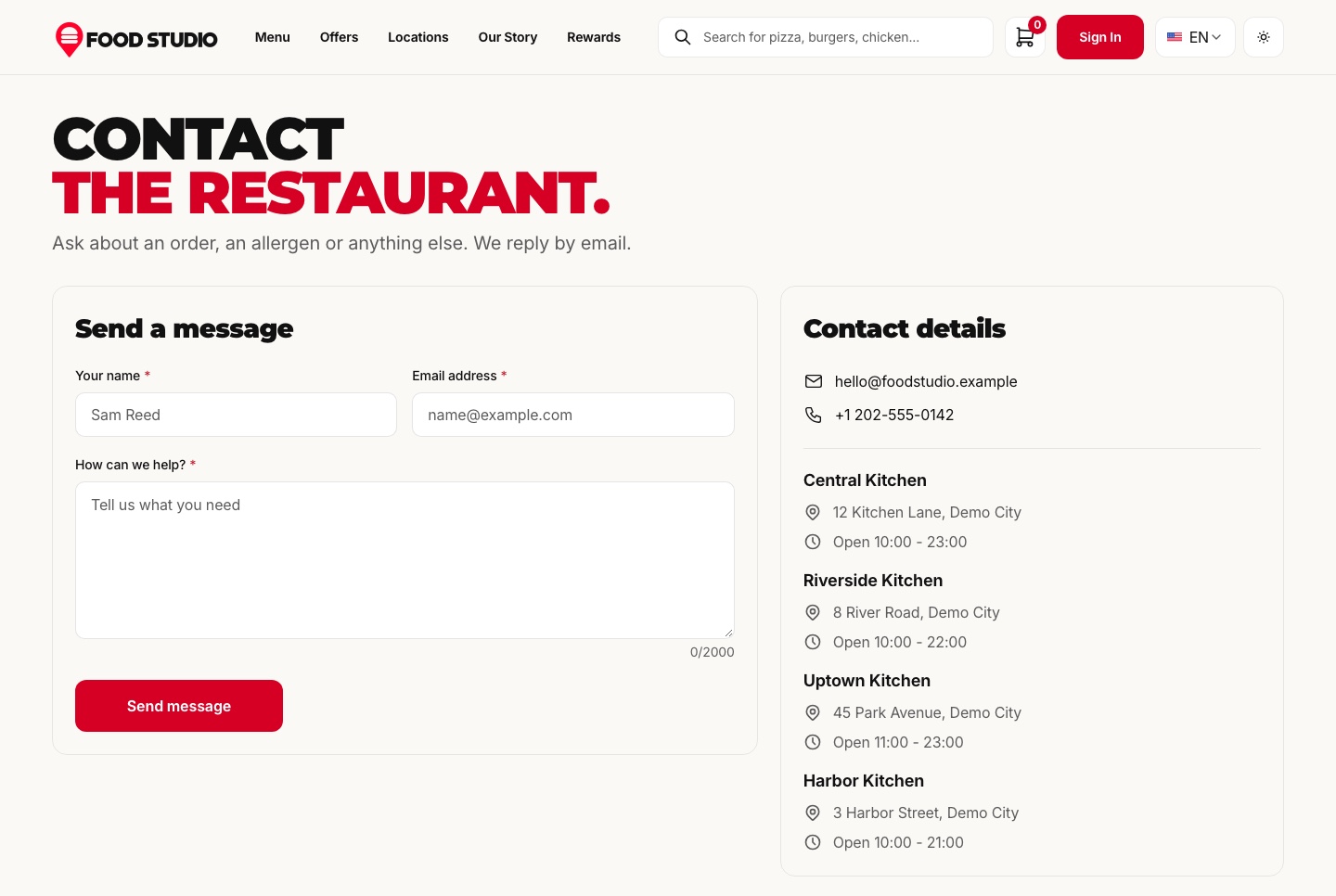
Order from the website as a guest, then open the staff dashboard, whose sign-in page signs you in as your own demo account. What you change in the dashboard is yours alone, and the demo data is rebuilt every night. In the demo, orders are paid with test payments, and the AI studio and the assistant run on your own Google Gemini key. Screenshots use sample data.
Build your restaurant's ordering with Food Studio
Technical Specifications
Framework
Next.js 16.3.6
React Version
React 19.3.0
Styling
Tailwind CSS 4.3.3
TypeScript
Yes
Responsive
Mobile, Tablet, Desktop
Support Period
Lifetime Included
Pro Tip: All templates include comprehensive documentation to get you started quickly.
Frequently asked questions
- What do I get when I buy this template?
- The complete source code of the package you choose, downloaded from your personal dashboard right after checkout. A business invoice is available for every purchase.
- Can I use it for client and commercial projects?
- Yes. Every paid template comes with a Commercial licence that covers one commercial project, including work you deliver to a client. To reuse the same template across several projects, choose the Agency licence, which covers unlimited projects.
- Do I get updates after buying?
- Yes. Updates are free. New versions appear in your dashboard, where you can download every file you own again at any time.
- Is support included?
- Yes. The assistant on this page answers in seconds, and email support is included with every purchase, at support@aniq-ui.com, with a reply within 4 hours.
- Can I try it before I buy?
- Yes. This template has a full live demo, linked at the top of this page, so you can click through the real thing before you decide.
Related Templates
Real Estate
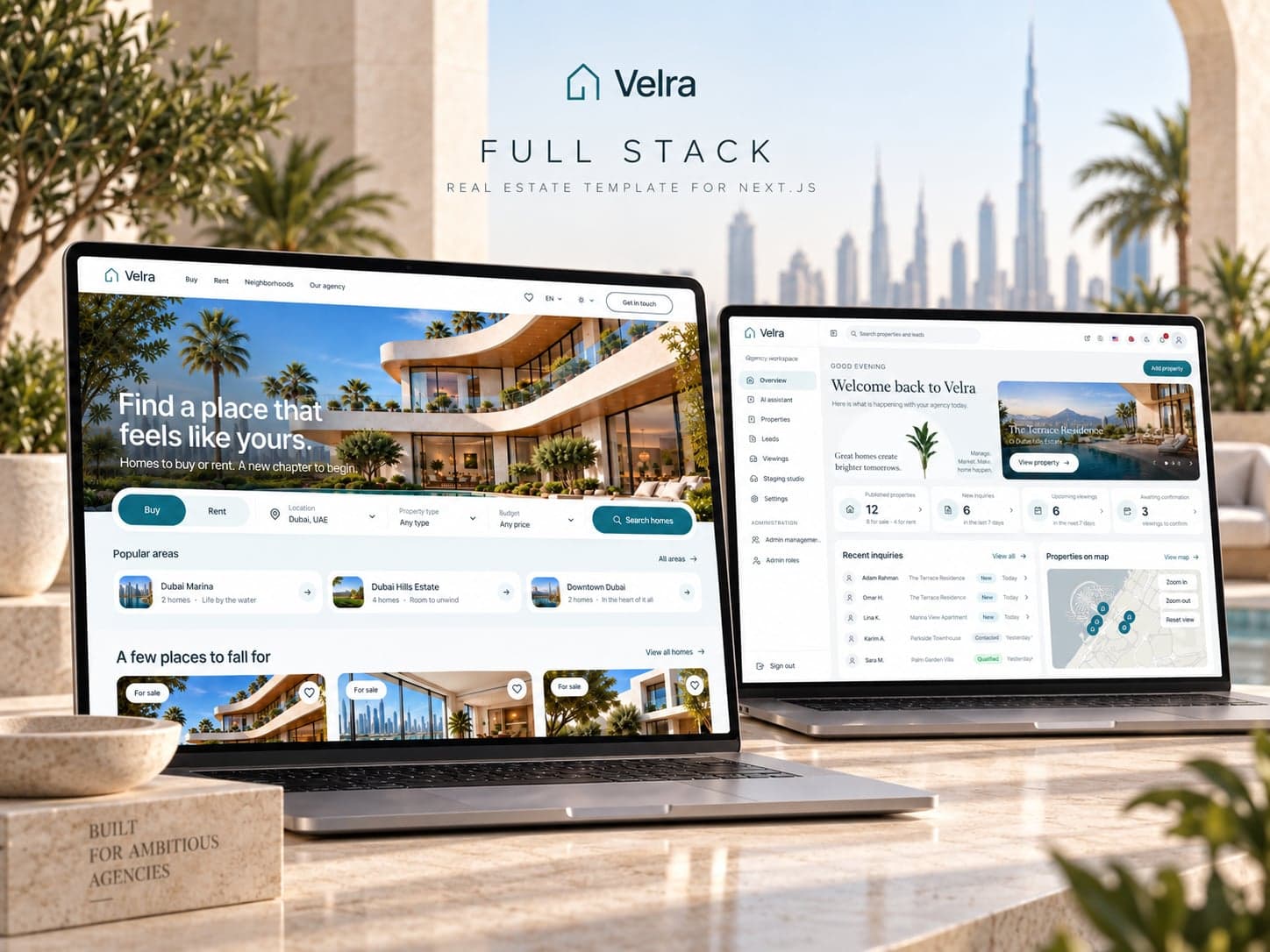
$179Velra is a full-stack Next.js real estate template: a public website for buying and renting, an agency dashboard for properties, leads and viewings, a NestJS API, AI virtual staging, and English and Arabic with RTL.
Fitness
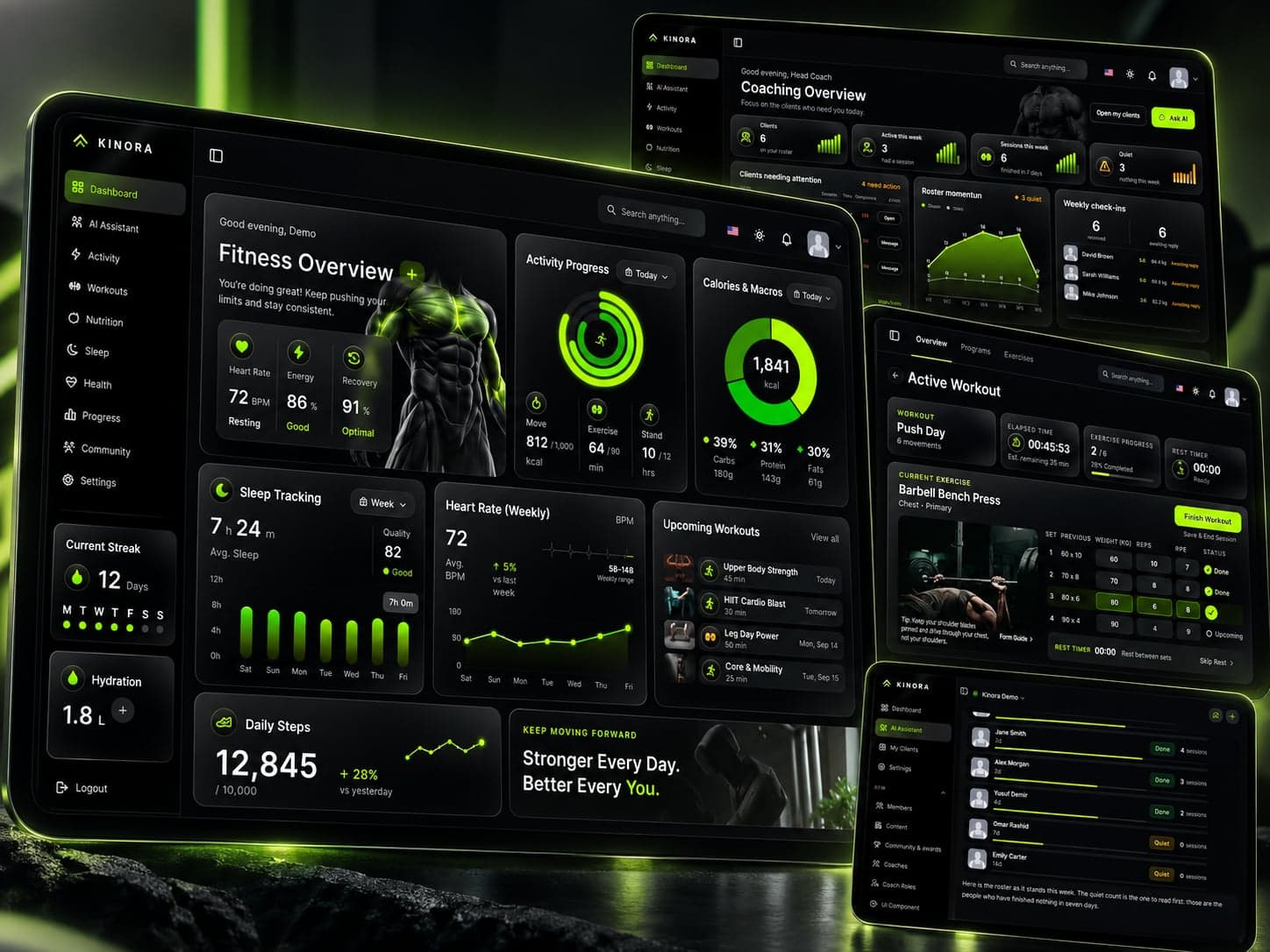
$149Kinora is a full-stack Next.js fitness coaching template with a NestJS backend, AI assistant, client roster, workout logger, meal planner, and Arabic RTL.

E-Learning
$179Learnio is a full-stack Next.js LMS template with a NestJS backend, AI assistant, live classes, Stripe checkout, quizzes, certificates, and Arabic RTL.
Professional Next.js Templates Technical Advantages
Our Next.js templates are engineered with performance optimization, TypeScript integration, and developer-friendly architecture to accelerate your web application development. Ready-to-use UI components save hours of design and coding time.
Responsive Design
Fully adaptive Next.js Templates with responsive breakpoints for mobile, tablet, and desktop viewport optimization.
Accessibility
Semantic HTML, ARIA attributes and keyboard navigation, built with accessibility in mind.
High Performance
Built on the Next.js App Router with server components and optimized assets, so pages stay fast as they grow.
TypeScript Support
Next.js App Router architecture with server components for reduced client-side JavaScript and faster time-to-interactive metrics.
Enterprise-Grade Features Included:
Developer Experience
Enterprise-grade development toolkit
- TypeScript 5.0+ with strict type checking
- Server & Client Components architecture
- Comprehensive JSDoc documentation
UX & Performance
Optimized user experience metrics
- Mobile-first responsive design system
- Accessible markup with ARIA and keyboard navigation
- Fast rendering with server components and optimized assets
Maintenance & Support
Long-term project sustainability
- Support included with your purchase
- Regular security & framework updates
- SEO-optimized semantic structure
All Next.js Templates implement modern React 19 patterns, App Router architecture, and Web Vitals optimization for SEO-friendly performance.

Cookie Preferences
We use cookies to enhance your browsing experience, analyze site traffic, and personalize content. By clicking "Accept All", you consent to our use of cookies for analytics and personalized advertising.