Claude Code vs Replit vs Lovable: Which One Fits Your Project (2026)
Claude Code vs Replit vs Lovable: three different kinds of AI tool. Where each runs, what happens to your code, first-year costs and who should pick which.
Claude Code vs Replit vs Lovable is not a race between three versions of one product. Claude Code is an AI coding assistant that works on a project folder on your computer, Replit is an online workspace with an AI agent and its own hosting, and Lovable is an AI builder that rebuilds your project on its own setup and hosts it. So the real question is which kind of tool fits you. We ran Replit and Lovable on the same Aniq UI template on 7 November 2026, in English and Arabic. Claude Code was not in that test; we have run it once, with a Full Stack package, and the rest of its column comes from Anthropic's own pages.
Claude Code vs Replit vs Lovable side by side
"Our test" means the Financial Dashboard on free plans on 7 November 2026, except the Full Stack row: the Food Studio Full Stack in Claude Code on 8 November 2026. Prices and policies were checked on 9 November 2026.
| Question | Claude Code | Replit | Lovable |
|---|---|---|---|
| Where it runs | Your computer: terminal, VS Code, JetBrains, the Claude desktop app. Also claude.ai/code in a browser | The browser: an online workspace with an AI Agent | The browser: an AI builder with chat and a visual editor |
| Who it is for | Developers, technical freelancers, agencies | Anyone who wants building and publishing in one place | Non-developers who want the quickest first result |
| Your existing code | Edited in your folder, nothing converted | Kept as it is (Next.js 16 and Yarn 4 in our test) | Rebuilt on TanStack Start: a converted copy |
| Starting from a template | Download the ZIP, open the folder, paste our prompt | Open in Replit (prompt typed, private download link valid 24 hours), or a ZIP up to 200 MB | + > Import project > Upload code (ZIP up to 250 MB) |
| Hosting and publishing | Not included: you choose the host | Built in; costs come out of monthly credits first | Built in; custom domains on paid plans |
| English and Arabic | Not tested by us | Both worked in our test | Both worked in our test |
| Full Stack package | Ran in our test: site, dashboard and API running about 4.5 minutes after unzipping | Not tested | Cannot run one |
| Free option | None | Starter: one published app, link down after 30 days | Free: 5 build credits a day, no custom domain |
| Paid price | Pro $20 a month ($17 billed yearly) | Core $20 a month ($18 billed yearly) | Pro $25 a month ($21 billed yearly) |
| Training on your data | Only while the setting is on | Yes; only Pro can opt out | Yes, unless you opt out (free) |
Three different kinds of tool
Anthropic describes Claude Code as a tool that reads your codebase, edits files and runs commands. It is not a host: when the site is ready, you publish it where you like. Replit's Agent installs and runs the project in Replit's cloud and publishes it from there, and in our test it kept the template as written. Lovable rebuilds an imported app on TanStack Start, with the same pages and routes, then hosts that copy.
So two of them keep the code and one converts it. Kept code means Aniq UI updates, the template's guides and a future developer all still fit; converted code trades that for speed and a friendlier editor.
What each one costs
Checked on 9 November 2026 on each company's pricing page and docs. Claude's prices exclude tax.
| Plan | Price | What it gives |
|---|---|---|
| Claude Pro | $20 a month, or $200 billed yearly | Claude Code; limits that reset every 5 hours and every week |
| Claude Max | $100 a month | 5 times Pro's usage |
| Claude Ultra | $200 a month | 10 times Pro's weekly usage, no 5-hour limit for verified accounts |
| Claude Console | Pay as you go | Claude Code billed per token at API rates |
| Replit Starter | Free | Daily Agent credits up to a monthly cap, Free Mode only, one published app (down after 30 days), badge |
| Replit Core | $20 a month ($18 billed yearly) | $20 of monthly credits that also cover publishing, unlimited workspaces |
| Replit Pro | $100 a month ($90 billed yearly) | Up to 15 collaborators, model training opt-out |
| Lovable Free | Free | 5 build credits a day (up to 30 a month); no code editing or download; GitHub sync |
| Lovable Pro | $25 a month for 100 credits ($250 a year) | Custom domains, code editing and download, badge removal |
| Lovable Business | $50 a month for 100 credits ($500 a year) | Team controls; data excluded from training by default |
Claude's limits in plain words. The plans do not sell a number of messages. Pro has a limit that resets every five hours and a weekly limit on top, and how fast you reach it depends on the model, the length of the conversation and the size of the files. Optional usage credits let you keep working past a limit, at extra cost. A Console account has no subscription: Claude Code is billed per token. Anthropic puts the average across enterprise deployments at about $13 per developer per active day, a figure for daily professional use, not a quote for one website.
Publishing. Replit takes it from the monthly credits first: static hosting free plus $0.05 per GB, Autoscale $2 a month plus usage, a shared Reserved VM $15 a month. Lovable publishes from its dialog at no credit cost, and hosting uses Run credits after a monthly grant of 20 Cloud credits.
First-year cost for one small business site
One website template ($39), one person, twelve months, each tool's entry paid plan. A domain name is extra everywhere.
| Cost | Claude Code | Replit | Lovable |
|---|---|---|---|
| Plan for a year | Pro: $200 yearly, or $240 monthly | Core: $216 yearly, or $240 monthly | Pro: $250 yearly, or $300 monthly |
| Plan plus template | $239 to $279 | $255 to $279 | $289 to $339 |
| Hosting | Wherever you choose, at that host's price | From the credits, then billed on top | Run credits after the monthly grant |
With Claude Code the site lives wherever you host it, and that host sets the price, so add it yourself; we do not quote hosting prices we did not read. With Replit and Lovable you pay more only when the site uses more than the credits cover. Our guide to small business website costs with an AI builder goes further on those two.
Who should pick which
| If you are | Pick |
|---|---|
| A shop owner with no technical background | Lovable, or Replit to keep the code |
| A freelancer who delivers client sites | Claude Code, or Replit if a project folder is not for you |
| An agency that hands code to a developer | Claude Code |
| A developer who wants speed | Claude Code |
| Someone who needs a full-stack app | Claude Code, or the developer route |
| Someone who only wants to try | Replit or Lovable on the free plan |
A shop owner with no technical background
Lovable, or Replit if you want the original code kept. Both run in the browser with nothing to install, and Lovable was quickest to a branded result in our test. Claude Code means looking after a project folder and a host, more than most shop owners want. The Fashion e-commerce storefront ($39) runs on sample data; real orders and payments are a bigger job, whichever tool you use.
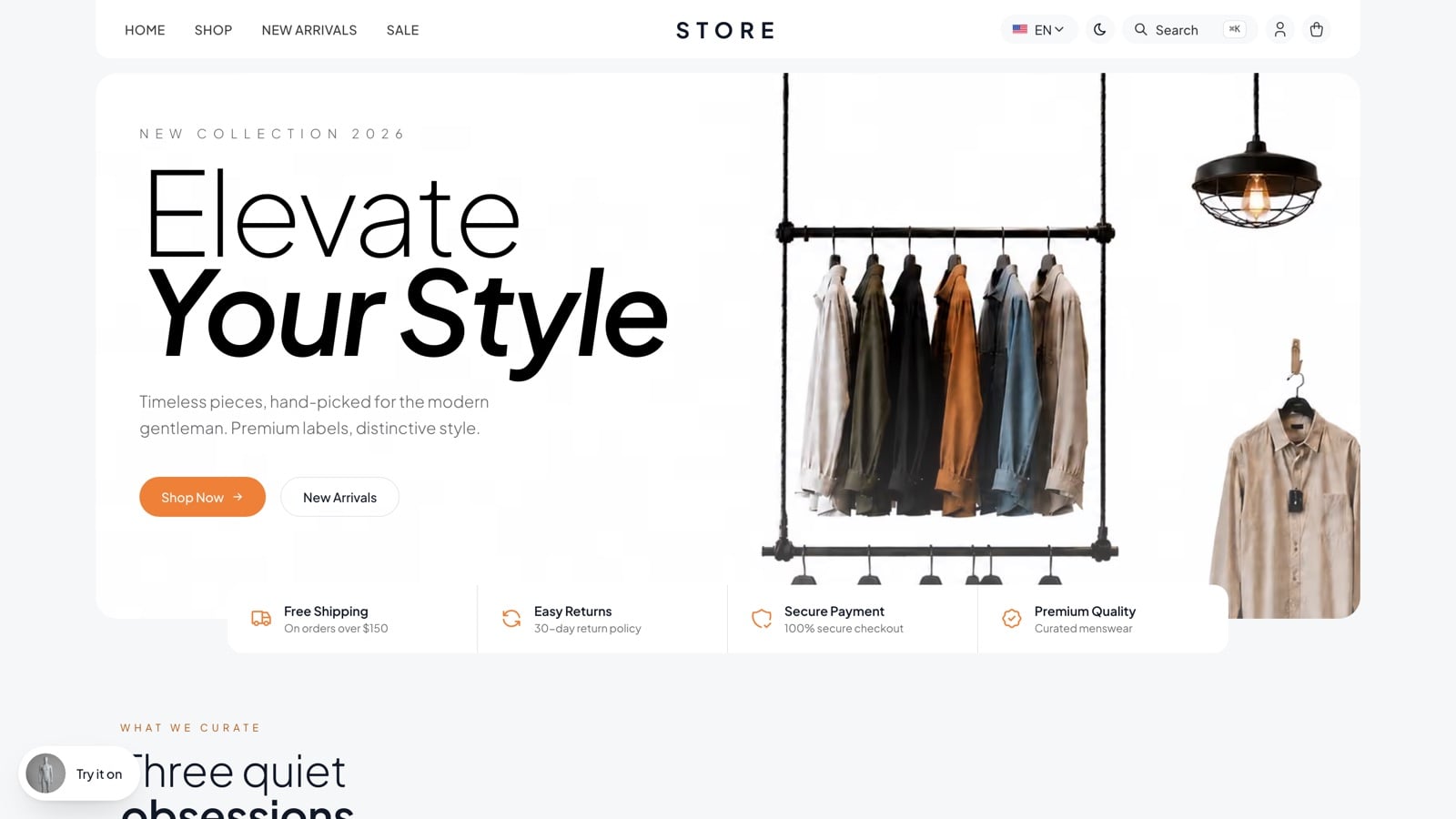
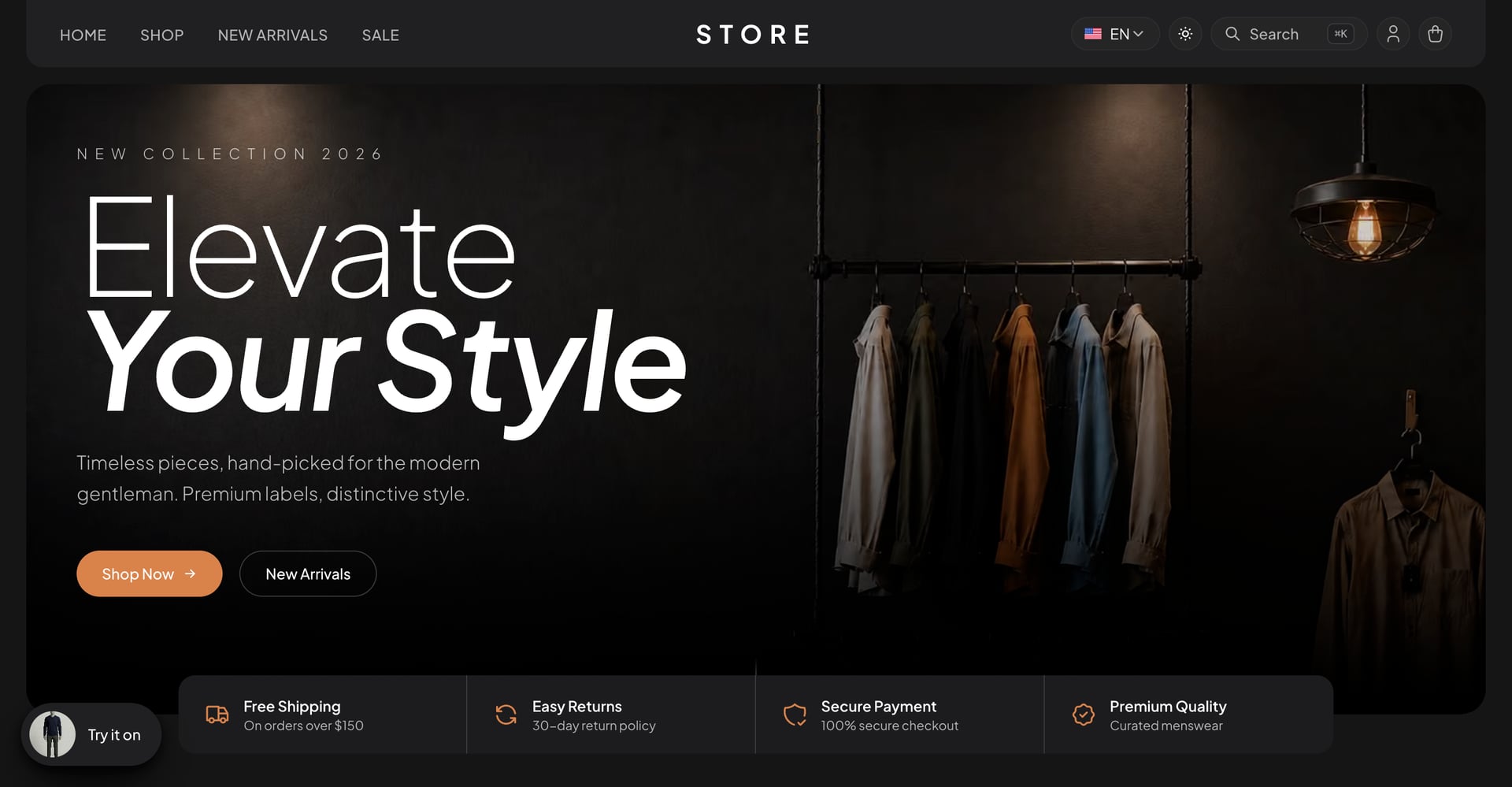
Demo video: Fashion e-commerce template
A freelancer who delivers client sites
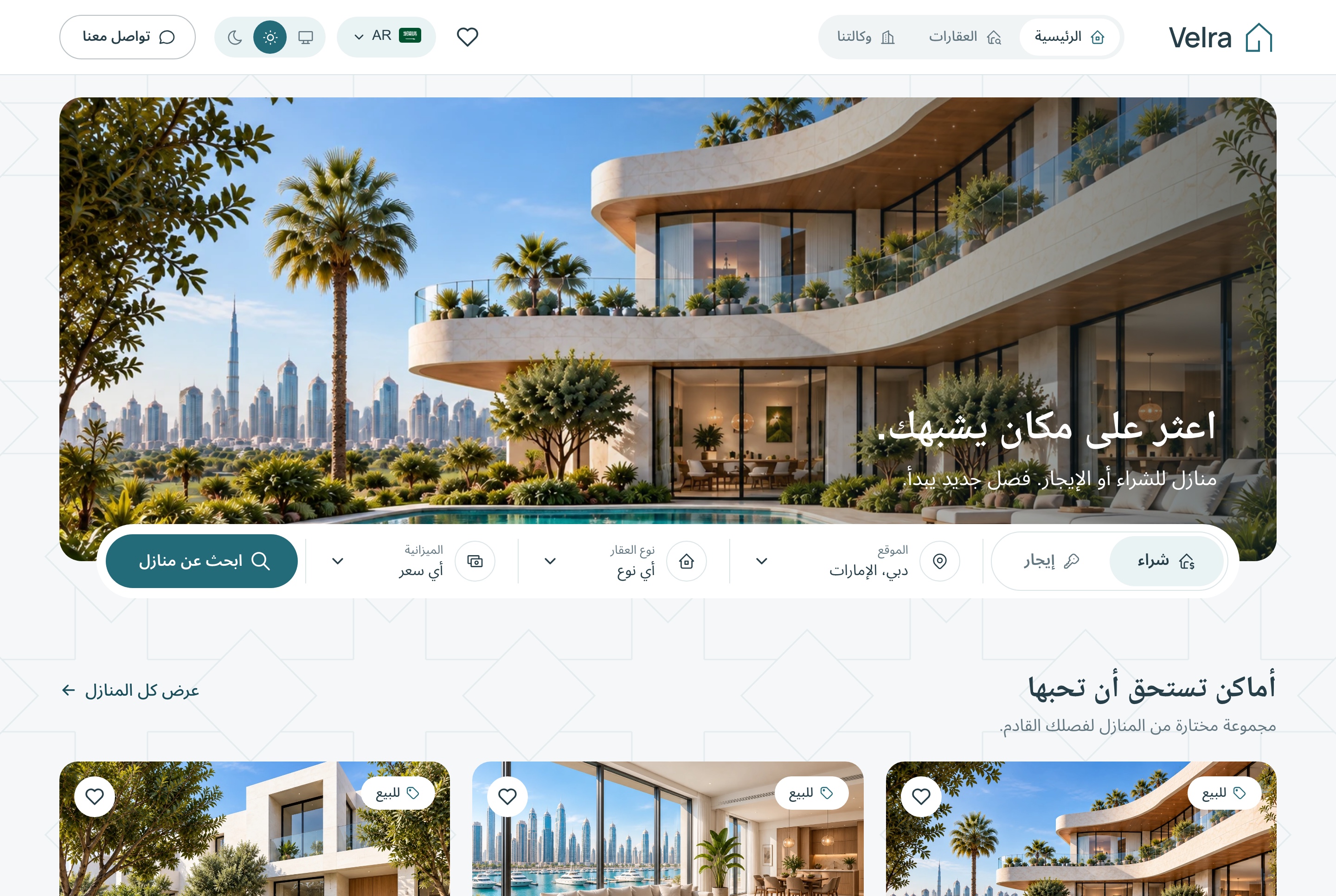
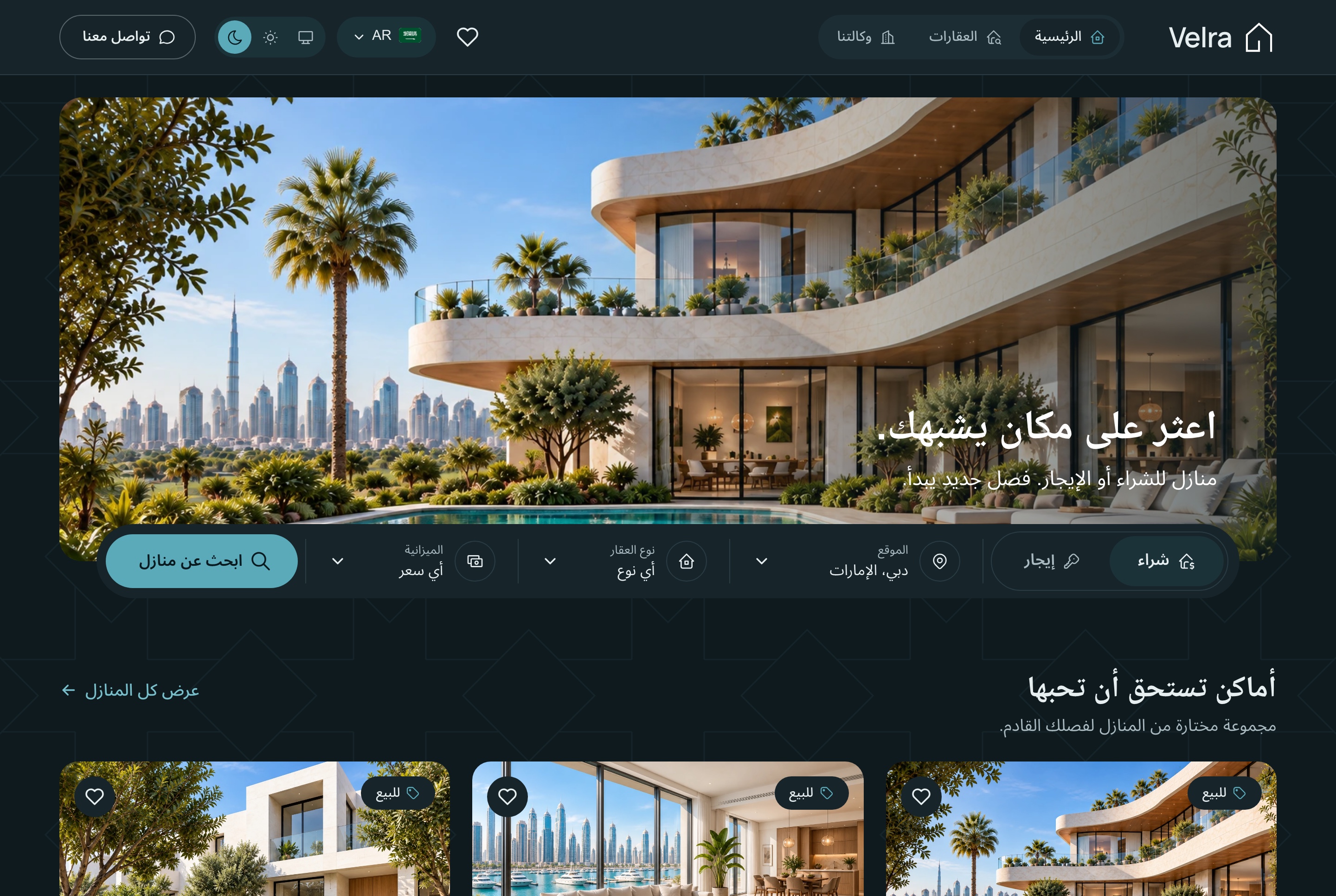
Claude Code if you are at ease in a project folder, Replit if not. Both keep the original code, so the client gets the project they paid for, and the Aniq UI licence covers client work. With Claude Code the site can go on the host the client already uses. The Velra real estate website ($39) is a typical job: a name, a colour, listings and contact details in two languages.
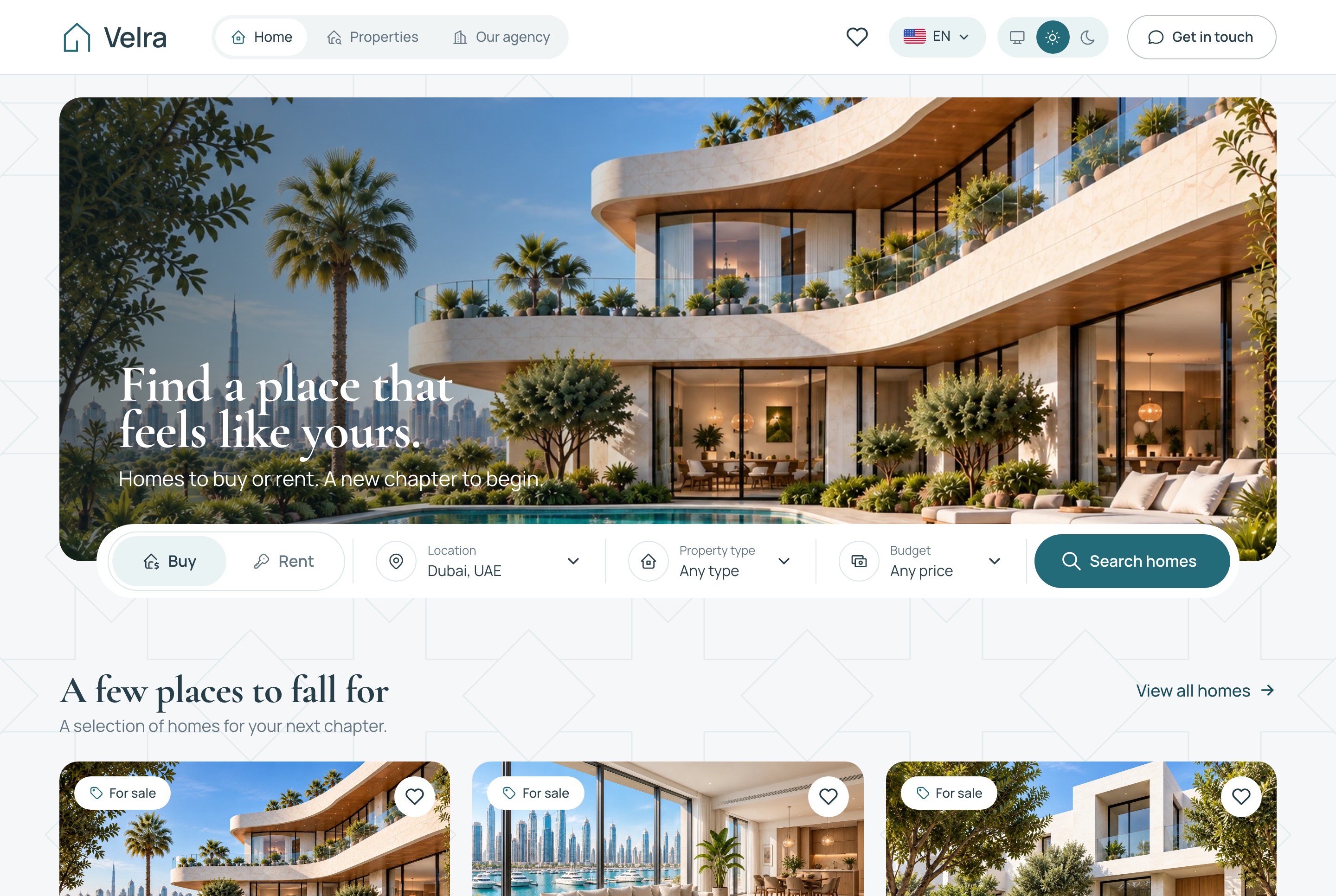
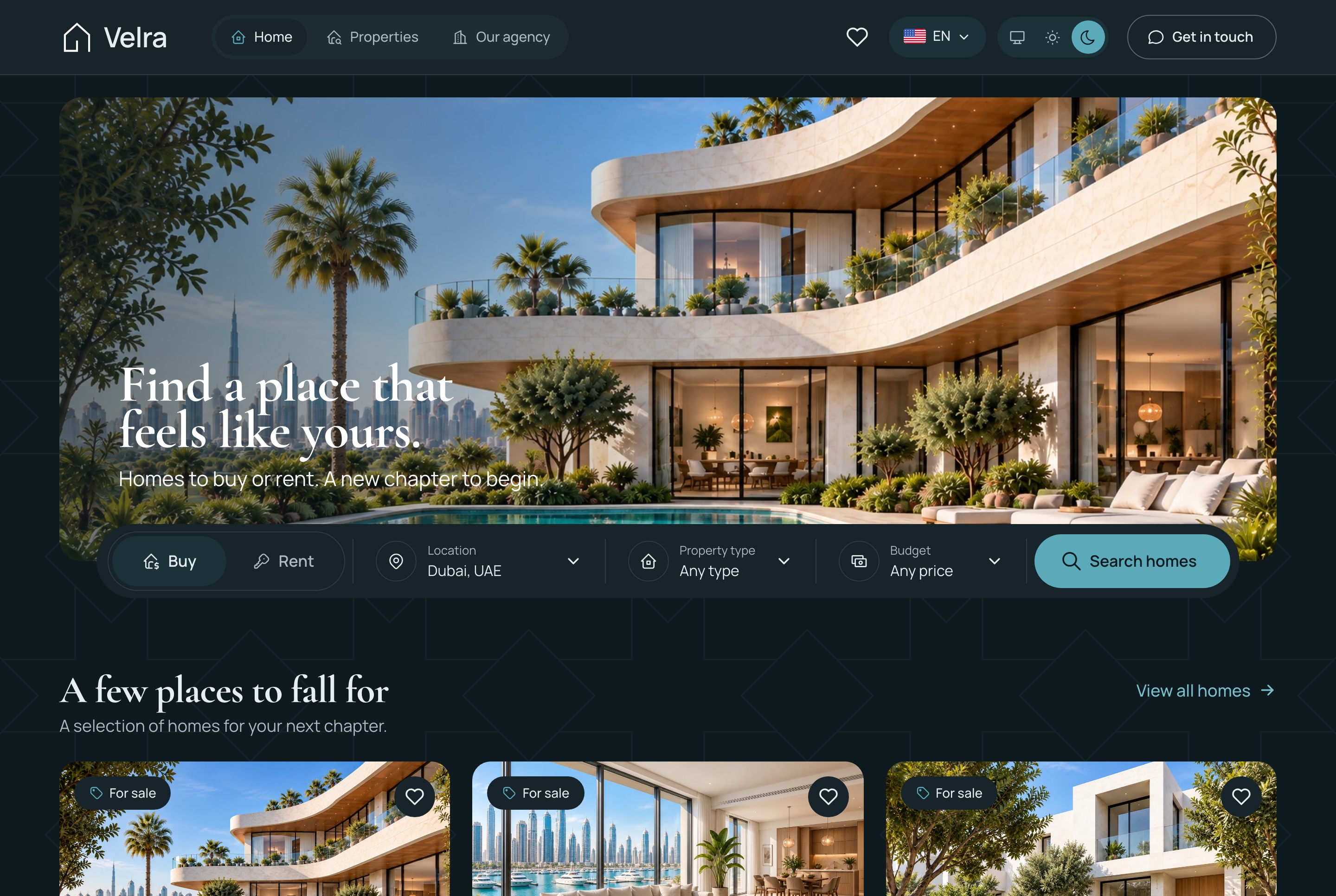
Demo video: Velra
An agency that hands code to a developer
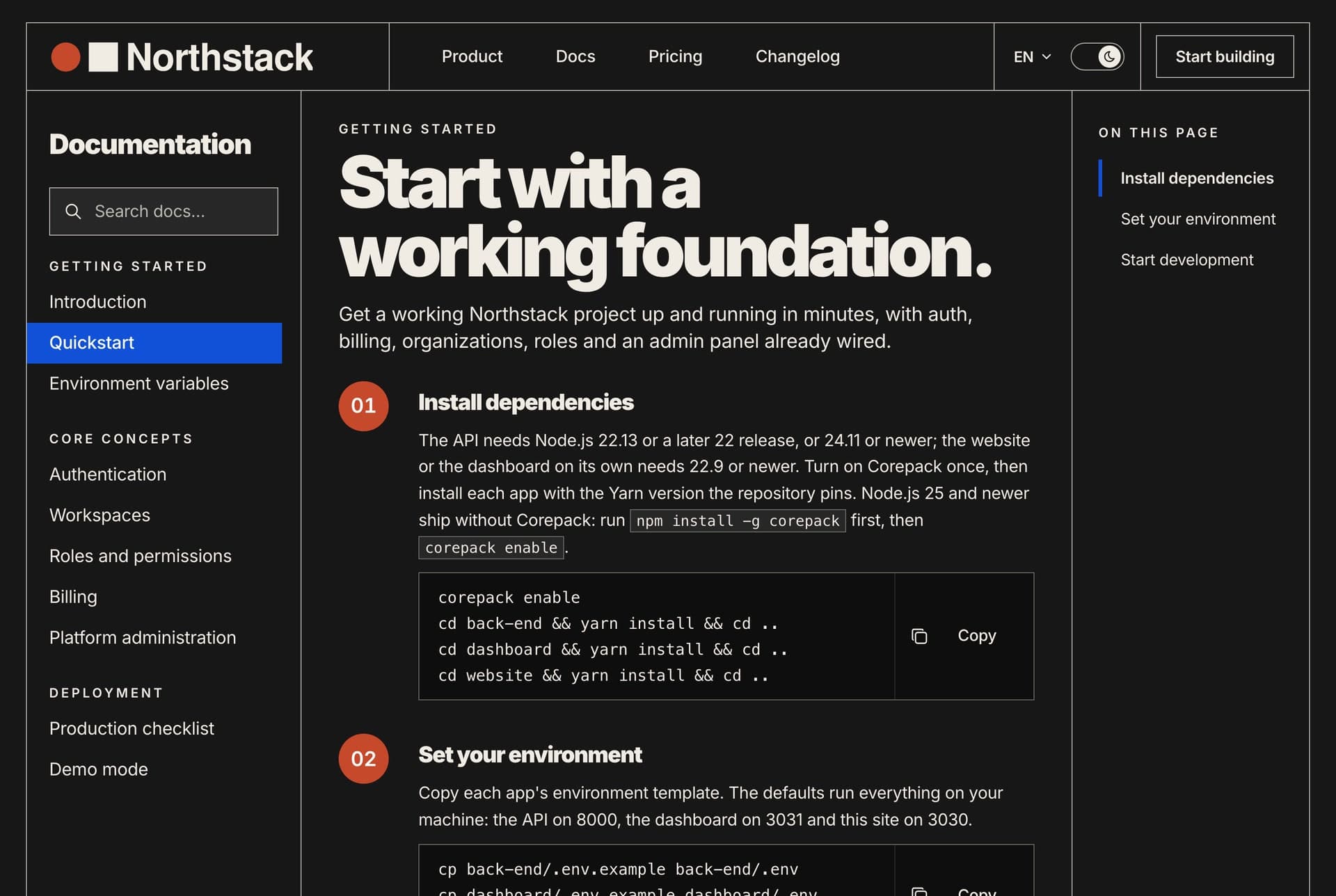
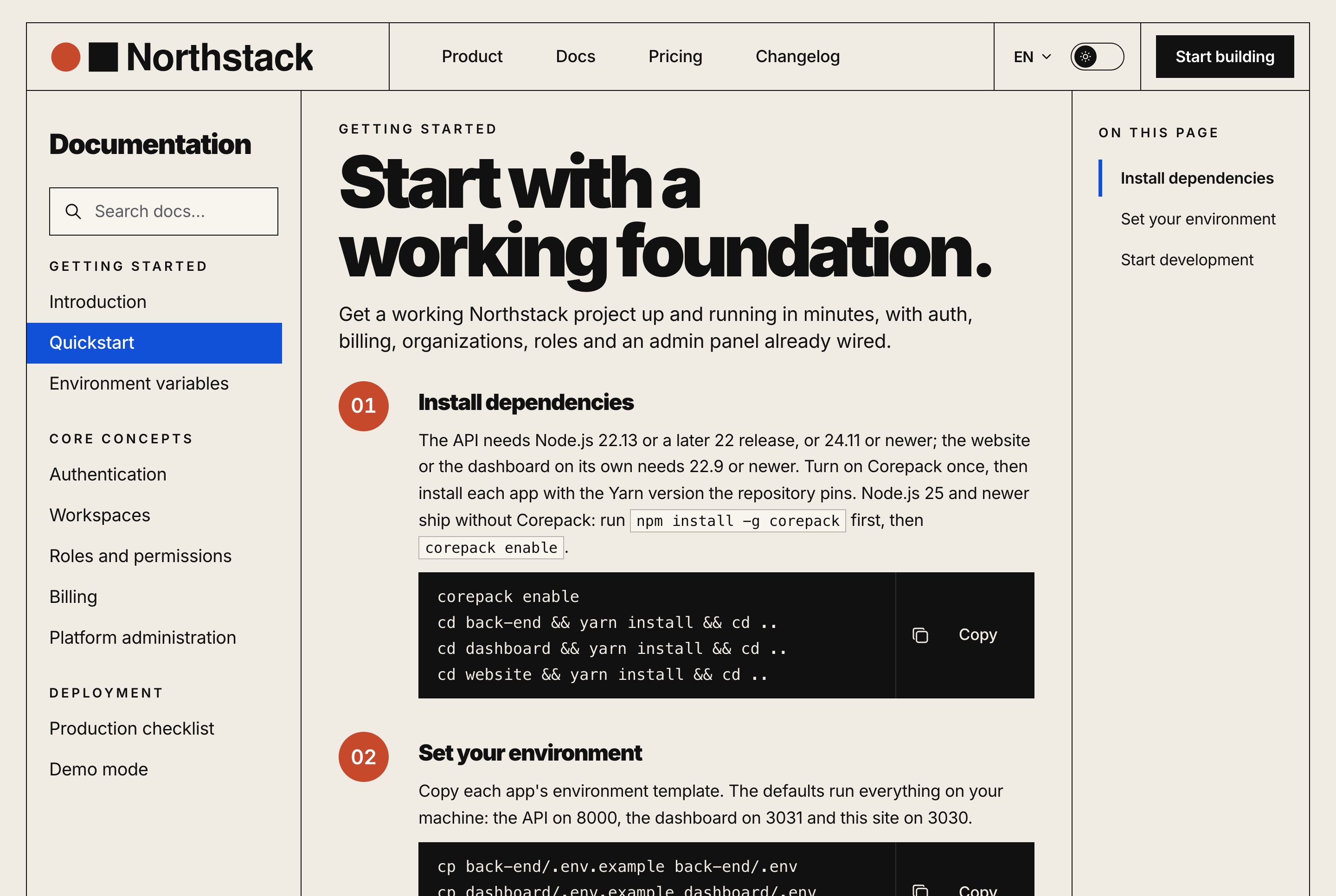
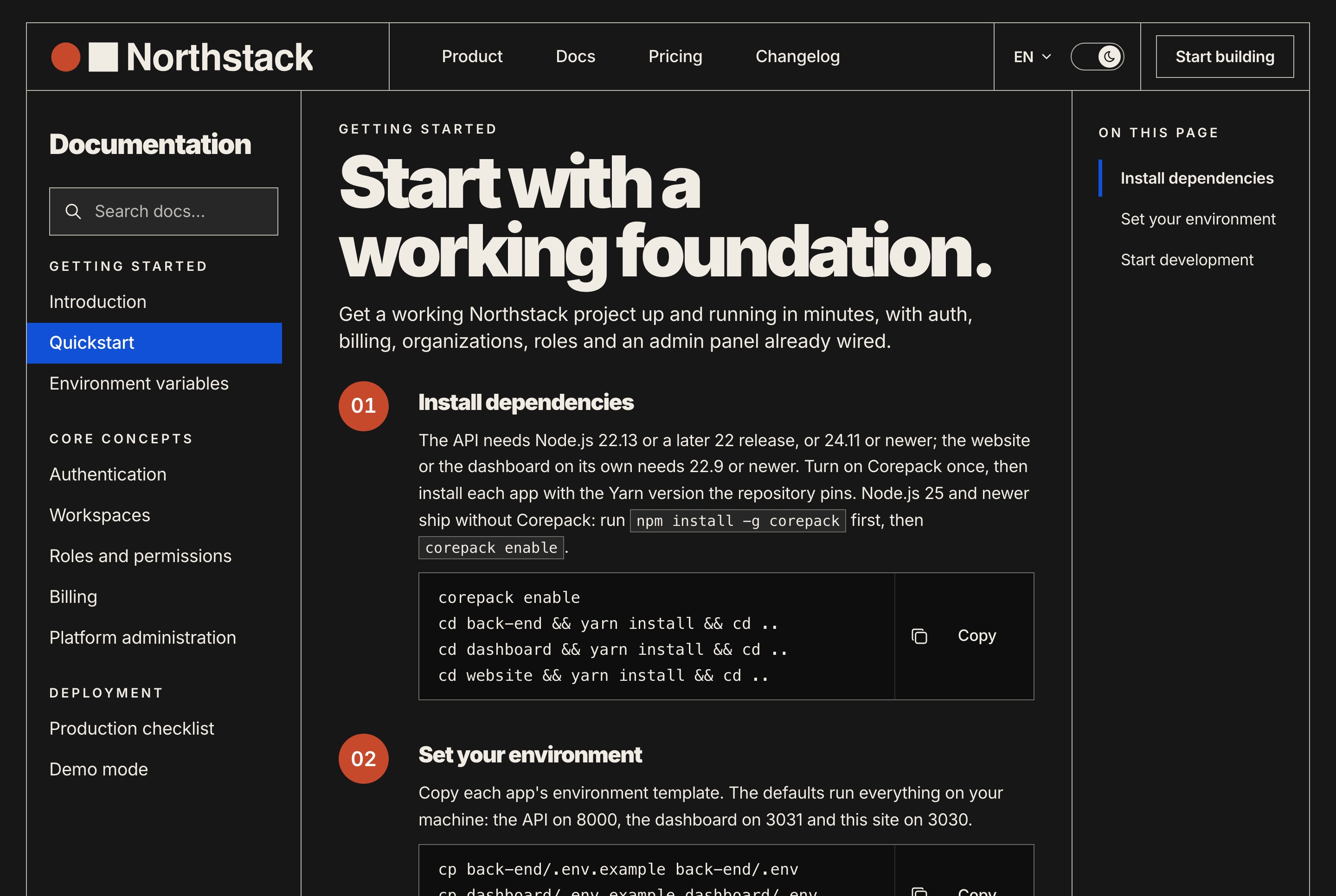
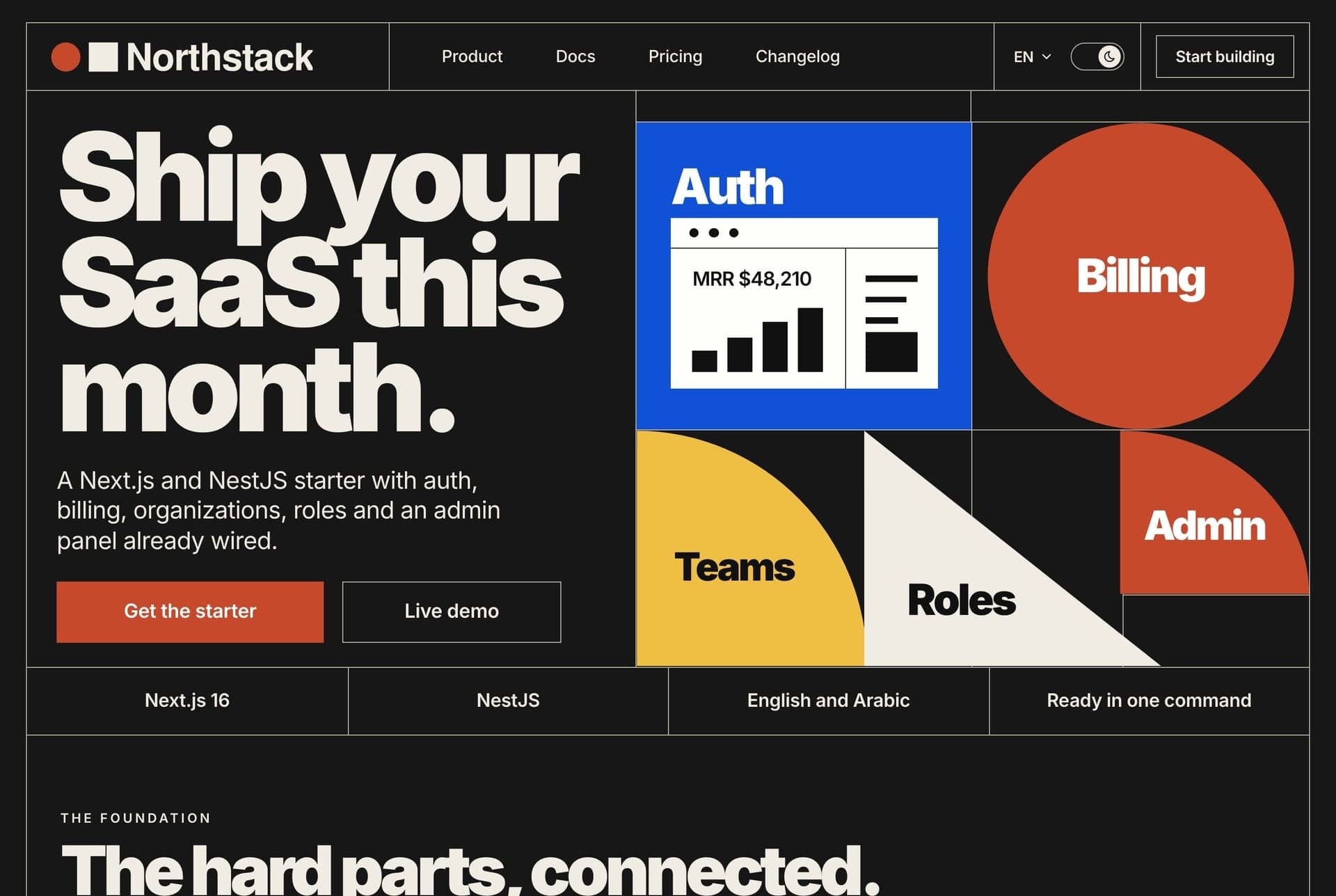
Claude Code. The project stays in your folder and git repository, in the shape our docs describe, and Claude Code can write commits, create branches and open pull requests. Skip Lovable here: the developer would get Lovable's converted version, not the Next.js project. The Northstack SaaS website ($39) is a typical handover: marketing pages and a documentation section, in English and Arabic.
A developer who wants speed
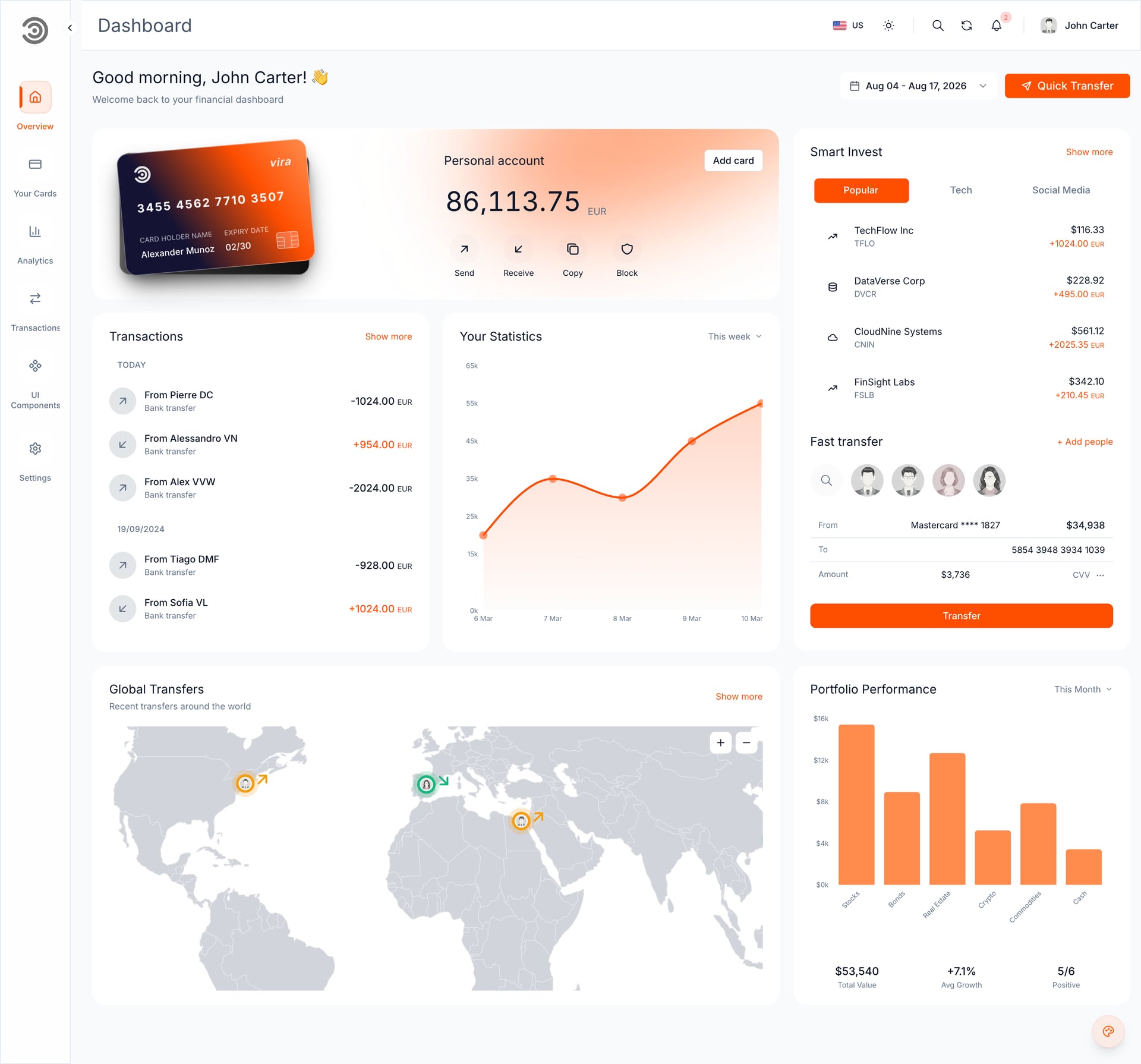
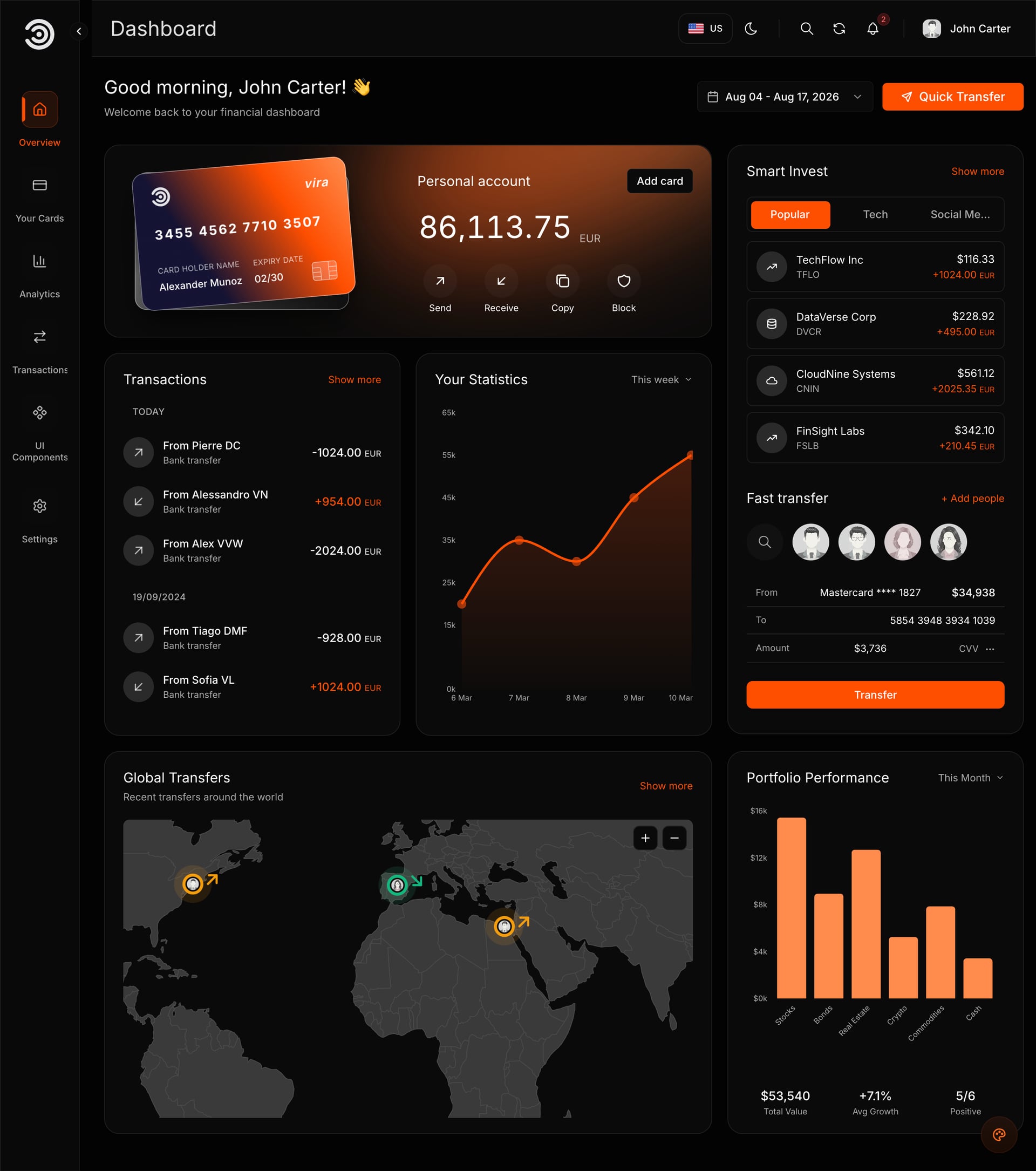
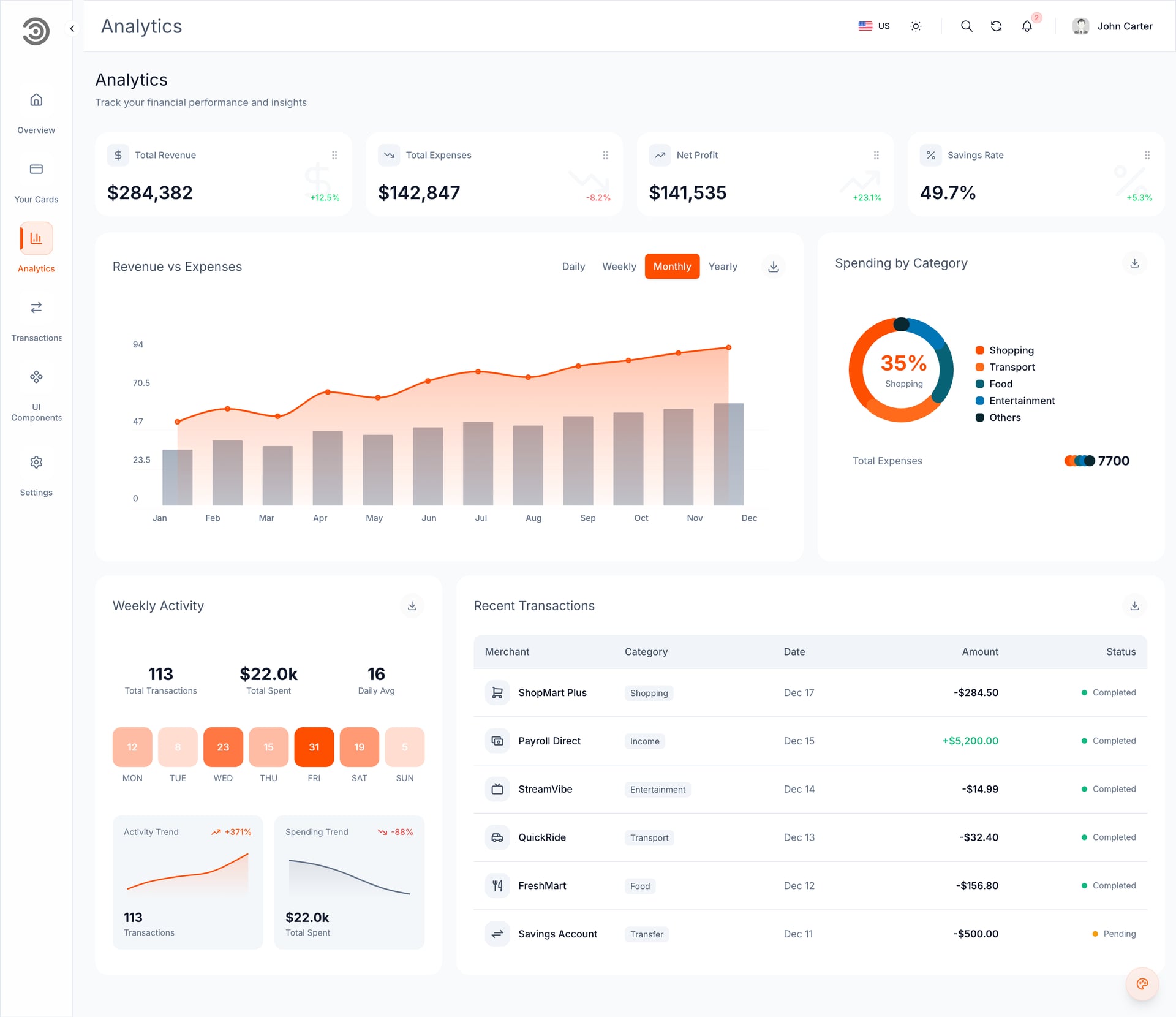
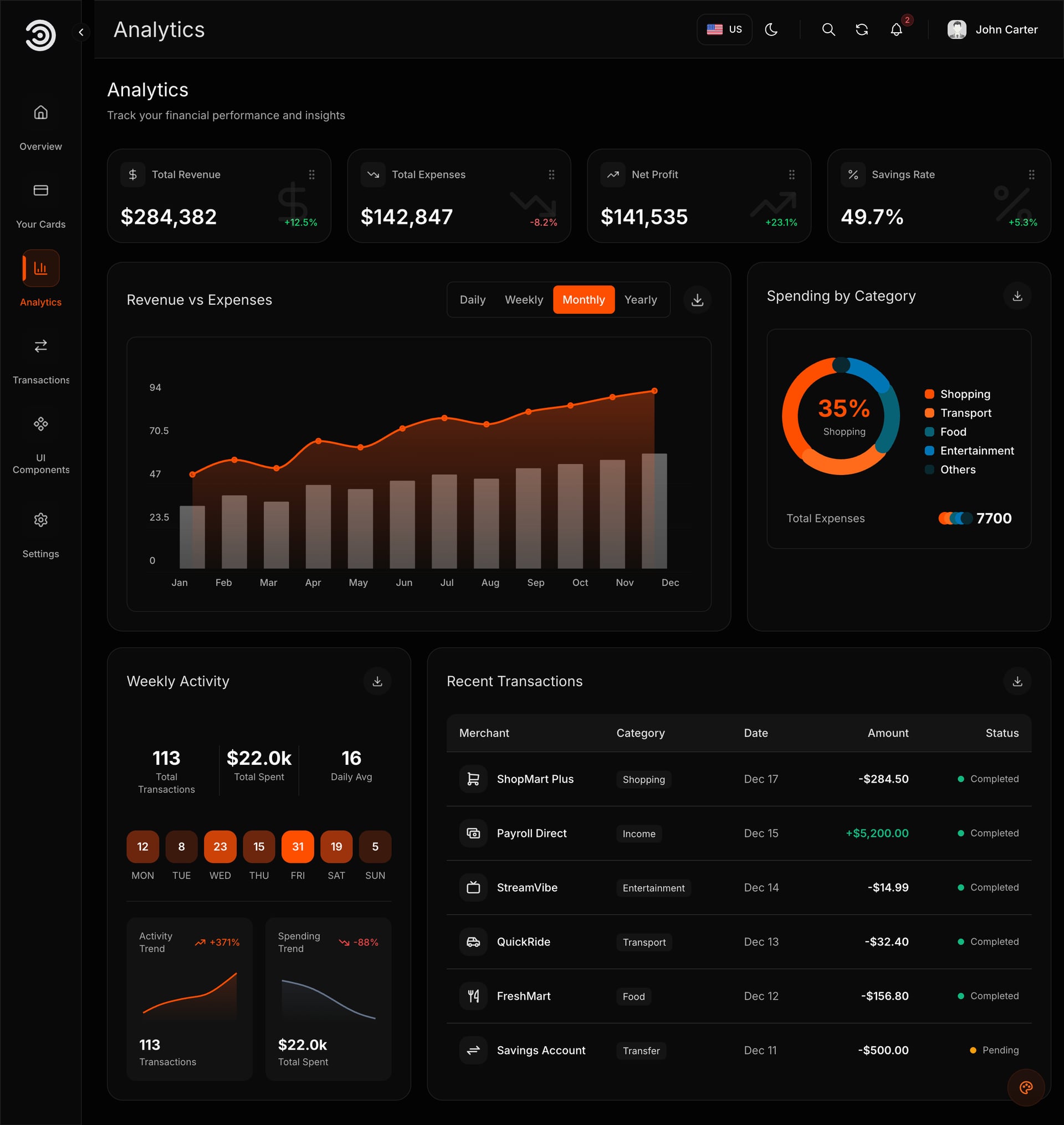
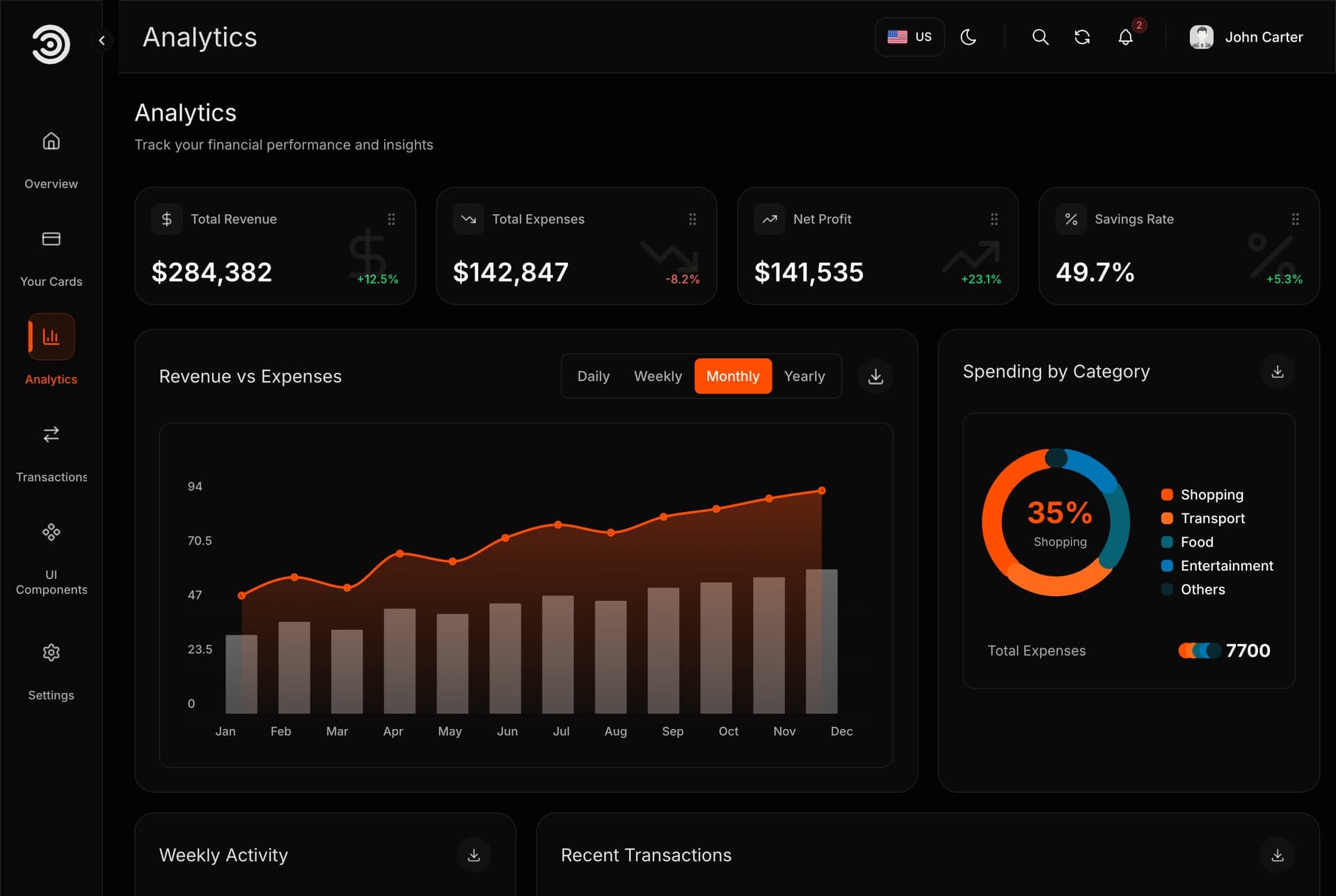
Claude Code. It works in your terminal or editor, reads the whole project, runs the commands itself and shows each change as a diff. From a template, the AI applies your brand and features instead of inventing a design first. The Financial Dashboard ($49) is the package we ran on Replit and Lovable.
Someone who needs a full-stack app
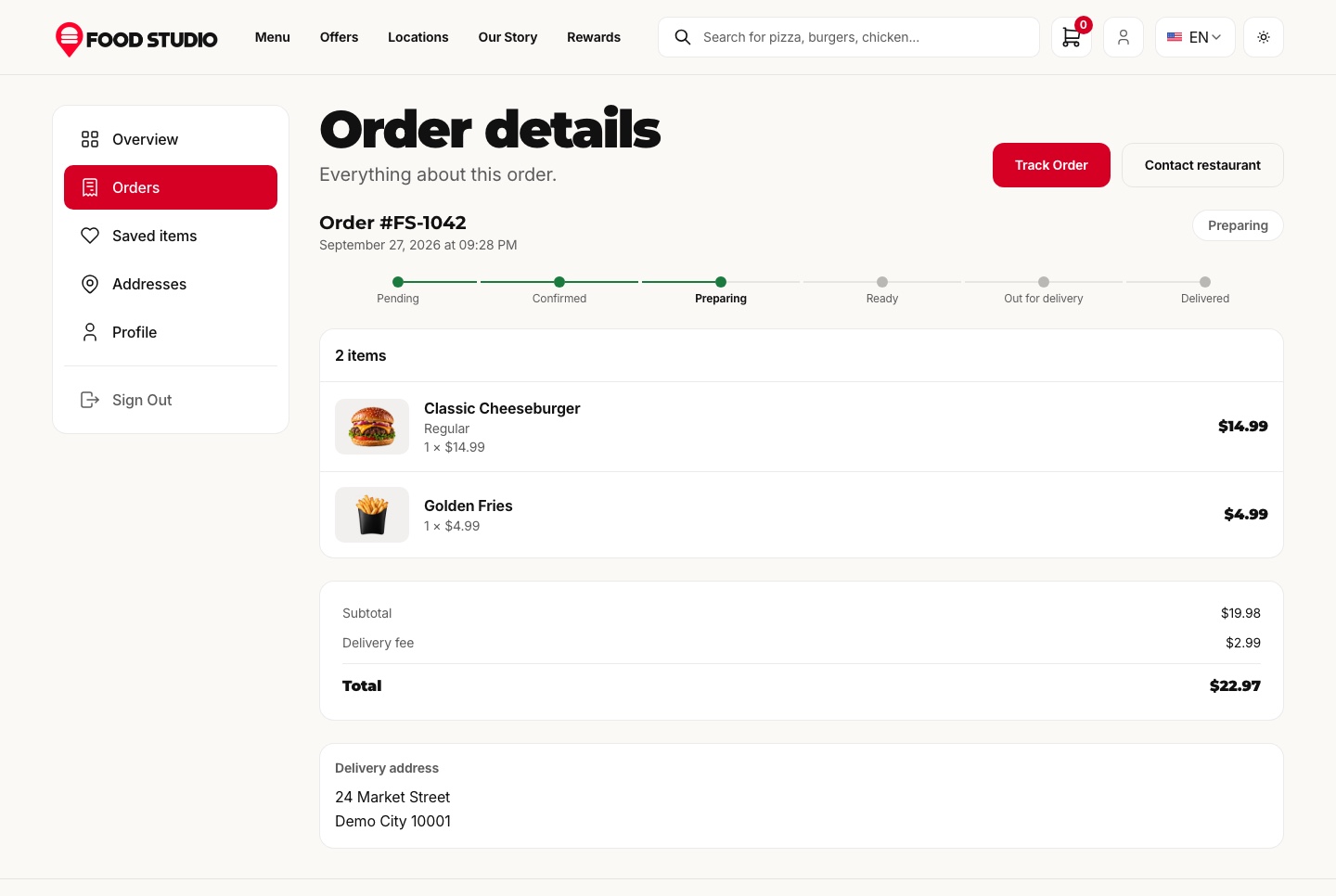
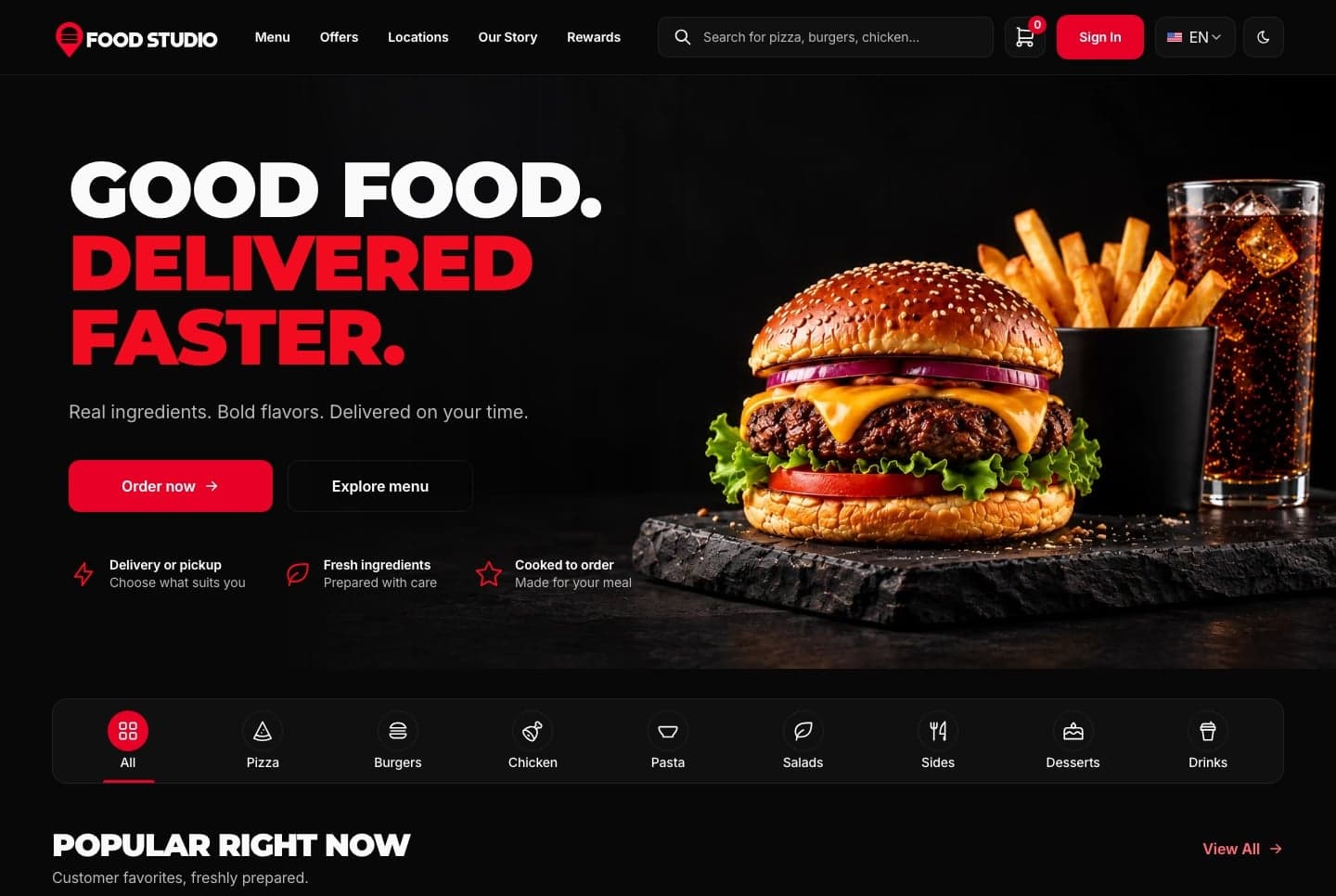
Claude Code, or the developer route in the template's guides. A Full Stack package ($149) has an API and a database with a seed step, so it is not a no-code job. Lovable cannot run one and we have not tested Replit with one. Claude Code is the only route we have run with a Full Stack: on 8 November 2026, given the unzipped Food Studio Full Stack package (restaurant website, dashboard and API with its database) and our prompt, it had the site, dashboard and API running about 4.5 minutes after unzipping. A simpler start: the Food Studio ordering website ($39) alone, the Full Stack later.
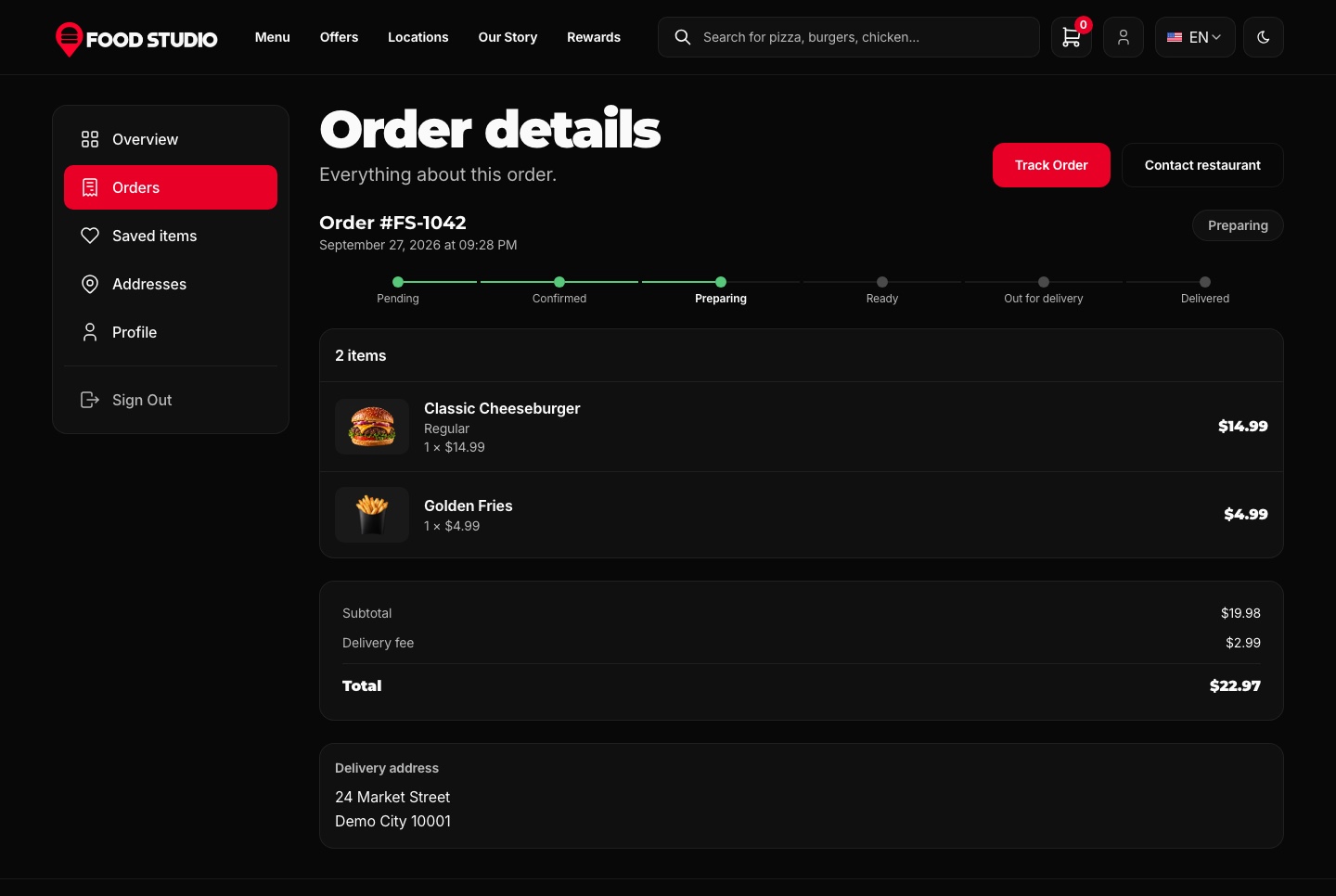
How Claude Code starts from a template
This is the route our Open with AI window gives for AI code editors, with the setup from Anthropic's docs. We have not timed a brand change with Claude Code.
- A paid plan: Pro, Max, Ultra, Team or Enterprise, or a Console account. The free Claude plan does not include Claude Code.
- Install: the Claude desktop app (macOS, Windows, Linux in beta) and its Code tab, with no terminal needed; or one install command for the terminal; or the VS Code or JetBrains extension.
- Download: in the buyer dashboard, Open with AI, AI code editors card: Download template, then Copy prompt. Unzip.
- Open and paste: open the unzipped folder, paste the prompt, send.
- Answer: the prompt has the AI run the built version first, ask for your name, how it is written in Arabic, colour, logo and contact details, keep both languages and read the template's guides before publishing. In Manual mode, Claude asks before each edit or command.
- Publish on a host you choose.
The desktop app includes Claude Code itself, but a Next.js project runs on Node.js, which the computer needs too.
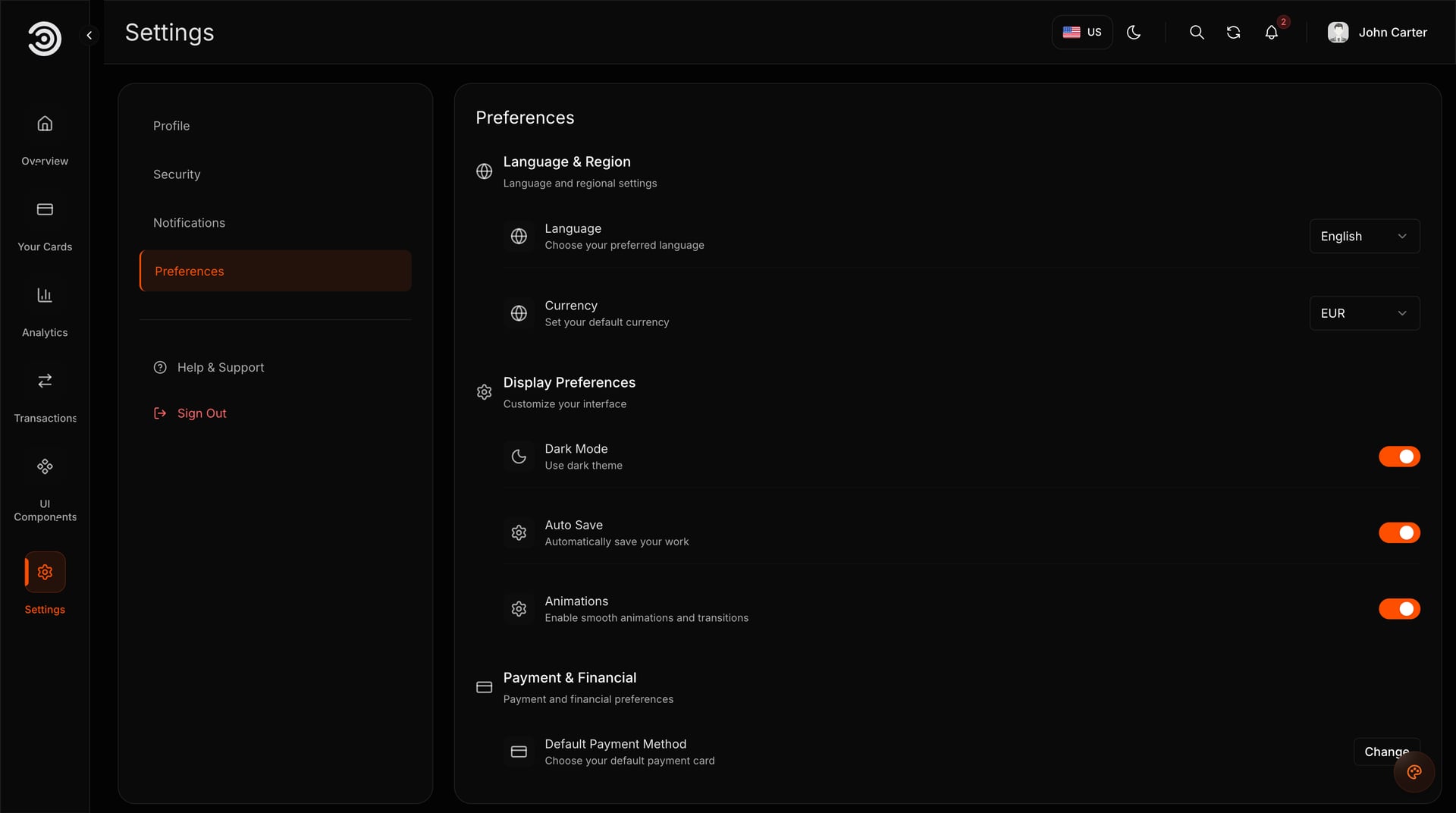
What we tested, and what we did not
On 7 November 2026 we gave the Financial Dashboard (frontend only, a 6.5 MB ZIP) to Replit and Lovable on free plans. Replit kept the code, reached a preview in about 6 to 7 minutes and changed both languages answer by answer. Lovable imported in about 10 minutes and applied the brand prompt in about 30 seconds, on its converted copy. Claude Code was not part of that test; our only run with it is the Full Stack one above. Cursor, Copilot and Windsurf we have not run. The full account is in our Replit vs Lovable comparison.
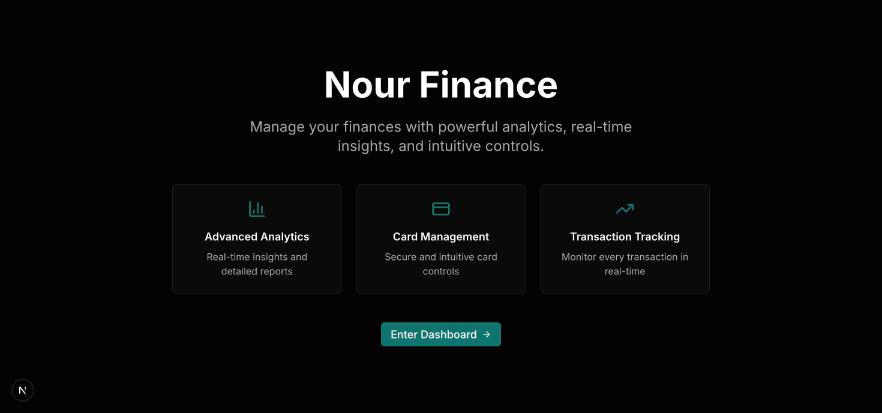
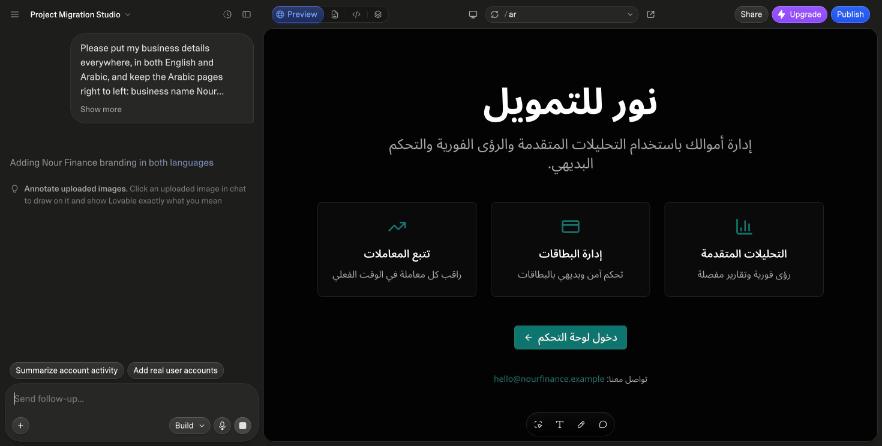
English and Arabic
Every Aniq UI template ships in English and Arabic, with the Arabic pages right to left, so the AI only has to keep both. Replit and Lovable did in our test. Claude Code edits the template's own files, both languages included, and Anthropic lists Arabic among the languages its models are measured in, but we have not tested it on our Arabic pages. With any tool, open /ar after every change: an AI can update one language and miss the other.
What happens to your prompts and code
Checked on 9 November 2026. Look at the setting yourself before you paste client work.
- Claude: on Free, Pro, Max and Ultra, Anthropic trains on chats and Claude Code sessions only while the model training setting is on (Settings > Privacy). Team, Enterprise and API use is not used for training.
- Replit: uses your prompts, instructions, context and generated responses to improve its models. Pro users can opt out in Settings > Personalization > Model Improvement; Enterprise content is not used.
- Lovable: since 9 September 2026, Free and Pro content may be used for training unless you opt out, for free, in Account settings > Preferences > AI model training. Business and Enterprise are excluded by default.
Five mistakes to avoid
- Comparing them as one kind of tool. Claude Code does not host; Replit and Lovable do. Count hosting in.
- Expecting Claude Code for free. The free Claude plan does not include it.
- Assuming converted code is the same code. Lovable's copy behaves like the template, but Aniq updates and guides no longer fit file by file.
- Launching on a free plan. Replit's free link goes down after 30 days; Lovable's free plan has no custom domain.
- Rewriting the window's prompt. Send it as it is, so the AI runs the template instead of rebuilding it.
FAQ
Short answers.
Is Claude Code better than Replit?
Neither is better in general: they do different jobs. Claude Code works on a project folder on your computer and leaves hosting to you; Replit runs the project online and publishes it. Both keep a template's original code. Choose Claude Code if a project folder suits you, Replit if you want everything in the browser. For a Full Stack package, Claude Code is the only route we have run: on 8 November 2026 our Food Studio Full Stack was running about 4.5 minutes after unzipping.
Is Claude Code better than Lovable?
For keeping the code, yes: Claude Code edits the template's own files, while Lovable rebuilds an imported project on TanStack Start. For a non-developer who wants the quickest first result in a visual editor, Lovable is easier.
Can a non-developer use Claude Code?
Yes, through the Claude desktop app, which works on a folder without a terminal and can ask before each edit or command. You still look after a real project: Next.js needs Node.js on the computer, and you choose the host. Replit and Lovable keep everything in the browser.
Which is cheapest?
To try, Replit Starter and Lovable Free cost nothing; Claude Code has no free plan. For a year, billed yearly: Claude Pro $200, Replit Core $216, Lovable Pro $250 (checked November 2026). Claude Code's price leaves out hosting, which Replit and Lovable include up to their credits.
Which keeps my code?
Claude Code and Replit. Claude Code edits the files in your folder, and Replit ran our template with its original Next.js 16 and Yarn 4 setup. Lovable rebuilds an import on TanStack Start; downloading that code needs a paid plan, while GitHub sync is on every plan.
Can I start any of them from a template?
Yes. Claude Code opens the unzipped template folder. Replit opens with our prompt and a private download link, or takes a ZIP up to 200 MB. Lovable imports a ZIP up to 250 MB, and the first build of your first import is free.
Do they work with Arabic?
Replit and Lovable kept English and Arabic, right to left, in our test on 7 November 2026. We have not tested Claude Code on our Arabic pages. All three only have to keep the Arabic the template ships, so open both languages after every change.
Price list
Checked on 8 November 2026. One payment each, free updates, commercial licence.
- Food Studio restaurant site, Velra real estate site, Northstack SaaS site, Fashion e-commerce storefront: $39
- Financial Dashboard, staff dashboards for restaurants, real estate, e-commerce and SaaS workspaces: $49
- AI admin dashboard, Fitness dashboard: $69
- Full Stack packages: $149
- Bundle of 10 premium templates: $199 launch price (list $499)
Related guides
- Replit vs Lovable for Templates: We Tested Both in English and Arabic (2026)
- Small Business Website With an AI Builder: Real Costs, $267 to $364 in Year One (2026)
- How to Customize a Next.js Template With AI, No Coding (2026)
- Template or Blank Prompt? Why AI Builds Go Better From a Template (2026)
- Publish a Replit or Lovable Site on Your Own Domain: Costs and Steps (2026)
- Arabic Website With an AI Builder: What Works Right to Left, With 22 Real Arabic Screens (2026)
Sources
You might also like
Replit vs Lovable for Templates: We Tested Both in English and Arabic (2026)
Replit keeps a template's code, Lovable converts it. We tested both on one template in English and Arabic: tables, plans and prices, who should pick which.
Publish a Replit or Lovable Site on Your Own Domain: Costs and Steps (2026)
How to publish a Replit or Lovable site and connect your own domain: the steps from each platform's docs, plan prices and what to check first. Checked November 2026.
Replit Agent: What It Builds, What It Costs and How to Start From a Template (2026)
Replit Agent tested twice on a real template: how a session works, Free, Power and Max modes, plan prices, publishing costs and the prompts that work.
