
Run the site locally
Get the landing page running on your computer with two Docker commands.
Before you start: install and open Docker Desktop, or Docker Engine on Linux. Nothing else is needed, and there is no .env file to create.
Download the template
Open the template's page on Aniq UI and press Download Free. Enter your email and your name and press Claim: you land in your dashboard, signed in, and download the ZIP from My templates.
Expected result: A file named like
juicy-main-….zipis in your downloads.Unzip and open the folder
Extract the ZIP and open a terminal in the
juicyfolder. On Windows, extract it in File Explorer, then open a terminal in the folder.Terminalunzip juicy-*.zip cd juicyExpected result: The folder lists
Dockerfile,package.json,messages,publicandsrc.Build the image
The site reads no environment variables, so the build takes no arguments. The first build downloads Node.js and the dependencies and takes a few minutes; later builds reuse what did not change.
Terminalinjuicydocker build -t juicy .Expected result: The build ends with a line naming the image
Having trouble?juicy.Start it and open the site
Start a container from the image, then open localhost:3030Local. Arabic is at
/ar.Terminalinjuicydocker run -p 3030:3030 juicyA port is already in use?
If the start stops with
A port is already in useports are not available ... address already in use, another program uses port 3030. Either stop it, or change the number on the left of-ponly: rundocker run -p 3041:3030 juicyand open localhost:3041Local.Expected result: The page opens on the Lemon Ginger can. Scroll, press the arrow keys or use the arrow buttons to turn the wheel.
Having trouble?
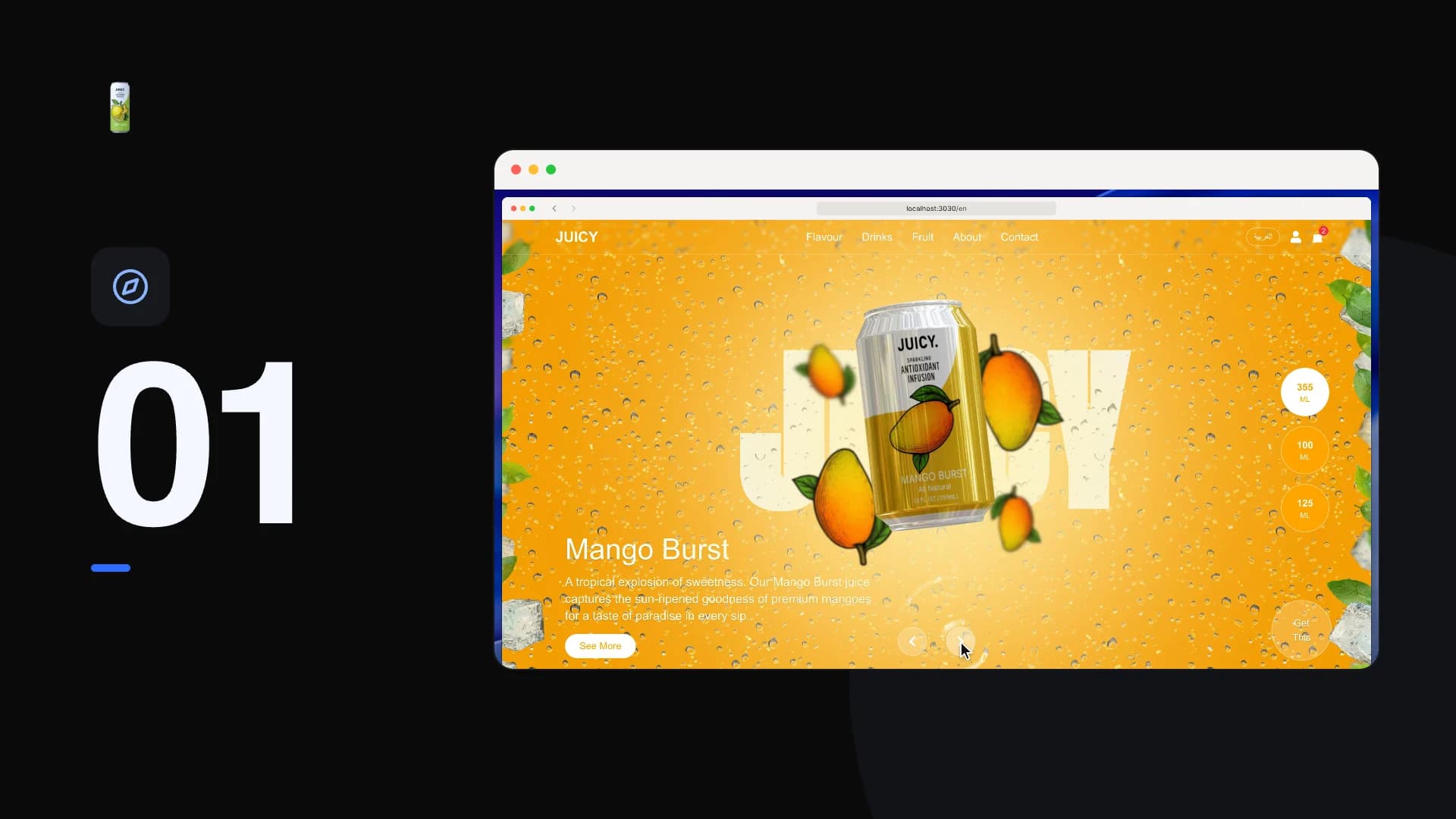
Take a tour
What the page looks like once it runs.
Stop and start again
Press Ctrl+C in the terminal to stop it. Start it again with the same docker run command; there is nothing to rebuild.
To keep it running in the background instead, give the container a name, then stop it by that name:
docker run -d --name juicy -p 3030:3030 juicy
docker stop juicy
After docker stop, docker start juicy starts the same container again. After you change a file, run docker build -t juicy . again: the image holds a copy of the site as it was when you built it.